
Capua intractana
Capua intractana
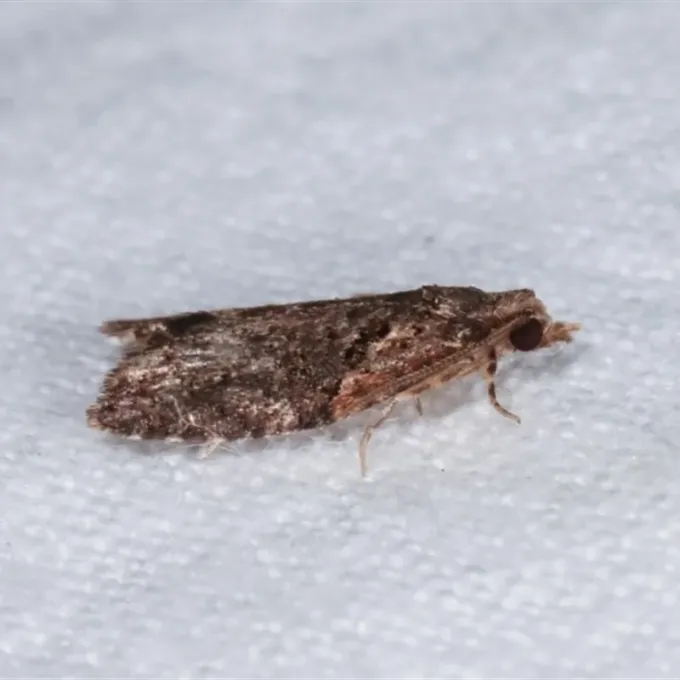
Description
How to identify
Capua intractana belongs to the Tortricidae family within the order Lepidoptera. It is a small moth, with a wingspan typically ranging between 15 and 20 millimeters.
The adult moths have protective coloration that allows them to camouflage effectively on tree bark. Their forewings feature a distinctive pattern in brown and grey tones, typical of this species.
The larvae go through several developmental stages, changing their color from light green to a darker shade. The larval head capsule is well-defined and usually darker than the rest of the body.
A notable characteristic of the pupae is their ability to reside inside rolled leaves, protected by dense webbing. This makes visual detection by non-specialists extremely difficult.
To identify adults in the field, agronomists often use pheromone traps, which allow for accurate determination of population density and the timing of peak flight activity.
What it damages
The primary damage is caused by the larvae, which feed on a wide range of agricultural and ornamental crops. Members of the Rosaceae family are particularly susceptible.
The pest feeds actively on young leaves, binding them with silk into characteristic tubes or nests. This disrupts the plant's photosynthesis and stunts its overall growth.
Beyond vegetative mass, the larvae frequently damage reproductive organs such as buds, flowers, and fruit set. This results in significant crop losses during the early stages of development.
In orchards, the pest may damage the skin of young fruit, creating entry points for various fungal and bacterial infections that lead to decay.
Severe infestations can lead to total defoliation of young shoots, which critically weakens the plant before winter and reduces its overall cold tolerance.
When it appears
The pest's life cycle is closely linked to the phenological stages of its host plants. The first generation typically appears during bud burst and the active growth of young shoots.
Mass flight of adults is observed during warm periods, when environmental conditions favor reproduction. The temperature threshold for egg development is approximately 10-12 degrees Celsius.
Multiple generations can develop within a single growing season, with the total number depending on regional climatic conditions and accumulated degree days.
Insects usually overwinter as young larvae in dense cocoons hidden in bark crevices, under plant debris, or within dried leaves.
As spring arrives and daily mean temperatures rise, the larvae become active, begin to feed intensively, and soon pupate, initiating a new developmental cycle.
Signs of infestation
The first sign of infestation is the presence of characteristically rolled or silk-bound leaves on shoot tips. A larva is usually found inside these nests.
Surface damage to the epidermis of young fruit may occur, which eventually develops into corky scars or spots.
- Presence of silk threads on opening buds.
- Chewed edges of leaf blades.
- Damaged buds that fail to open or drop prematurely.
- Larval frass accumulating inside rolled leaves.
When inspecting tree canopies in summer, one may observe mass wilting or deformation of young terminal leaves, signaling the localization of the pest.
Control measures
Effective management of this pest is based on an integrated approach, combining cultural, biological, and chemical methods.
Cultural practices include regular sanitary pruning of infested shoots, removing old bark layers, and clearing plant debris where larvae overwinter.
Biological control involves the use of natural enemies or bio-insecticides based on Bacillus thuringiensis, which are effective against early-instar larvae.
Chemical treatments should be timed precisely with the period of peak larval emergence, as larvae inside silk nests are less susceptible to contact poisons.
Monitoring populations with pheromone traps allows for optimized application timing, reducing the frequency of necessary pesticide treatments in the orchard.
Taxonomy
- Latin name
- Capua intractana
- Order
- Lepidoptera (butterflies)
- Family
- Tortricidae
- EPPO code
- CAPUIN
Discussion
No discussions yet — be the first.