
Capua
Capua
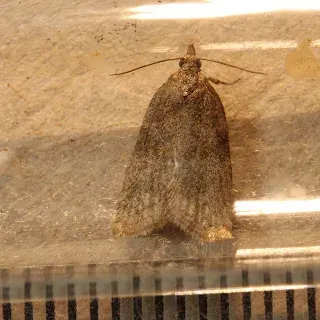
Description
How to identify
Capua, commonly referred to as the summer fruit tortrix (Adoxophyes orana), is a moth species belonging to the family Tortricidae, known for being a significant agricultural pest.
The adult moth has a wingspan of approximately 15–22 mm. Its forewings are brownish with a distinctive net-like pattern, which serves as camouflage against tree bark.
The larvae progress through several instars, transitioning from a pale green body with a dark head to a more robust, vibrant green color as they reach maturity.
Females deposit their eggs in flat, shingle-like clusters on the upper surfaces of leaves, often resembling translucent shields that are difficult to spot.
The species overwinter as small larvae within silk cocoons tucked away in crevices of bark, bud scales, or junctions of tree branches.
What it damages
This pest is highly polyphagous and infests a wide range of fruit trees, including apple, pear, plum, and cherry, causing substantial economic losses.
Larvae feed primarily on young buds during the spring, subsequently moving to foliage where they create leaf-rolls bound by silk threads.
As the season progresses, larvae may feed on the surface of developing fruit, creating shallow holes or abrasions that diminish the fruit's market value.
These surface injuries often serve as entry points for secondary fungal infections and pathogens, leading to premature fruit drop or rot during storage.
Heavy infestations can lead to significant defoliation, which stresses the tree and negatively impacts the overall harvest quality and quantity.
When it appears
The first flight of the moths typically occurs in late spring, coinciding with the period of bud burst and initial leaf development in orchards.
A second generation usually emerges during the summer months, posing a significant threat to fruits that are approaching maturity and harvest.
The developmental cycle is highly influenced by temperature; warm and humid weather conditions favor rapid multiplication and increased larval activity.
Larval diapause begins as temperatures drop in autumn, at which point the insects seek out sheltered locations on the trunks to survive the winter.
Ongoing monitoring is essential throughout the growing season to identify peak flight periods and effectively time interventions.
Signs of infestation
One of the earliest signs of infestation is the appearance of curled or rolled leaves held together by thin silk webbing.
In early spring, damaged buds that fail to bloom or show signs of being hollowed out provide clear evidence of larval feeding.
Surface scarring or shallow pits on the fruit skin are characteristic indicators of late-stage larval feeding before harvest.
The presence of fine webbing at the tips of shoots is a common symptom that indicates the location of active feeding larvae.
- webbed leaf clusters;
- deformed or hollowed-out buds;
- skin damage on fruits;
- premature drying of foliage.
Control measures
Cultural control practices include the removal and destruction of infested shoots and the cleaning of tree bark to eliminate wintering sites.
Biological control, using Bacillus thuringiensis or other specific entomopathogens, is effective when applied against early-stage larvae.
Pheromone traps are essential for monitoring moth flight patterns, enabling growers to apply treatments exactly when needed to maximize efficacy.
Chemical control should be strategically timed to target young larvae before they protect themselves within rolled leaves, ensuring higher success rates.
Integrated Pest Management (IPM) strategies, combining monitoring and selective pesticide use, are highly recommended to keep populations below economic thresholds.
Taxonomy
- Latin name
- Capua
- Order
- Lepidoptera (butterflies)
- Family
- Tortricidae
- EPPO code
- CAPUSP
Discussion
No discussions yet — be the first.