
Dromedary camel
Camelus dromedarius
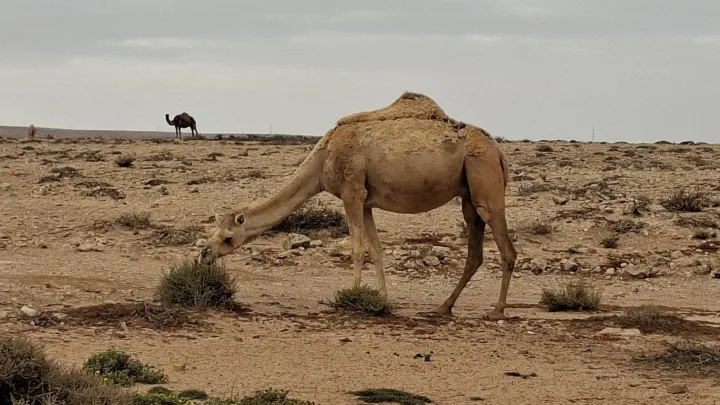
Description
How to identify
The dromedary camel (Camelus dromedarius) is a large ungulate of the Camelidae family, known for its significant impact on arid land vegetation and agricultural systems.
Adult camels are highly mobile and possess a physiological capacity to consume vast amounts of plant material, making them a major challenge in rural development.
Their anatomy is uniquely adapted to browse on thorny and fibrous plants, which allows them to clear areas of vegetation that other livestock might leave untouched.
While often domesticated, unsupervised or wild-ranging dromedaries act as pests by destroying cultivated plants and disrupting local agro-ecosystems.
Due to their size and herd behavior, a single group of camels can significantly alter the landscape within a few days of feeding.
What it damages
Dromedary camels cause extensive damage to grain crops, fruit orchards, and vegetable plots by grazing and trampling on the harvest.
They are particularly destructive to young trees, where they strip the bark and consume leaves, often leading to the permanent death of saplings.
By grazing intensively, they degrade the soil structure and reduce the biomass available for other forms of agriculture in the surrounding region.
Competition for fodder results in the reduction of pasture quality, affecting the productivity of mixed farming systems in semi-arid zones.
The destruction of irrigation infrastructure often occurs as a secondary consequence of camel activity when herds attempt to access water sources.
Signs of infestation
Key indicators of camel presence include large, distinct hoof prints in the soil that differ significantly from cattle or smaller livestock.
Browse marks on trees located at a height of 1.5 to 2 meters indicate that camels have been feeding in the area, as this height is unreachable for smaller pests.
Large patches of decimated crops, characterized by pulled-up plants and broken stems, are a primary sign of feeding activity.
The presence of large, identifiable droppings in field borders provides clear evidence of recent herd transit through the agricultural plot.
Visible damage to fence lines and perimeter barriers is a common symptom of camel pressure on enclosed farm land.
Control measures
The installation of heavy-duty, high-tensile wire fencing is the most effective physical barrier against dromedary camels.
Implementing motion-activated lighting or acoustic deterrents can discourage camels from entering fields during the night.
Community-based herd management programs, which coordinate grazing times and locations, are essential for minimizing crop interference.
The use of buffers or non-palatable "barrier crops" at the edges of fields can help reduce the attractiveness of the site to wandering herds.
Regular monitoring of perimeter integrity and early intervention by farm security are vital for safeguarding crops from camel-related damage.
Taxonomy
- Latin name
- Camelus dromedarius
- Family
- Camelidae
- EPPO code
- CMELDR
Discussion
No discussions yet — be the first.