
Calosirus
Calosirus
Description
How to identify
Calosirus is a genus of weevils (family Curculionidae, order Coleoptera). The most economically significant species in agricultural settings is Calosirus erysimi, often referred to as the rapeseed seed weevil.
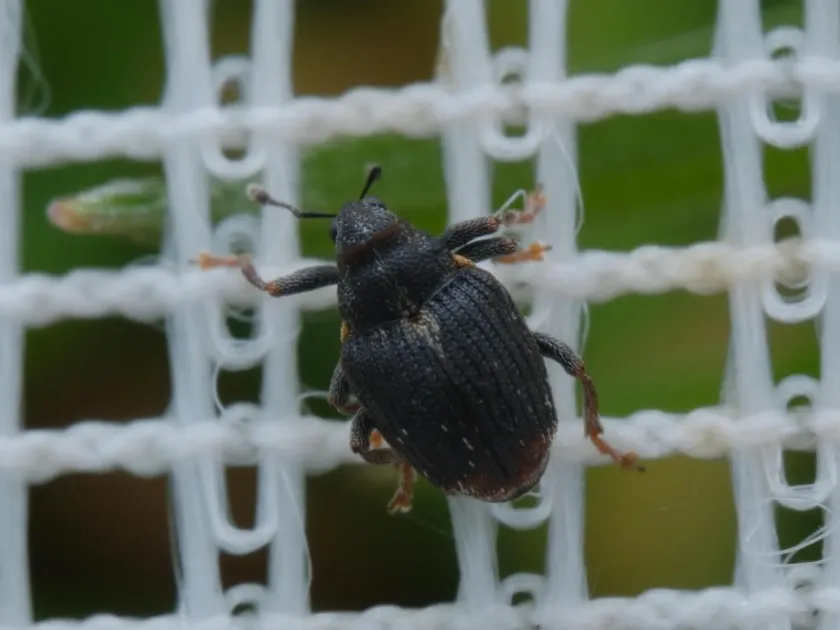
The adult weevils are small, measuring approximately 2.5–3 mm in length. Their bodies are typically dark, covered in fine scales that give them a greyish appearance. They possess the characteristic elongated snout (rostrum) typical of the weevil family.
The larvae are small, legless grubs, creamy white in color with a distinct brown head. They are primarily specialized to develop inside the pods of cruciferous plants, which makes them difficult to monitor.
These insects have fully developed wings, allowing them to fly between fields. They are highly active during warm weather and can rapidly colonize newly planted rapeseed or mustard fields.
The species thrives in temperate climates and is commonly found in regions where oilseed rape or other Brassica species are cultivated on a large scale.
What it damages
Calosirus pests primarily target plants within the Brassicaceae family, including winter and spring rapeseed, mustard, cabbage, and radishes. They are major threats to seed production.
While adults cause minor damage by feeding on young leaves, the larvae are responsible for severe economic losses. They bore into young pods and feed directly on the developing seeds inside.
This feeding activity destroys the seeds, rendering the crop unmarketable. Furthermore, the damage caused by the larvae disrupts the physiological development of the pod, leading to lower yields.
Holes made by larvae in the pod walls act as entry points for pathogens, including various fungal diseases. This often results in premature yellowing and rotting of the infested pods.
Severe infestations can significantly decrease crop quality and total yield. In unprotected fields, the loss caused by these weevils can be substantial, often requiring targeted intervention.
When it appears
Adult weevils overwinter in the upper layers of the soil or beneath plant debris from previous harvests. They emerge in the spring when temperatures consistently rise above 8–10 degrees Celsius.
The initial stage of activity involves feeding on young foliage of wild cruciferous weeds or early crop sprouts. Once the crops enter the budding stage, the weevils migrate toward the flowering plants.
Mating occurs during the spring, followed by egg-laying. Females puncture the young pods and deposit eggs inside, ensuring their offspring have immediate access to food upon hatching.
Larval development takes place inside the pods throughout the flowering and seed-filling stages. After feeding is complete, the mature larvae exit the pods and drop to the ground to pupate.
A new generation of adults emerges in late summer, feeds briefly on green vegetation, and then seeks suitable sheltered sites for overwintering, completing the annual cycle.
Signs of infestation
Early identification can be made by spotting small "shot-hole" punctures on the surface of young leaves, which are caused by adult weevils feeding.
A critical sign of infestation is the appearance of tiny dark spots or indentations on the young pods, indicating where females have laid their eggs inside the plant tissue.
Opening the pods during the seed-filling stage can reveal the presence of the white larvae feeding on the developing seeds, providing definitive confirmation of the pest's presence.
Visually, infested pods may appear deformed, turn yellow prematurely, or show signs of rotting. During the harvest period, these pods are prone to premature shattering.
Using yellow sticky traps or pans in the field is an effective monitoring method to assess the timing and intensity of the adult weevil migration into the crop.
Control measures
Effective control measures include crop rotation, which is essential to prevent the buildup of the pest population in the same field. Keeping a significant distance between new rapeseed crops and last year's fields is recommended.
Weed control is equally important, as cruciferous weeds serve as crucial reservoirs for the weevils in the early spring before the main crops emerge.
Chemical control via insecticides is typically employed during the budding to early flowering stages when the number of adult weevils exceeds the economic threshold.
When selecting pesticides, it is vital to choose products that are effective against the target pest while minimizing risks to beneficial insects, particularly pollinators like bees.
Cultural practices, such as deep plowing after harvest, can help bury larvae and pupae in the soil, effectively reducing the overwintering survival rate of the population.
Taxonomy
- Latin name
- Calosirus
- Order
- Coleoptera (beetles)
- Family
- Curculionidae
- EPPO code
- CAOISP
Discussion
No discussions yet — be the first.