
Calomycterus obconicus
Calomycterus obconicus
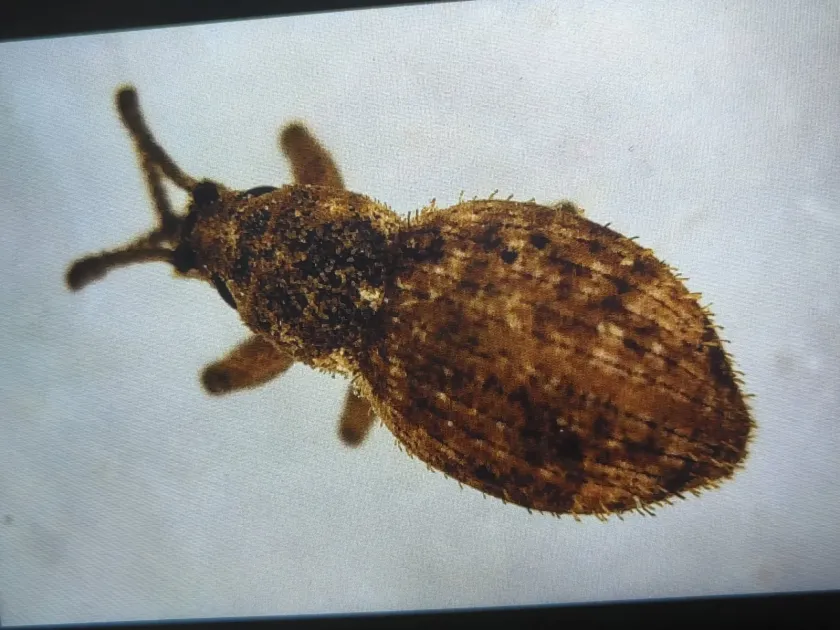
Description
How to identify
Calomycterus obconicus is a species of weevil (Curculionidae) within the order Coleoptera. Adult beetles are characterized by their conical body shape and a covering of scales that provides camouflage against their host environment.
The life cycle of this pest follows complete metamorphosis, comprising egg, larva, pupa, and adult stages. Each stage is adapted to specific environmental conditions, with the larval stage being predominantly soil-dwelling.
The larvae are legless, white to cream-colored, and possess well-developed mouthparts. They remain within the upper soil layers, making them difficult to detect without specialized field examination.
Adults are known for their defensive behavior; when threatened, they often drop from plant surfaces to the ground, mimicking death to avoid predation by birds or other insects.
Their sensory organs are highly efficient, allowing them to locate host plants effectively, which contributes to their success as agricultural pests in certain regions.
What it damages
This pest is known to be a polyphagous insect, meaning it feeds on a variety of plants. However, its primary impact is observed in leguminous crops, particularly soybean, where it causes significant economic losses.
Adults feed on foliage, creating irregular holes or eating the edges of leaves. This feeding activity reduces the overall photosynthetic capacity of the plant, potentially limiting energy production.
The larvae represent a significant threat to root systems. By feeding on roots, they interfere with the plant's ability to absorb water and vital minerals, leading to stunted growth.
Severe infestations can result in sparse plant stands, as damaged seedlings often fail to thrive or perish under environmental stress conditions such as drought.
The economic damage is most pronounced when high populations of the beetle coincide with the early vegetative growth stages of the crop, hindering initial plant development.
When it appears
The emergence of adults from their overwintering sites in the soil is triggered by rising temperatures in the spring, coinciding with the sprouting of new crop foliage.
Egg-laying occurs in the soil near the base of host plants. After hatching, the larvae immediately begin feeding on root tissues, continuing their development throughout the warm summer months.
The intensity of the pest's activity is heavily influenced by soil moisture and ambient temperature, which determine the rate of larval growth and pupation success.
As autumn approaches and soil temperatures drop, the larvae migrate to deeper soil horizons to enter a state of dormancy, ensuring their survival through the winter.
Understanding the synchronization between the pest's life cycle and the crop's phenology is essential for predicting periods of peak damage and implementing timely intervention strategies.
Signs of infestation
The most reliable sign of infestation is the characteristic notched or eaten leaf margins on soybean or other legume plants, easily visible during daylight inspection.
Plants showing signs of yellowing, wilting, or general lack of vigor often indicate that larval feeding has damaged the root system below the soil surface.
Adult beetles can be detected by examining the underside of leaves or by using sweep nets, especially during the peak hours of their daily activity.
Excavating soil samples near the base of affected plants can reveal the presence of larvae, providing concrete evidence of the pest's role in the observed crop decline.
Early season symptoms such as patchiness in the field or slow regrowth after germination may serve as an indicator that the soil is harboring a population of this weevil.
Control measures
Crop rotation is the most effective cultural practice for managing populations, as it breaks the pest's life cycle by depriving it of suitable host crops in consecutive years.
Deep autumn plowing is a recommended mechanical measure, as it disturbs the soil layers where larvae and pupae overwinter, exposing them to unfavorable conditions.
Chemical control via insecticides can be used to manage adult populations during peak emergence, preventing further foliage damage and subsequent egg-laying in the soil.
Promoting overall crop health through proper fertilization and irrigation helps plants build compensatory mechanisms, allowing them to better withstand minor root or leaf damage.
Integrated Pest Management (IPM) strategies, involving field monitoring and the use of threshold-based applications, are essential to maintain populations below economically damaging levels.
Taxonomy
- Latin name
- Calomycterus obconicus
- Order
- Coleoptera (beetles)
- Family
- Curculionidae
- EPPO code
- CALMOB
Discussion
No discussions yet — be the first.