
Calliopum elisae
Calliopum elisae
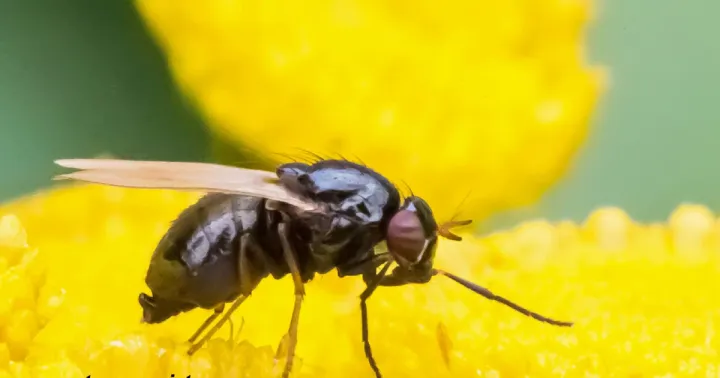
Description
How to identify
Calliopum elisae is a species of fly belonging to the Lauxaniidae family. These small insects are typically characterized by their specific morphology adapted to life within meadow and forest vegetation, often appearing in agricultural areas.
Systematically, this species belongs to the order Diptera. While many members of the Lauxaniidae family are saprophagous, they can interact with cultivated plants under specific ecological conditions.
The adult flies possess specialized mouthparts used for feeding on plant exudates, organic debris, and floral nectar, allowing them to thrive in various habitats including agricultural fields.
Larval development typically occurs in decaying organic matter, soil, or leaf litter. This dependency on organic decomposition highlights the role of the environment in the life cycle of this pest.
Environmental humidity plays a crucial role in the population dynamics of Calliopum elisae. High moisture levels facilitate the survival of all life stages, making them particularly prevalent during wet seasons.
What it damages
Although Calliopum elisae is often considered an occasional pest, it can cause significant damage to vegetable crops, berries, and ornamental plants during periods of high population density.
The primary damage is caused by adults feeding on leaves and flower buds. This mechanical damage disrupts the integrity of the plant tissue, which can hamper photosynthetic activity.
Wounds created during the feeding process serve as entry points for various phytopathogens, including fungi and bacteria, leading to the development of secondary infections and rot.
High infestation levels on young shoots can cause noticeable stunting and deformation of growth, directly impacting the marketable quality of the agricultural product.
The severity of the damage is often exacerbated by the proximity of the field to wooded areas or uncultivated land, which act as reservoirs for the pest throughout the growing season.
When it appears
The activity of Calliopum elisae spans the growing season, with peak emergence often occurring between late spring and early summer, when temperature and humidity are most favorable.
Adults typically emerge from overwintering sites in sync with the vegetative growth of crops. The duration of their activity is strongly linked to regional temperature patterns.
Diurnal activity peaks are generally observed in the morning and evening hours. During these times, flies are more mobile and actively move to find suitable host plants for feeding.
The number of generations per season varies depending on the latitude and local climate. In warm climates, the population can increase rapidly, necessitating vigilant monitoring.
As the season progresses, adult activity may fluctuate. However, the pest can remain a threat until late in the season if environmental conditions support continued feeding and reproduction.
Signs of infestation
Early symptoms of an infestation include the appearance of small necrotic spots and chlorosis on leaves. These are direct results of the adults feeding on the leaf epidermis.
The presence of insect waste on the leaf surface often facilitates the colonization by sooty mold, which appears as a dark, dusty coating, further reducing plant health.
Plants may show reduced vigor, with slowed development of flower stalks and occasional wilting of tender parts due to the constant stress caused by the feeding activity.
- Small pin-sized necrosis on leaves.
- Visible dark sooty mold growth on leaves.
- Deformation or stunting of buds and young stems.
Frequent scouting for the presence of adult flies on the undersides of leaves is recommended to identify the infestation before it reaches critical economic levels.
Control measures
Integrated pest management (IPM) is key to controlling Calliopum elisae. Cultural practices, such as removing weeds and crop residues, significantly reduce potential breeding sites.
Chemical control should be implemented only when the pest population exceeds the economic injury level. Selective insecticides are preferred to protect beneficial organisms.
Biological control methods, such as the use of entomopathogenic fungi or predators, can be effective in maintaining population levels below the damage threshold in organic systems.
Deep cultivation of soil in the off-season helps disrupt the developmental cycle of larvae residing in the upper soil layers, reducing the next generation's emergence.
The use of yellow sticky traps is a reliable method for monitoring population spikes, allowing for precise and timely applications of control measures.
Taxonomy
- Latin name
- Calliopum elisae
- Order
- Diptera (flies)
- Family
- Lauxaniidae
- EPPO code
- KALLEL
Discussion
No discussions yet — be the first.