
Calliopum aeneum
Calliopum aeneum
Description
How to identify
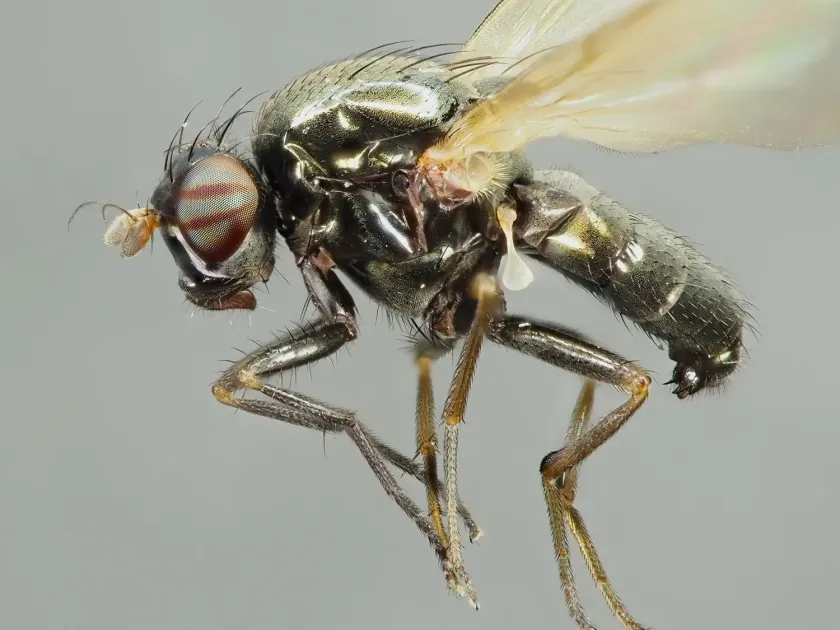
Calliopum aeneum is a species belonging to the family Lauxaniidae within the order Diptera. The adult is a small fly, typically measuring between 3 to 5 mm in length.
The insect possesses a characteristic metallic or copper-bronze sheen, which serves as a key identifying feature. The body is compact, and the wings are clear with a subtle yellowish tint at the base.
The head features well-developed compound eyes, often displaying a reddish or brownish hue. The mouthparts are typical for members of this family, adapted for feeding on liquid plant-derived nutrients.
The larvae of Calliopum aeneum lead a cryptic lifestyle, developing within decaying organic matter, soil, or leaf litter. They exhibit the typical legless form of dipteran larvae with a whitish or yellowish coloration.
Identification in the field can be challenging due to their small size and resemblance to other Lauxaniidae species, necessitating entomological expertise for precise classification.
What it damages
Adult Calliopum aeneum are polyphagous and visit a wide range of cultivated and wild plants. They are most commonly observed on fruit trees, berry bushes, and various ornamental crops.
The primary damage occurs during the flowering and fruit-set stages, as the adults feed on pollen and nectar, and may also damage tender tissues of young leaves. This interferes with the pollination process.
Furthermore, the feeding sites created by the flies serve as entry points for secondary infections, including fungal and bacterial pathogens, which can lead to tissue necrosis in the affected plants.
Larvae developing in the soil primarily feed on decomposing organic material; however, under conditions of high population density, they may occasionally damage the roots of weakened plants or young shoots.
The economic impact of this species varies; while populations remain low in balanced agroecosystems, outbreaks can occur in specific settings, leading to significant yield reductions.
When it appears
Activity of adult Calliopum aeneum begins in the spring when temperatures stabilize, typically starting in May or June. The peak of their population often coincides with the flowering phase of major fruit crops.
Depending on regional climatic conditions and the availability of host plants, the species can complete one or two generations throughout the warm season.
The latter half of the summer is characterized by a gradual decline in adult activity. Insects seek shelter during the hottest parts of the day or rest during the night.
By autumn, the adult population diminishes, and the life cycle continues through the larval or pupal stages, which overwinter in the upper soil layers or under leaf litter.
Consequently, the primary monitoring period for this pest is late spring and early summer, coinciding with essential plant protection activities.
Signs of infestation
The main indicator of this pest's presence is the sight of the adult flies on flower clusters, especially during the morning or evening hours. They are frequently seen moving across leaves and flowers.
Visible damage to petals and anthers is a common sign; these parts may appear eaten or deformed, potentially leading to premature flower drop before fruit formation.
Leaves that have been fed upon by the flies may exhibit small spots or punctures that eventually develop necrotic characteristics, showing brown or black margins.
In cases of heavy infestation, a noticeable delay in fruit development, malformation, or premature fruit drop may occur as a consequence of impaired pollination.
- Deformation of flower clusters and individual blossoms.
- Presence of necrotic spots on foliage.
- Reduced fruit-set percentages.
- High density of adult flies within the tree canopy.
Control measures
The cornerstone of managing Calliopum aeneum is the implementation of cultural practices: clearing away leaf litter and organic debris significantly reduces the habitat for overwintering larvae and pupae.
Deep cultivation of soil under the canopy during the autumn helps destroy a significant portion of the overwintering population by exposing larvae to surface conditions, leading to mortality.
Chemical control is only justified during periods of high infestation. Insecticides with contact and systemic action, approved for use on fruit crops, should be applied according to local regulations.
Spraying should be timed before flowering begins or after it concludes to minimize negative impacts on essential pollinators such as bees and bumblebees.
Biological control methods involve encouraging natural predators in the garden, such as predatory beetles, spiders, and parasitic wasps, which help maintain the population density of dipterans at manageable levels.
Taxonomy
- Latin name
- Calliopum aeneum
- Order
- Diptera (flies)
- Family
- Lauxaniidae
- EPPO code
- KALLAE
Discussion
No discussions yet — be the first.