
Ghost shrimp
Callianassa affinis
Description
How to identify
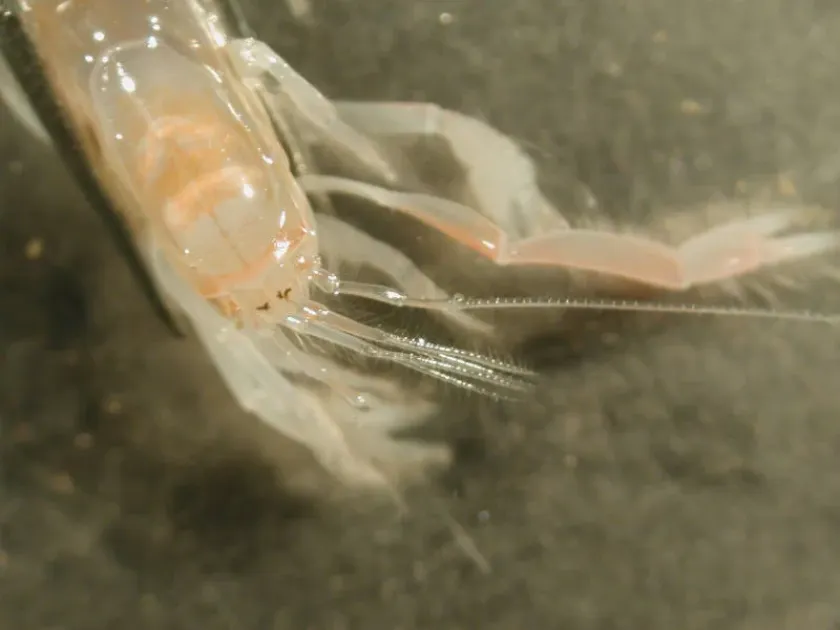
The ghost shrimp (Callianassa affinis) is a species of decapod crustacean belonging to the family Callianassidae. These organisms are adapted to a burrowing lifestyle within soft marine sediments.
Their bodies are elongated and cylindrical, usually pale beige or pinkish in color. They possess specialized claws used for constructing complex, deep burrow systems and for filtering organic matter from the sediment.
Adults typically measure only a few centimeters, but their collective burrowing activity can drastically alter the structure of the seafloor. They are essential components of the benthic ecosystem but can become problematic in controlled environments.
Identification is challenging because they spend most of their life deep beneath the sand or silt. Their presence is usually confirmed through benthic core sampling in aquaculture zones.
As a key burrowing species, they represent a significant ecological force, though they can reach pest status when their tunneling interferes with commercial aquaculture operations.
What it damages
Ghost shrimp cause direct damage to marine aquaculture infrastructure, particularly farms growing mollusks such as oysters or mussels. The primary issue is the destabilization of the substrate.
The burrowing activities of these crustaceans lead to the erosion of the seabed, which destabilizes the racks or collectors used to grow shellfish, causing equipment to sink or drift.
During the excavation of their intricate tunnel systems, ghost shrimp displace large volumes of sediment, often burying juvenile mollusks under layers of substrate, leading to high mortality rates.
Continuous disturbance of the seafloor increases water turbidity, which negatively affects the feeding processes of filter-feeding mollusks, ultimately reducing their growth rates and vitality.
These crustaceans disrupt the geochemical balance of the sediment-water interface, altering oxygen availability for bottom-dwelling species and reducing the overall productivity of the cultivated area.
When it appears
The activity level of ghost shrimp is highly dependent on water temperature, with peak activity occurring during the warmer spring and summer months.
Reproduction cycles are often synchronized with the warm season, as the increased availability of organic detritus provides the necessary nutrition for larval development.
During the autumn and winter, as temperatures drop, the metabolic rate of these crustaceans slows down, leading to reduced burrowing activity, though the tunnels remain structurally intact.
Monitoring populations is most effective at the beginning of the growth season to implement preventive measures before the shrimp can cause significant damage to the equipment.
Climate change and rising sea temperatures are extending the active periods of these crustaceans, potentially increasing their impact on marine farming operations.
Signs of infestation
The most recognizable sign of an infestation is the presence of characteristic cone-shaped mounds of sediment on the seabed surface, indicating the exits to their complex burrow systems.
A loose, unstable, or "fluffy" seafloor that erodes easily under minor currents is a strong indicator of a dense population of burrowing crustaceans in the area.
A sudden decline in the survival rate of juvenile shellfish often correlates with high levels of burrowing activity observed in the immediate vicinity of the farming structures.
Underwater video surveillance can reveal small, distinctive holes in the sediment, which correspond to the size of the shrimp and the diameter of their tunnels.
Frequent equipment sinking or structural instability in mollusk farming cages is a reliable indicator that the underlying sediment is being extensively reworked by ghost shrimp.
Control measures
Managing ghost shrimp is difficult due to their deep-burrowing habits; therefore, the focus is placed on modifying the aquaculture environment to minimize their impact.
Installing protective barriers or geotextiles on the seafloor can stabilize the substrate, making it less conducive to burrowing and restricting the movement of shrimp into the farm area.
Regular maintenance, including the cleaning and relocation of farming equipment to new, undisturbed sites, helps reduce local population pressure and prevents excessive habitat damage.
Biological control strategies may involve encouraging the presence of natural predators, such as specific fish species or larger crustaceans, to keep the population within manageable limits.
Chemical control is generally restricted by environmental regulations in aquaculture; therefore, physical and site-management interventions remain the most effective and sustainable options.
Taxonomy
- Latin name
- Callianassa affinis
- Family
- Callianassidae
- EPPO code
- CLLNAF
Discussion
No discussions yet — be the first.