
Caliothrips
Caliothrips
Description
How to identify
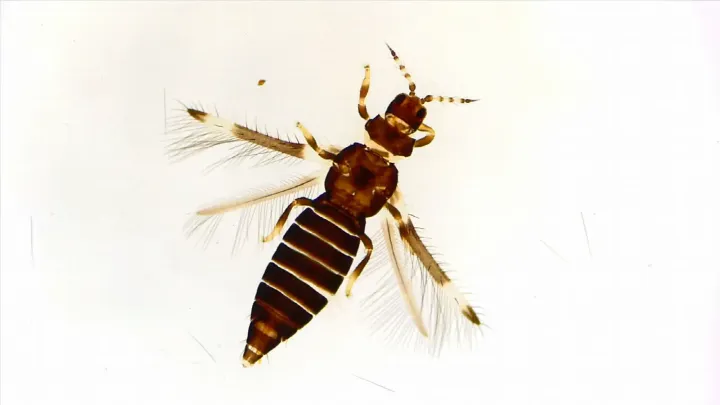
Caliothrips is a genus of thrips belonging to the family Thripidae, known for being significant agricultural pests in many regions of the world.
Adult Caliothrips are small, typically measuring 1–1.5 mm in length, and are easily distinguished by their dark body color and reticulated wing patterns.
They possess mouthparts specifically adapted for piercing plant tissues and sucking out the cell contents, which characterizes their feeding behavior.
The life cycle includes egg, larva, prepupa, pupa, and adult stages, with larvae being the most active feeding stage on the underside of plant leaves.
Accurate identification usually requires microscopic examination of the antennae and specific body setae to differentiate them from other thrips species found in the field.
What it damages
These insects attack a wide range of host plants, including soybeans, cotton, corn, and various legumes, causing significant economic losses.
Feeding results in the destruction of mesophyll cells, leading to characteristic silvering or bronzing of the leaves, which impairs photosynthesis.
Severe infestations often cause leaf curling, premature yellowing, and eventual leaf drop, which stunts the plant's growth and reduces fruit production.
Furthermore, Caliothrips can act as vectors for various plant viruses, introducing pathogens that further compromise the health and yield of the crop.
Yield quality is negatively impacted as well, with damaged crops showing reduced seed weight and lower overall market value due to cosmetic and physiological defects.
When it appears
The seasonal appearance of Caliothrips is closely tied to rising temperatures, with populations typically beginning to build up in late spring and early summer.
Dry, hot weather conditions are particularly favorable for their development, leading to rapid population explosions in mid-summer when crops are at peak growth.
As autumn approaches and temperatures decrease, adults seek refuge in soil crevices or under decaying organic matter to overwinter.
Multiple generations can occur within a single growing season, making consistent monitoring essential for managing population outbreaks.
Field scouting should be intensified during sensitive phenological stages, such as flowering and pod development, to detect early signs of pest pressure.
Signs of infestation
The primary visual sign of a Caliothrips infestation is the presence of silvery, bleached spots on the upper leaf surface caused by tissue destruction.
Small, dark, tar-like spots scattered on the underside of leaves are a diagnostic indicator, representing the excrement deposited by the feeding thrips.
Deformed or withered flower buds and premature blossom drop are common indicators of heavy infestation that directly impact final crop yields.
Stunted overall plant height and general yellowing of the foliage indicate systemic stress caused by prolonged feeding pressure on the plant.
In cases of severe infestation, the plant may show reduced vigor, making it more susceptible to additional environmental stressors or secondary infections.
Control measures
Integrated Pest Management (IPM) is the best approach, starting with good agricultural practices like crop rotation and the removal of reservoir weeds.
Chemical control should rely on the judicious application of systemic insecticides that target the larvae and adults while minimizing impact on beneficial insects.
Proper timing of applications is critical; treating the crop before the population reaches an economic threshold is key to preventing major damage.
Field borders and irrigation management can also play a role in reducing the attractiveness of the environment to thrips populations.
- Monitoring with blue or yellow sticky traps.
- Preserving natural predators like lacewings and predatory mites.
- Ensuring optimal plant health through balanced fertilization.
- Deep plowing post-harvest to disrupt overwintering sites.
Taxonomy
- Latin name
- Caliothrips
- Order
- Thrips
- Family
- Thripidae
- EPPO code
- CALHSP
Discussion
No discussions yet — be the first.