
Cacoecia leafrollers
Cacoecia
Description
How to identify
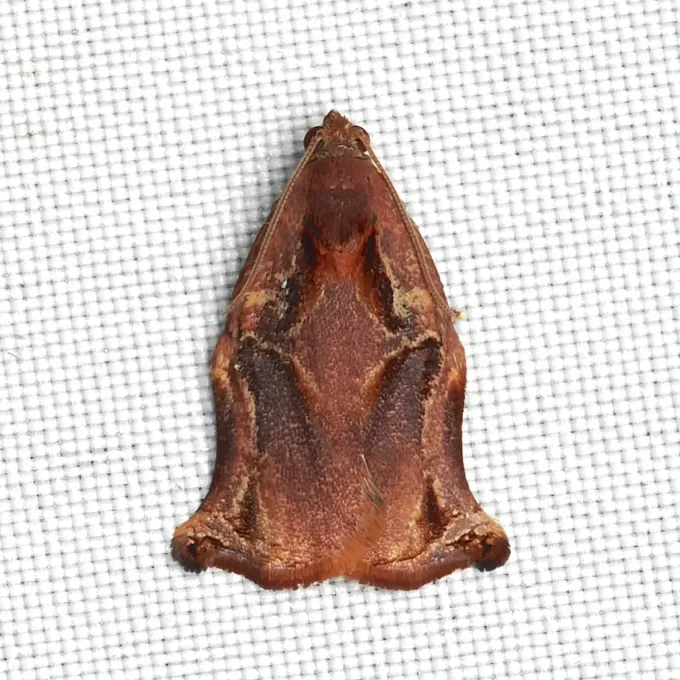
The Cacoecia genus belongs to the Tortricidae family, order Lepidoptera. Adult moths have a wingspan of 18–28 mm, with forewings typically displaying brown, tan, or ochre patterns, often resembling leaves or bark when at rest.
The larvae (caterpillars) are the primary damaging stage. They feature a cylindrical body, a distinct sclerotized head, and a color range from pale yellow-green to dark olive, which provides excellent camouflage.
Pupae are generally dark brown and are found within leaf rolls or bark crevices. The species typically overwinter as young larvae in silk-lined hibernacula located in protected spots on the tree trunks.
The life cycle involves complete metamorphosis: egg, larva, pupa, and adult. Eggs are laid in clusters, often covered by a protective substance that hardens into a scale-like shield, making them resistant to contact pesticides.
Accurate identification of Cacoecia species is essential, as they share morphological traits with other leafroller genera. Diagnostic examination of male genitalia or pheromone trapping is often required for precise species confirmation.
What it damages
Larvae are polyphagous, meaning they feed on a wide variety of hosts. They cause significant damage to pome and stone fruits, including apple, pear, plum, cherry, and apricot trees, reducing both yield and quality.
Besides fruit trees, these pests frequently infest forest trees like oak, maple, and hazelnut, which act as secondary reservoirs that facilitate constant re-infestation of orchards throughout the season.
During outbreaks, larvae consume buds, flowers, and young foliage, severely impacting the plant's photosynthetic capacity and weakening the tree's overall vigor and winter hardiness.
Larvae often feed on the developing fruit, leaving deep cavities that serve as entry points for rot-causing fungi, such as Monilinia species, which can destroy a large portion of the harvest.
In ornamental plants and nursery stock, the aesthetic damage caused by leaf skeletonizing and deformation can render the plants unsellable, resulting in direct economic losses for growers.
When it appears
Larval activity begins in early spring, coinciding with the "green tip" stage of apple development. They emerge from hibernation to feed on swelling buds and young, unfolding leaves.
The first flight of adults typically occurs in late spring or early summer. This period is critical for setting up monitoring traps to determine the timing of insecticide applications.
The highest damage levels usually occur in mid-summer due to the second generation of larvae, which are highly mobile and tend to feed on both leaves and fruit simultaneously.
A second generation of adults appears later in the summer to mate and lay eggs, which will enter winter diapause, completing the seasonal cycle of the pest.
Temperature and moisture levels strongly influence developmental speed. Warm, humid summers often lead to higher survival rates and faster generation turnover, significantly increasing the pest pressure.
Signs of infestation
The most diagnostic sign of an infestation is the presence of leaves rolled into tight cylinders, cones, or irregular clusters held together by silk webbing produced by the larvae.
- Buds that fail to open or appear desiccated.
- Skeletonized leaves showing a patchy, window-like appearance.
- Deep, irregular feeding scars or gouges on the surface of ripening fruits.
- Presence of frass (larval excrement) trapped within webbing.
Caterpillars often web a leaf against a fruit surface, creating a sheltered feeding environment. This protects them from predators and pesticides while they tunnel into the fruit's skin.
In spring, early-stage damage may be confused with frost injury, as damaged buds wither and turn brown before reaching the flowering stage, potentially leading to missed treatment opportunities.
Premature fruit drop is a common indicator of infestation, especially when larvae have tunneled into the stem or the central core of the fruit, causing the plant to abort the damaged crop.
Control measures
Cultural control involves mechanical removal of hibernacula during winter pruning and the destruction of heavily infested shoots, which helps reduce the initial pest population density.
Biological control focuses on conserving natural enemies such as parasitic wasps (e.g., Trichogramma), lacewings, and predatory beetles that keep populations in check naturally.
Chemical intervention should be timed to target the larvae before they construct protective leaf rolls. Once the leaf is curled, it becomes nearly impossible for spray coverage to reach the pest.
Pheromone traps are essential for monitoring. Growers should use these to establish a threshold of trap catches before deciding to apply broad-spectrum insecticides, thus preserving beneficial insects.
Resistance management is crucial. Rotate chemical classes—such as organophosphates, carbamates, and insect growth regulators—to prevent the development of pesticide resistance within the local population.
Taxonomy
- Latin name
- Cacoecia
- Order
- Lepidoptera (butterflies)
- Family
- Tortricidae
- EPPO code
- CACOSP
Discussion
No discussions yet — be the first.