
Pill beetle
Byrrhus pilula
Description
How to identify
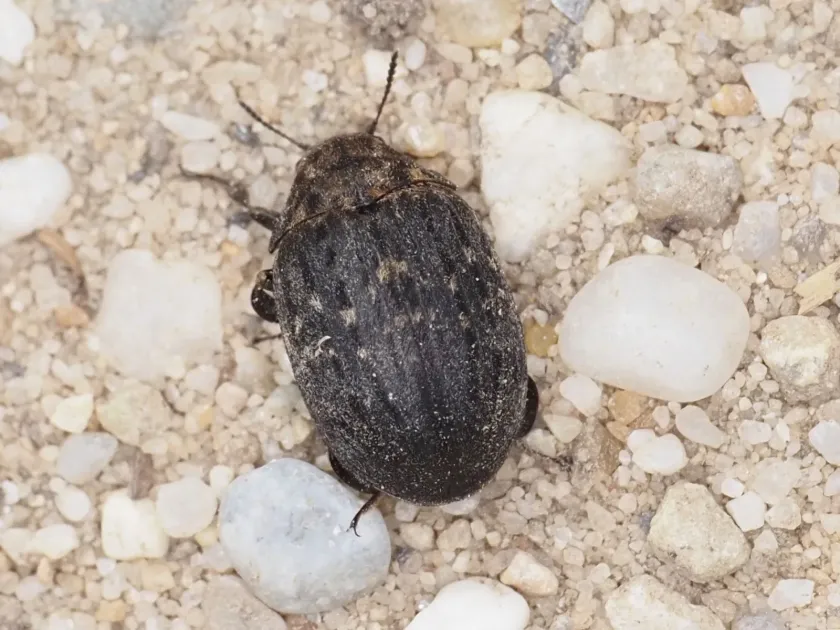
The pill beetle (Byrrhus pilula) is a small beetle, typically measuring between 7 and 10 millimeters in length. It is characterized by its distinctively oval, highly convex body shape, which resembles a pill, giving the species its common name.
The coloration of the beetle ranges from dark brown to nearly black, often displaying a subtle metallic bronze sheen. The elytra are covered in dense, short, appressed hairs, which may occasionally form a faint, mottled pattern on the surface.
A notable behavioral trait of this beetle is its defensive mechanism: when threatened, it pulls its legs and antennae tightly against its body. This renders it almost seamless and immobile, resembling a small pebble or seed, which helps it evade potential predators.
The larvae possess a fleshy, slightly curved, creamy-white body with a distinctively darker, brownish head. They are equipped with well-developed thoracic legs, allowing them to move efficiently through the soil or dense moss mats.
While the adult beetles have well-developed eyes, they are largely secretive and nocturnal. They prefer shaded or damp environments and are commonly found in sandy soils, fields, and habitats with abundant moss cover.
What it damages
The primary food source for both adult and larval pill beetles consists of terrestrial mosses. They feed on the vegetative parts of these bryophytes, often causing significant damage to mossy turf in areas where they congregate in large numbers.
In agricultural settings, this pest can occasionally become a threat to young seedlings of vegetable and grain crops. While not a specialized crop pest, they may damage the basal parts of stems when their preferred food source is scarce.
Damage symptoms typically include irregular gnawing marks on the leaves of young sprouts or the scraping of tissue at the base of the stem. This weakens the plant, leading to stunted growth and increased susceptibility to stress.
Greenhouse operations and nurseries are particularly vulnerable to pill beetle infestations. The combination of high humidity and organic debris creates an ideal environment for the beetles to multiply and cause damage to young, tender plants.
Beyond direct tissue consumption, the insects contribute to the overall weakening of the plant's defense system. This makes the seedlings more susceptible to secondary fungal infections that can enter through the damaged surface areas.
When it appears
Adult activity begins early in the spring as soon as the top layer of soil starts to warm up. The peak of their population density usually occurs during May and June, which marks their primary mating season.
Larvae develop throughout the summer months, feeding continuously on mosses and decomposing organic matter in the soil. The life cycle of a single generation typically lasts approximately one year, ensuring population stability under favorable conditions.
Pupation usually takes place within the soil or among dense vegetation during the second half of the summer. Adults of the new generation emerge by late summer or early autumn, actively preparing for the overwintering period.
The species primarily overwinters in the adult stage. They seek refuge in the soil, under rocks, beneath fallen leaves, or within thick grassy clumps, allowing them to survive cold winter temperatures successfully.
The spring emergence of the beetle coincides with the initial growth of early-season weeds, which provide temporary shelter and sustenance until cultivated crops become available in the fields.
Signs of infestation
The first sign of pill beetle presence is the appearance of small, jagged holes on the edges of seedling leaves. Damage often manifests as tiny pits or abrasions on the stem tissue near the ground level.
If you inspect your garden in the early morning, you may notice motionless beetles near the affected plants. Due to their "feigning death" behavior, they can be difficult to spot during a cursory visual inspection.
The presence of large moss patches on or around garden beds is a reliable indicator of conditions favorable for pill beetle infestation. Moss provides them with both the necessary moisture and their primary food source.
Wilting, yellowing, or the sudden lodging of young sprouts—especially when no signs of fungal root rot are present—may indicate mechanical damage to the roots or crown caused by the larvae.
Finding adult beetles in pitfall traps or observing them while digging the soil during the off-season serves as definitive proof of their presence, necessitating immediate preventive measures.
Control measures
Effective management begins with agrotechnical measures aimed at reducing weed pressure. Regular weeding and the removal of moss from garden beds effectively strip the beetles of their primary food and shelter source.
Deep autumn tillage of the soil is an effective way to destroy overwintering sites for both adults and larvae. This disrupts their life cycle and exposes them to natural predators, such as birds, and harsh winter conditions.
The application of biological control agents, such as entomopathogenic fungi, can be a safe and effective way to manage population levels without relying on harsh chemical pesticides.
In cases of severe infestation, contact-stomach insecticides may be utilized. Always strictly follow the application instructions and avoid using chemicals immediately before the harvest to ensure safety.
- Practice crop rotation to disrupt the beetles' feeding cycle.
- Clear all plant debris from the field immediately after harvest.
- Use mulch or ground cover to inhibit moss growth and restrict beetle access to plant stems.
Taxonomy
- Latin name
- Byrrhus pilula
- Order
- Coleoptera (beetles)
- Family
- Byrrhidae
- EPPO code
- BYRRPI
Discussion
No discussions yet — be the first.