
Yellow-billed oxpecker
Buphagus africanus
Description
How to identify
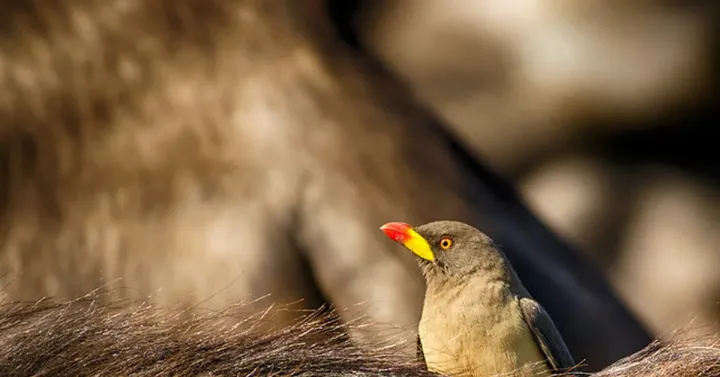
The yellow-billed oxpecker is a member of the Sturnidae family within the order Passeriformes. It is defined by its distinct heavy bill, which is yellow at the base and red at the tip, designed for grooming large mammals.
The bird possesses highly specialized sharp, curved claws that allow it to cling vertically to the hides of various mammals, even while the host is running or grazing.
Its plumage is predominantly earthy brown and grey, providing essential camouflage against the hide of cattle or wild herbivores in the African savannah environment.
A notable facial feature is the bright red eye-ring, which distinguishes this species from others and helps in rapid visual identification within large herds.
These birds live in tightly knit flocks and exhibit strong site fidelity, often remaining with the same herds for extended periods of time to exploit available food sources.
What it damages
While often perceived as beneficial, these birds can become pests by feeding on the blood and tissue of livestock, effectively turning wounds into open, slow-healing sores.
By constantly pecking at minor injuries, the birds prevent natural scarring and create entry points for dangerous pathogens, leading to secondary bacterial or parasitic infections.
The persistent presence of oxpeckers causes significant behavioral stress in cattle, which disrupts natural grazing patterns and decreases overall metabolic efficiency and weight gain.
Livestock constantly bothered by the presence of these birds exhibit reduced milk production, negatively impacting the profitability of dairy farms operating in infested zones.
Skin damage caused by repeated pecking leads to permanent scars on the hides, which significantly lowers the market value of raw materials produced by the livestock sector.
Control measures
Effective control strategies involve the use of livestock shelters during peak bird activity hours to minimize the duration of interaction between the flock and the herd.
Topical application of veterinary-grade repellent sprays on the coat of cattle has proven effective in discouraging oxpeckers from landing and pecking the skin.
Aggressive management of existing skin wounds, including the use of antiseptic bandages or temporary isolation of injured animals, is critical to stop the attraction of bird flocks.
Integrated pest management systems, including automated sonic repellers installed in grazing areas, help to maintain a safe distance between birds and sensitive livestock.
Proactive herd monitoring allows farmers to identify early stages of bird-inflicted damage and implement corrective measures before significant tissue destruction occurs.
Taxonomy
- Latin name
- Buphagus africanus
- Family
- Buphagidae
- EPPO code
- BPHGAF
Discussion
No discussions yet — be the first.