
Oxpeckers
Buphagus
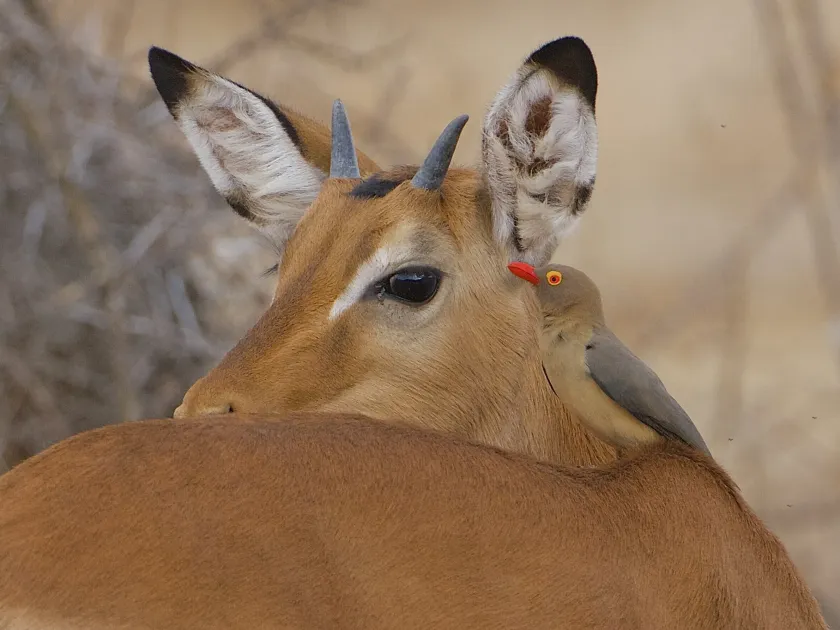
Description
How to identify
Oxpeckers (genus Buphagus) belong to the order Passeriformes and the family Buphagidae. These birds are uniquely adapted for a life spent primarily on the backs of large mammals, moving across their hosts with ease.
They are characterized by strong, compressed beaks and sharp, curved claws that provide a secure grip on the hide of their host animals. Their plumage is generally muted, typically earth-toned, which helps them remain inconspicuous while foraging.
Oxpeckers are highly social birds that travel in flocks, consistently shadowing herds of cattle or wild ungulates. Their biology is deeply intertwined with the presence of large mammals, making them a fixture in many grazing ecosystems.
Unlike common insectivorous birds, oxpeckers exhibit specialized feeding behaviors that include the consumption of blood and tissue. This behavior is the primary reason why they are categorized as pests in intensive agricultural settings.
The birds possess a stiff tail that acts as a prop, similar to woodpeckers, allowing them to cling to the sides of animals during active movement. This evolutionary adaptation makes them remarkably difficult to dislodge.
What it damages
The primary damage caused by oxpeckers is the physical wounding of livestock. While they do consume ticks, they frequently exacerbate existing wounds or create new ones by pecking at the skin, hindering the healing process significantly.
By constantly feeding on blood and lymph, oxpeckers turn minor abrasions into deep, weeping sores. These open wounds attract secondary pests like flies, leading to further irritation and increasing the risk of infection.
In the agricultural sector, the damage to the hide of cattle represents a significant financial loss, as the scarred or torn skin loses its commercial value. This is a major concern for farmers managing high-quality beef or dairy herds.
Oxpeckers cause substantial stress to livestock, which directly impacts productivity. The constant movement of birds across the animal's body and their piercing alarm calls interfere with the cattle’s ability to rest and graze peacefully.
This chronic stress leads to reduced growth rates and lower milk yields. Furthermore, their role as carriers of bacteria between animals in a herd poses a constant risk to the overall health status of the livestock management system.
Signs of infestation
One of the most obvious signs of oxpecker activity is the restless behavior of the herd. Animals often twitch, run, or attempt to shake off the birds, which disrupts the normal grazing routine and increases energy expenditure.
Upon examination, livestock will display fresh or chronic lesions, particularly around the ears, eyes, and back. These sores are frequently kept open by the persistent pecking of the birds throughout the day.
The presence of large flocks circling or landing on the herd is an immediate indicator of a pest pressure problem. Additionally, bird feathers found near watering holes or resting areas are evidence of their sustained presence.
Increased fly activity around specific animals within the herd often signals the existence of open wounds maintained by oxpeckers. This creates a cycle where secondary parasites flourish due to the initial damage caused by the birds.
Reduced weight gain and signs of irritability in the herd are critical indicators that the birds are significantly disrupting the welfare of the cattle, necessitating an immediate intervention strategy.
Control measures
Effective control involves the use of specialized repellent pour-on treatments for livestock. These substances are formulated to deter birds from landing on the animals while remaining safe for the cattle's health.
Veterinary management is crucial; prompt treatment of all skin abrasions with antiseptic and protective ointments prevents the birds from accessing blood and tissue, eventually forcing them to look for alternative feeding grounds.
Auditory deterrents, such as systems that broadcast predator calls, are highly effective in keeping oxpecker flocks away from livestock pens and grazing fields without harming the birds.
Integrated pest management should include the control of ticks and other skin parasites. By reducing the tick population on the livestock, the primary incentive for oxpeckers to visit the herd is largely removed.
Implementing rotational grazing and moving herds to different locations can break the cycle of habituation. Combining these agricultural techniques with consistent health monitoring ensures that the impact of oxpeckers remains minimal.
Taxonomy
- Latin name
- Buphagus
- Family
- Buphagidae
- EPPO code
- BPHGSP
Discussion
No discussions yet — be the first.