
Bryobia mite
Bryobia praetiosa
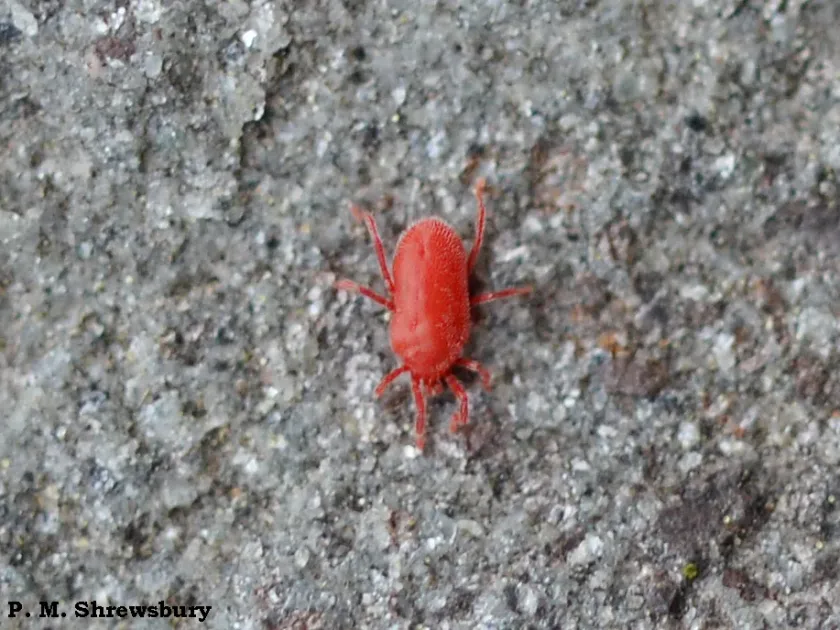
Description
How to identify
Bryobia praetiosa, commonly known as the clover mite, is a member of the Tetranychidae family. The adult mite is characterized by its brownish-red oval body and a distinct pair of elongated front legs that facilitate rapid movement across leaf surfaces.
The eggs are bright red and typically laid in clusters within bark crevices or on the stems of host plants. The mite primarily overwinters in the egg stage, which serves as a biological safeguard against harsh winter temperatures.
Its life cycle is heavily influenced by environmental factors such as temperature and humidity. Under optimal conditions, the mite can produce several generations throughout a single growing season.
Unlike many other spider mites, this species does not spin dense webs. This absence of visible silk often makes initial infestations go unnoticed until significant damage to the plant has already occurred.
These mites are polyphagous and demonstrate a high degree of mobility, easily moving from ground-level vegetation like clover and grasses to garden shrubs and trees when environmental conditions allow.
What it damages
The pest affects a diverse range of plants, including fruit trees such as apple and pear, various ornamental shrubs, and lawn grasses. It is a frequent concern for nursery stock and landscape plants.
By feeding on the cellular sap, the mites create microscopic puncture wounds in the leaf epidermis. This feeding pattern causes the leaves to develop a characteristic stippling effect, often appearing as pale or grey spots.
Severe infestations lead to a substantial reduction in chlorophyll, which impairs the plant's photosynthetic capacity. As a result, the plant loses vigor, growth rates decline, and overall productivity is compromised.
Leaves that are heavily damaged may turn yellow or brown, eventually drying out and dropping prematurely. This damage significantly detracts from the plant's aesthetic value and structural health.
Continued stress from mite feeding during the active season leaves plants susceptible to secondary infections and reduces their ability to store energy for successful overwintering.
Signs of infestation
The earliest sign of an infestation is a fine, mottled, or stippled appearance on the upper surface of leaves. These small white or yellowish dots eventually expand as the mite population increases.
The presence of small, bright red eggs in protected spots like bark crevices or leaf axils is a clear indicator that the mites have established a colony in the immediate vicinity.
Leaf curling and deformation of new, tender growth often indicate a high density of mites feeding on the succulent tissues of the plant.
An unexpected yellowing of leaves in mid-summer, despite adequate watering, is a strong diagnostic sign of mite feeding, necessitating a closer inspection with a magnifying glass.
Since this mite does not spin webs, gardeners should monitor for the mites themselves, particularly during sunny and dry periods when they are most active on the leaf surface.
Control measures
Integrated pest management begins with good cultural practices, such as removing weeds that serve as alternate hosts and keeping the garden environment clean to reduce overwintering sites.
When monitoring shows that mite populations exceed economic thresholds, the use of targeted acaricides is necessary. It is crucial to rotate chemical classes to prevent the development of mite resistance.
Dormant oil sprays applied in early spring are highly effective at neutralizing overwintering eggs, which significantly reduces the initial pest pressure at the start of the season.
Maintaining proper soil moisture and promoting plant health through irrigation can discourage infestations, as these mites typically favor hot, dry, and drought-stressed conditions.
Encouraging natural predators, including phytoseiid mites, lacewings, and lady beetles, provides biological control that can keep Bryobia populations at manageable levels without heavy chemical reliance.
Taxonomy
- Latin name
- Bryobia praetiosa
- Order
- Mites
- Family
- Tetranychidae
- EPPO code
- BRYOPR
Discussion
No discussions yet — be the first.