
Bee louse
Braula coeca
Description
How to identify
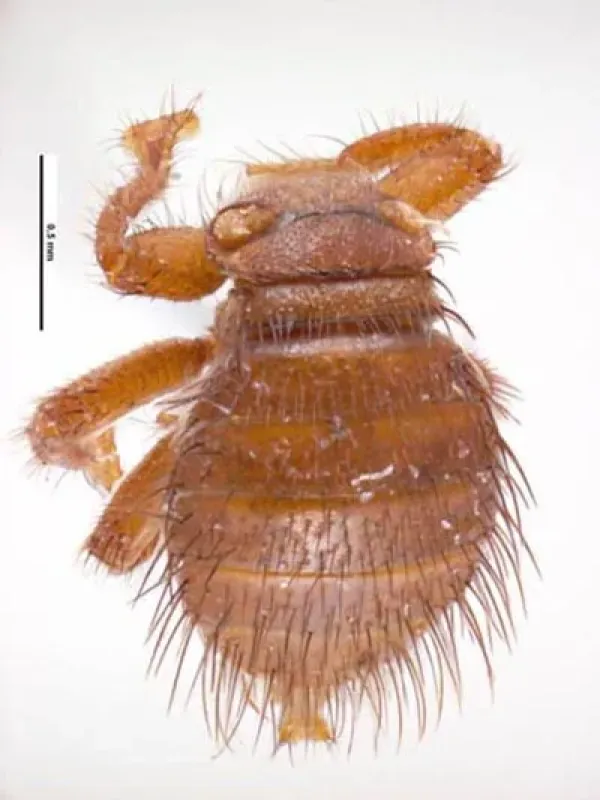
The bee louse, known scientifically as Braula coeca, is a small wingless insect of the order Diptera, family Braulidae. Adult specimens measure approximately 1.5 mm and feature a reddish-brown body covered in dense bristles.
This insect is an obligate parasite of the honey bee. Having evolved to live permanently on the host, the bee louse is completely wingless, and its eyes are reduced, reflecting its specialized niche.
The louse’s legs are equipped with comb-like claws that allow it to anchor itself firmly onto the bee's hairs, even during flight. This biological adaptation enables the pest to spread rapidly between hives and colonies.
The life cycle occurs entirely within the honeycomb, where larvae tunnel through the wax cappings. The development stages include egg, larva, pupa, and adult, all taking place inside the bee colony.
To identify the parasite, beekeepers should inspect the thorax and abdomen of bees, particularly the queen, where these lice often aggregate to wait for food sharing from the host.
What it damages
The primary hosts for Braula coeca are honey bees and their queens. Significant damage occurs in colonies with high infestation rates, leading to severe stress and physical exhaustion of the host insects.
The queen suffers most, as constant irritation by the parasites disrupts her feeding, resulting in reduced egg-laying capacity or, in severe cases, the complete cessation of brood production.
Worker bees infested with bee lice show signs of fatigue and reduced vigor, which negatively impacts their foraging efficiency and reduces their overall lifespan within the colony.
Larval tunneling ruins the wax cappings of honey cells. This loss of hermetic sealing can lead to honey leakage and reduces the aesthetic and commercial quality of the harvested honeycombs.
Prolonged infestation weakens the collective immune response of the bee colony, making the bees more susceptible to secondary infections and other opportunistic bee diseases.
When it appears
The activity of the bee louse is closely tied to the internal hive temperature and the reproductive status of the colony. During spring and summer, the parasite reproduces rapidly.
Peak infestation usually occurs in late summer and early autumn. In heavily infested hives, dozens of adult lice can be found on a single bee, straining the colony’s resources.
During the winter cluster, the parasite’s activity slows, but it continues to feed on the bees, which can diminish the bees' energy reserves needed to survive the winter months.
As soon as warm weather arrives in spring and the queen resumes active brood rearing, the overwintered females begin laying eggs in fresh combs, starting the cycle anew.
The dispersal of the pest across an apiary is accelerated by routine beekeeping practices, such as transferring frames between hives, which allows infected bees to hitch a ride into healthy colonies.
Signs of infestation
Presence of the bee louse is easily confirmed through visual inspection of the bees. The queen is the most common target and may host hundreds of these reddish parasites at once.
A key indicator is the presence of fine, winding tunnels on the surface of wax cappings. These are created by larvae feeding on the wax and debris underneath the seal.
Beekeepers may also notice unusual wax debris on the hive floor or landing board, resulting from the larvae breaking the wax cappings during their developmental stage.
If the queen shows signs of erratic movement and decreased egg production, accompanied by visible reddish-brown spots on her body, immediate action is required to manage the infestation.
- Presence of small reddish-brown lice on the bee thorax.
- Visible winding tunnels in wax cappings.
- Debris from broken wax cappings on the bottom board.
- Reduced queen performance and colony vigor.
Control measures
Traditional control methods include using smoke from naphthalene or specialized acaricide strips, which irritate the lice and cause them to drop from the bees onto the hive floor.
Phenothiazine treatment is a common recommendation for effective management. When applied according to strict dosage guidelines, it successfully paralyzes the parasites, causing them to fall onto a debris trap.
Regular maintenance of the hive bottom boards is essential. Removing and incinerating wax debris helps eliminate larval and pupal stages of the pest residing in the waste material.
Strict hygiene protocols should be maintained when working in the apiary to prevent the accidental transmission of infested frames from affected colonies to healthy ones.
Proactive management includes keeping colonies strong and ensuring adequate nutrition, which empowers the bees to better withstand parasitic pressure and maintain overall health.
Taxonomy
- Latin name
- Braula coeca
- Order
- Diptera (flies)
- Family
- Braulidae
- EPPO code
- BRAUCO
Discussion
No discussions yet — be the first.