
Brown-throated sloth
Bradypus variegatus
Description
How to identify
The brown-throated sloth Bradypus variegatus is a species within the Pilosa order, specifically belonging to the Bradypodidae family, known for its slow movement and primarily folivorous diet.
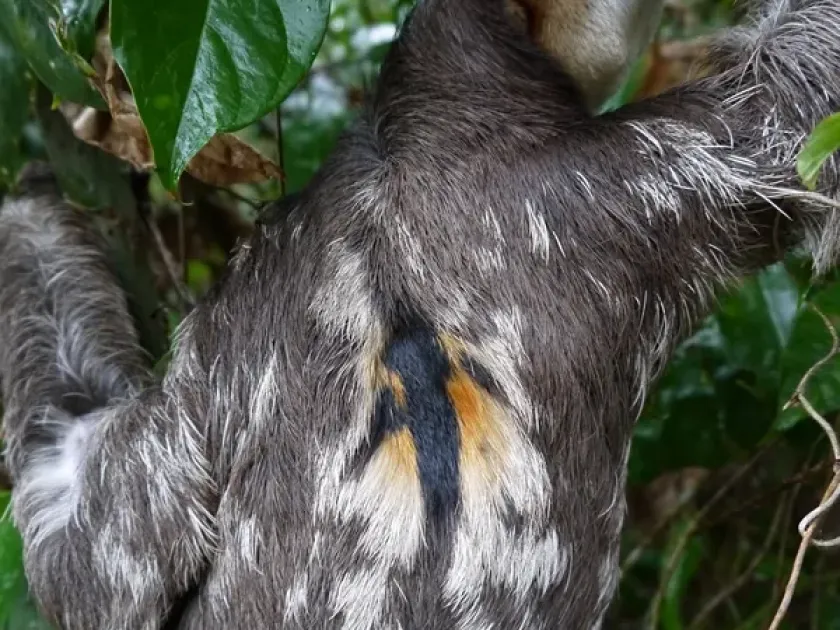
These animals are characterized by coarse, thick fur that often hosts symbiotic algae, providing a greenish hue that serves as camouflage within their natural forest canopy environment.
The species features strong, curved claws that allow for a secure grip on branches, which they use to navigate effectively through treetops and occasionally onto agricultural plantations.
Adult specimens can weigh several kilograms and have a high metabolic requirement for fibrous leaf material, which drives them to consume large quantities of foliage daily.
Identification is aided by the distinct dark mask-like stripe across the eyes, a morphological trait that persists across different populations in their tropical range.
What it damages
In tropical agriculture, this species frequently impacts cacao, citrus, and various fruit-bearing trees by consuming leaves, buds, and young, tender shoots.
Feeding damage can lead to significantly stunted growth in young saplings, as the removal of excessive leaf tissue reduces the plant's photosynthetic capacity.
Beyond direct consumption, the animal's weight can cause structural damage, such as breaking limbs, which makes the tree more susceptible to fungal pathogens and pests.
The cumulative effect of repeated feeding cycles leads to decreased tree vigor and potential yield loss, posing a financial challenge to plantation managers.
Young plantations are particularly vulnerable to this type of browsing, necessitating consistent monitoring to prevent severe localized deforestation of crops.
Control measures
Effective management focuses on physical exclusion methods that prevent the animals from climbing the stems of vulnerable orchard trees.
Installing slick metallic collars or baffles around tree trunks serves as a primary non-lethal deterrent, as the sloth's claws cannot gain purchase on smooth surfaces.
Maintaining clear boundaries between plantations and native forests can reduce the frequency of sloth incursions into agricultural fields.
Strategic pruning and canopy management can also limit the ease of movement for sloths between individual trees, effectively isolating them from the crop.
- Install smooth metallic trunk guards
- Maintain buffer zones around plantations
- Regular monitoring for signs of damage
- Implement canopy isolation strategies
Taxonomy
- Latin name
- Bradypus variegatus
- Family
- Bradypodidae
- EPPO code
- BRDPVA
Discussion
No discussions yet — be the first.