
Sloth
Bradypus
Description
How to identify
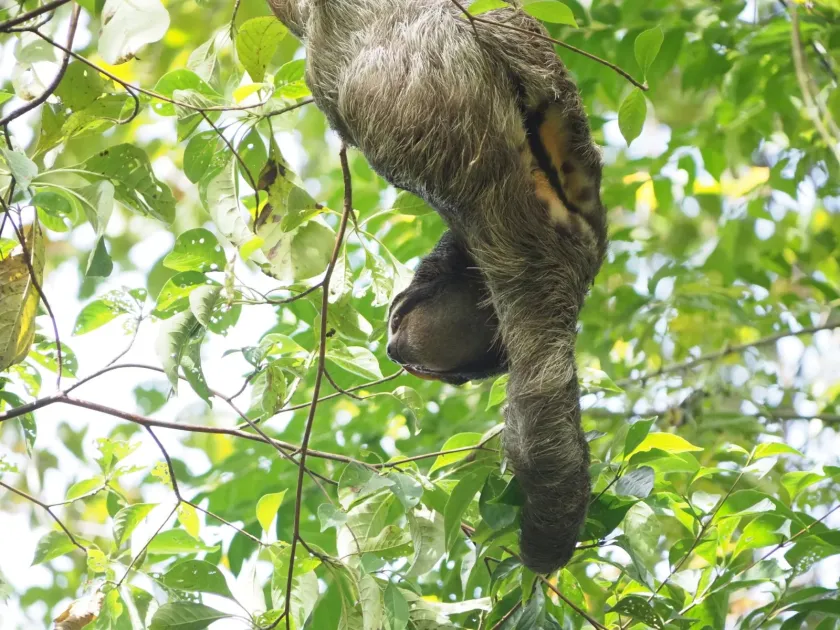
Sloths (genus Bradypus) belong to the order Pilosa, specifically the family Bradypodidae. They are arboreal mammals primarily found in the tropical rainforests of South and Central America.
Their anatomy is highly specialized for climbing, featuring long, curved claws that act as hooks. Their fur often harbors symbiotic algae, providing essential camouflage against predators in their natural habitat.
The metabolism of these animals is incredibly low, which dictates their slow lifestyle and energy-saving behaviors. This biological limitation keeps them stationary for long periods.
Their reproduction rate is very slow, with offspring reaching maturity over an extended period, which prevents the species from overpopulating specific areas.
In the context of agronomy, sloths are not recognized as pests. They possess no morphological or behavioral traits that would classify them as threats to cultivated crops.
What it damages
Sloths do not feed on commercial crops like maize, rice, or soybeans. Their dietary requirements are strictly limited to the leaves of specific tropical trees such as Cecropia.
There is no documented evidence of sloths causing significant economic damage to agricultural systems or plantations through herbivory or destruction.
While an individual sloth might occasionally be found in a tree located near a farm, they do not exhibit the traits of typical crop-destroying organisms.
Potential mechanical damage to young saplings, caused by the animal's weight, is statistically negligible and does not warrant any specific intervention measures.
Agronomically speaking, the impact of sloths on farming operations is effectively zero, distinguishing them from true agricultural pests that require mitigation.
Control measures
No pest control strategies are designed for sloths, as they do not constitute a threat to agricultural productivity or crop yield.
The best practice is to maintain peripheral forest buffers, ensuring the animals remain within their natural, sustainable habitats instead of entering agricultural zones.
If an animal is found in a cultivated area, standard procedure involves non-harmful relocation to the nearest forested area, respecting local wildlife protection laws.
The use of pesticides, traps, or chemical repellents is entirely inappropriate and counterproductive, as these actions would have negative environmental impacts.
Maintaining biological diversity around agricultural fields is the most effective approach to coexist with local fauna without resorting to invasive pest management techniques.
Taxonomy
- Latin name
- Bradypus
- Family
- Bradypodidae
- EPPO code
- BRDPSP
Discussion
No discussions yet — be the first.