
Maple seed weevil
Bradybatus kellneri
Description
How to identify
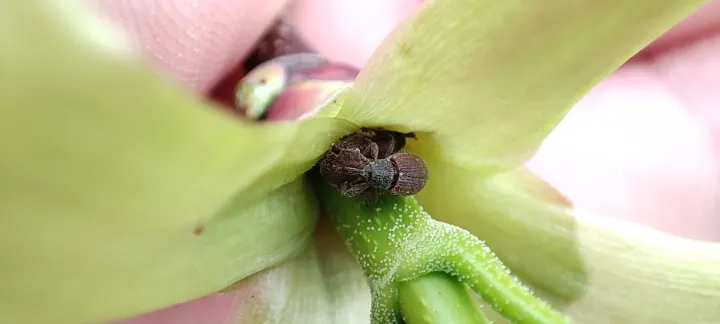
The maple seed weevil (Bradybatus kellneri) is a beetle belonging to the Curculionidae family. It is a small insect specialized in exploiting the reproductive organs of maple trees.
Adult beetles typically measure 3–4 mm in length. Their bodies are dark brown or black, densely covered with fine light-colored hairs, which act as camouflage against tree bark.
Like other weevils, they possess a distinct rostrum (snout) used for boring into plant tissues. The larvae are legless, C-shaped grubs, typically white or yellowish, adapted to life inside seeds.
The entire larval stage of this species occurs within the samara (winged fruit) of the maple tree, making them hidden from view during most of their development.
Identification often requires careful inspection of the seed crops, as the adult beetles are cryptic and rarely noticed unless specifically sampled during the flowering period.
What it damages
The primary hosts for Bradybatus kellneri are various species of Acer, including the Norway maple (Acer platanoides). The pest targets the developing seeds.
The female weevil bores a hole into the young samara to deposit her eggs. Upon hatching, the larva feeds on the interior of the seed, consuming the embryo entirely.
This feeding behavior causes total failure of the seed development. In outbreak years, the weevil can decimate the vast majority of a maple tree's seed crop.
Beyond the larval damage, adults can also feed on emerging buds and young leaves during the early spring, contributing to the overall physiological stress of the tree.
Such damage is economically significant for nurseries that rely on high-quality maple seeds for forest regeneration and ornamental tree production.
When it appears
Adults emerge from their overwintering sites, such as leaf litter or bark crevices, in early spring as temperatures rise, coinciding with the maple budding phase.
The mating and oviposition (egg-laying) period occurs during the flowering stage of the maple trees, which is the most critical time for monitoring and intervention.
Larval development takes place throughout the summer months within the developing samaras. The seeds provide both nourishment and protection from environmental stress and predators.
Pupation typically happens inside the seed or occasionally in the soil, depending on local environmental conditions and the specific developmental progress of the brood.
New generation adults emerge in late summer or early autumn, after which they seek sheltered locations to enter diapause and survive the winter months.
Signs of infestation
The most visible sign of infestation is the presence of small, perfectly circular exit holes on the surface of mature maple samaras, indicating where the beetle has exited.
Infested samaras may appear shriveled, prematurely discolored, or lighter in weight compared to healthy, fully developed seeds collected from the same tree.
Dissection of the seed reveals the larva inside or signs of feeding damage, such as hollowed-out tissue mixed with dark brown frass (waste material).
Premature abscission (drop) of maple keys is another common indicator of high infestation levels, as the tree may shed damaged seeds before they reach full maturity.
Low germination rates in laboratory testing are a reliable indicator that a seed lot has been heavily infested by the maple seed weevil.
Control measures
Effective management in nurseries includes the immediate collection and disposal of fallen seeds, which helps eliminate a significant portion of the overwintering population.
For ornamental trees, targeted insecticide applications during the flowering period can prevent oviposition, though this must be timed carefully to protect pollinators.
Biological control agents, such as parasitoid wasps that target weevil larvae, can be utilized to naturally reduce population density in forest settings.
Maintaining high tree vigor through proper pruning and water management can help trees better withstand the impacts of light insect infestations.
Seed treatment, such as cold storage or chemical fumigation, is essential for seed banks to ensure that weevil-infested materials do not spread the pest to new areas.
Taxonomy
- Latin name
- Bradybatus kellneri
- Order
- Coleoptera (beetles)
- Family
- Curculionidae
- EPPO code
- BRAAKE
Discussion
No discussions yet — be the first.