
Bradybatus
Bradybatus
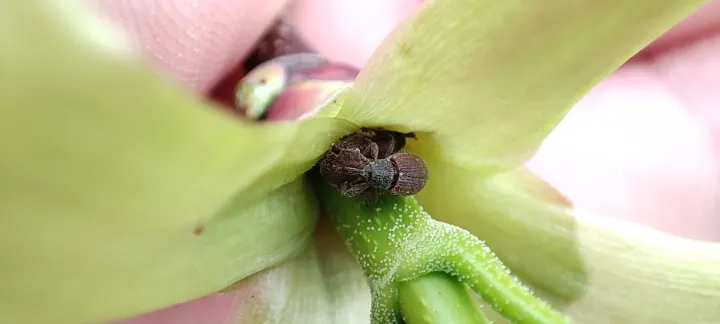
Description
How to identify
Bradybatus is a genus of weevils belonging to the Curculionidae family within the order Coleoptera. These beetles are characterized by their distinct elongated rostrum or snout.
Adult beetles are typically oval in shape and often covered with fine hairs or scales. Their coloration ranges from brown to nearly black, aiding in camouflage against tree bark.
The larvae are legless, curved, and usually whitish or cream-colored with a dark head. They lead a concealed lifestyle, developing entirely within the generative organs of host plants.
Identifying the exact species often requires microscopic examination of morphological traits due to the subtle differences between members of the genus. Field identification relies on observing damage patterns.
The lifecycle is tightly synchronized with the phenological stages of the host plants, making them highly specialized pests that depend on specific tree species for survival.
What it damages
The primary hosts for various species of Bradybatus are trees of the Aceraceae family, particularly the Norway maple (Acer platanoides).
The pest targets seeds and samaras, boring into the developing ovaries. This results in premature fruit drop or the total failure of seeds to mature properly.
Beyond maples, some species can be found on apple trees and other orchard fruits, where they damage buds and blossoms, leading to reduced overall yield.
In nurseries for decorative plants, Bradybatus activity causes significant economic losses by rendering seed stock non-viable for future propagation.
The severity of the damage is directly correlated with the population density of the pest and the favorability of weather conditions during the growing season.
When it appears
Adult activity begins in the spring as buds start to swell, marking the transition from hibernation to feeding on host plants.
The mass emergence of the beetles usually coincides with the onset of consistently warm temperatures, signaling the start of the breeding season.
Mating and oviposition occur during the formation of fruit ovaries, which is the most critical period for the survival of the next generation of larvae.
Larval development within the seeds lasts for several weeks, after which the pest either pupates inside or leaves the fruit to find a hibernation site.
The complete lifecycle of one generation is typically finished by late summer, with adults seeking shelter in soil, leaf litter, or bark crevices for overwintering.
Signs of infestation
A primary indicator of infestation is the presence of small, distinct holes in the maple samaras, through which larvae emerge or enter the seed.
Widespread dropping of immature fruits under the tree canopy is a clear symptom of internal seed damage caused by larval feeding.
Careful inspection of flower buds or young ovaries may reveal punctures made by the adult snout during feeding or while laying eggs.
Severe infestations lead to a noticeable decline in seed quality, leaving the fruits hollowed out and unsuitable for propagation or natural regeneration.
The presence of adult beetles on leaves or buds during early spring serves as a warning sign for growers to initiate monitoring and protection measures.
Control measures
Cultural control measures focus on the regular removal and destruction of fallen samaras and debris where larvae and pupae may be overwintering.
Biological control involves supporting local populations of natural enemies, such as parasitic wasps that regulate the number of weevils in the ecosystem.
In cases of high infestation, the use of systemic or contact insecticides is recommended during the adult feeding period before blooming begins.
Application must be timed carefully to avoid harming pollinators and other beneficial insects that visit the trees during the flowering stage.
- Use pheromone traps to monitor adult population dynamics.
- Apply approved pyrethroid-based insecticides during bud burst.
- Maintain healthy tree vigor through proper fertilization and pruning.
Taxonomy
- Latin name
- Bradybatus
- Order
- Coleoptera (beetles)
- Family
- Curculionidae
- EPPO code
- BRAASP
Discussion
No discussions yet — be the first.