
Brachyderes grisescens
Brachyderes grisescens
Description
How to identify
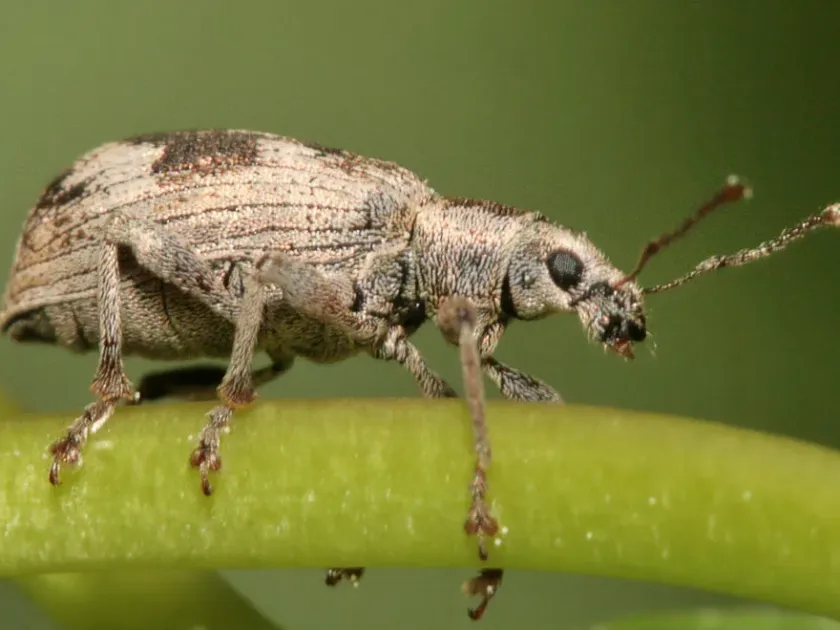
Brachyderes grisescens is a species of weevil (Curculionidae) within the order Coleoptera. Adult beetles typically measure between 6 and 9 mm in length.
The body coloration ranges from grey to brownish-grey, providing excellent camouflage against tree bark and forest litter, which is typical for this genus.
The body is densely covered with fine scales, giving it a matte appearance that serves as a diagnostic feature for the sub-family Entiminae.
Its rostrum (snout) is relatively short and broad, which distinguishes it from many other closely related weevil species found in woodland environments.
Larvae are legless, C-shaped, and possess a well-developed, dark-colored head capsule, adapted for their life cycle within the soil and root zone.
What it damages
This pest primarily impacts coniferous forests and certain deciduous species, causing significant damage during both the adult and larval stages of its life cycle.
Adult beetles feed on needles and buds, which can severely stunt the growth of young trees and affect the overall vitality of forest nurseries.
The larvae live underground and feed on fine roots, which is particularly devastating for seedlings and young saplings, often leading to total plant failure.
During outbreaks, widespread feeding can lead to significant needle loss, reducing the tree's photosynthetic capacity and making it prone to secondary infections.
Economic losses are mainly associated with the degradation of forestry stock and the increased operational costs for implementing pest control measures.
When it appears
Adults typically emerge from the soil in early spring as temperatures rise, signaling the start of their active feeding and mating period.
The peak activity period occurs during May and June, when the insects are most visible in the canopy of trees, engaging in foliage consumption.
Females lay eggs in the top layers of the soil or within the leaf litter, ensuring the next generation is close to the necessary food sources.
Larvae develop throughout the summer months, feeding on roots before moving deeper into the soil to overwinter or pupate depending on their developmental stage.
The life cycle can range from one to two years, influenced significantly by regional climate conditions, temperature, and food availability in the environment.
Signs of infestation
Evidence of infestation includes ragged, chewed needle edges, often concentrated on the upper parts of the tree where adults prefer to feed.
Damaged buds that fail to open in the spring are a clear indicator of localized feeding damage by the beetles on younger host plants.
Droppings left by the beetles on branches or the presence of frass on the soil surface can confirm an active infestation in the nursery area.
Sudden yellowing or wilting of seedlings in a nursery, unrelated to drought, suggests root damage caused by the larvae feeding in the soil.
Routine monitoring using the jarring method, where beetles are shaken from branches onto a cloth, is the most effective diagnostic field technique.
Control measures
Effective management begins with strict adherence to good silvicultural practices, such as maintaining weed-free rows in nurseries to reduce habitat.
Chemical control involving approved insecticides is recommended during the peak emergence phase to protect vulnerable young stock from adult feeding.
Mechanical cultivation of the soil in nurseries can disrupt larval development and reduce the survival rate of overwintering populations in the ground.
Biological control options, such as the application of entomopathogenic fungi, offer a sustainable method to suppress population growth without environmental damage.
Regular sanitation, including the removal and destruction of heavily infested seedlings, helps limit the pest's spread throughout the forestry plot.
Taxonomy
- Latin name
- Brachyderes grisescens
- Order
- Coleoptera (beetles)
- Family
- Curculionidae
- EPPO code
- BRAHGR
Discussion
No discussions yet — be the first.