
Beet weevil
Bothynoderes
Description
How to identify
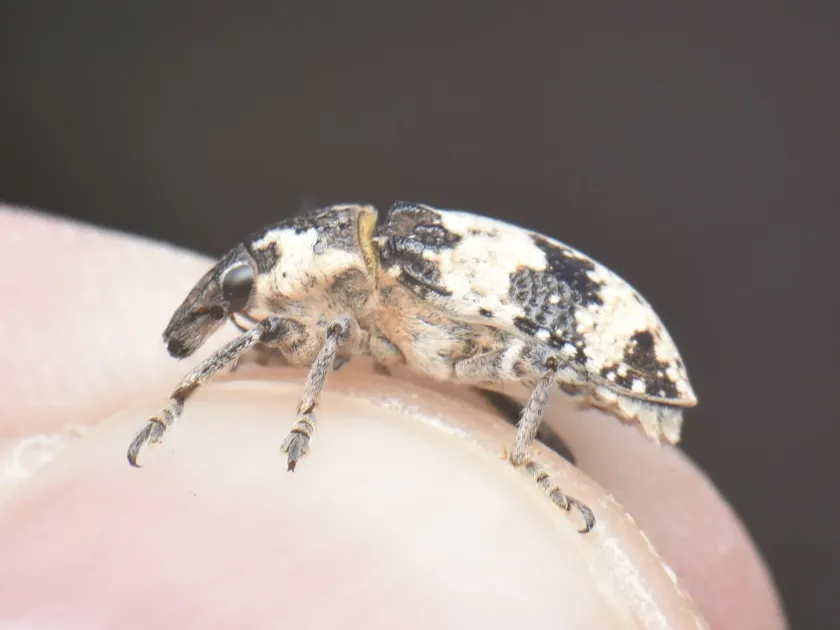
The adult beetle ranges from 12 to 16 millimeters in length and is covered in dense grey scales that provide effective camouflage against soil surfaces.
The larva is a legless, C-shaped grub, white to yellowish in color with a distinctive brown head, which feeds exclusively underground on root systems.
Pupation occurs within a specially constructed earth cell deep in the soil, where the pupa remains until it transforms into an adult beetle.
Beetles exhibit a defense mechanism of "playing dead" when disturbed, falling from plants onto the soil to avoid detection by predators and farmers.
This species belongs to the Curculionidae family and is a significant pest in sugar beet production across many regions, known for its high resilience.
What it damages
The beet weevil primary impacts sugar beet, fodder beet, and red beet, though it can sporadically attack other Amaranthaceae family members in the vicinity.
Adult beetles cause severe damage during the seedling stage by feeding on cotyledons and severing the young stems at the soil level, often destroying entire fields.
Larvae feed on the taproot, boring deep channels that stunt plant growth, reduce root size, and negatively impact the overall sugar content of the harvest.
The economic impact is most severe in years with dry, warm spring conditions, which accelerate beetle activity and increase the rate of plant mortality.
Root damage caused by larvae facilitates the entry of soil-borne pathogens, leading to secondary infections that further compromise the quality and yield.
When it appears
Beetles emerge from their overwintering sites in the soil when temperatures reach approximately 10–12 degrees Celsius, usually aligning with early beet germination.
The peak feeding intensity of adults occurs during the period of emergence through the development of the first few pairs of true leaves.
After a period of intense mating, females deposit eggs into the soil near host plants, where the larvae will later begin their feeding cycle.
Pupation typically occurs during the second half of the summer, and the new generation of adults completes development within the soil before winter.
Adults overwinter deep in the soil profile, often at depths of 30 to 50 centimeters, remaining dormant until the cycle restarts the following spring.
Signs of infestation
Characteristic semi-circular notches on the edges of cotyledons and true leaves are the earliest indicators of adult beet weevil presence.
Uneven, thin stands of seedlings, with plants appearing broken or wilted at the base, serve as a clear sign of significant pest infestation.
Excavating the soil around the base of damaged plants usually reveals the presence of larvae, as well as distinct feeding scars on the taproot.
Unexpected chlorosis or sudden wilting of the beet canopy during mid-summer may indicate severe root damage caused by the larvae feeding underground.
Monitoring the field edges, especially those adjacent to previous years' beet fields, often shows the highest density of adult beetles during the day.
Control measures
Effective crop rotation is the most critical management practice, ensuring that sugar beets are not planted in the same area more than once every three to four years.
Seed treatment with systemic insecticides is a standard and highly effective preventative measure to protect young plants during the vulnerable seedling stage.
When infestation levels exceed economic thresholds, timely application of contact or systemic insecticides on the crop canopy is necessary to mitigate damage.
- Establishing trap furrows to capture migrating beetles.
- Deep autumn plowing to disturb overwintering sites.
- Using pheromone traps for monitoring and early warning.
Maintaining high standards of agronomic practice and regular field scouting allows for early detection and targeted interventions, minimizing total crop loss.
Taxonomy
- Latin name
- Bothynoderes
- Order
- Coleoptera (beetles)
- Family
- Curculionidae
- EPPO code
- BOTHSP
Discussion
No discussions yet — be the first.