
Bolma
Bolma
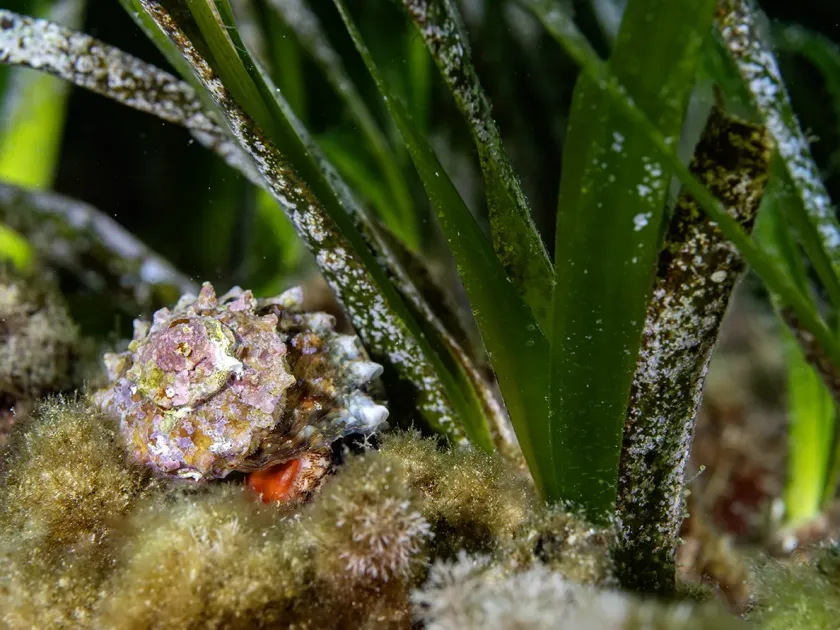
Description
How to identify
The genus Bolma belongs to the family Turbinidae within the order Trochida. These are marine gastropod mollusks known for their sturdy, coiled shells.
Members of this genus are characterized by a calcareous operculum that seals the shell aperture. The shell surface is often ornamented with spines or intricate structural ridges.
They are strictly marine organisms, inhabiting benthic environments in oceans and seas worldwide.
Systematically, they are unrelated to any terrestrial agricultural pests, as their life cycle is strictly tied to salt-water ecosystems.
Their morphological features serve as protection against marine predators in their deep-sea or reef-dwelling habitats.
What it damages
It is important to clarify that Bolma is not a plant pest. These mollusks do not feed on crops, vegetables, or ornamental plants.
Their diet consists primarily of marine algae and organic detritus found on the ocean floor, having no interaction with agriculture.
Any classification of Bolma as a crop pest is incorrect and likely stems from a confusion with terrestrial slugs or snails.
There is zero economic loss associated with this genus regarding plant cultivation, as they cannot survive in terrestrial conditions.
They do not cause damage to plant tissues, roots, or seeds, as their entire existence is restricted to marine water columns.
When it appears
The life cycle of Bolma is regulated by oceanic parameters rather than agricultural seasons.
Reproduction occurs in the sea, with larval development dependent on water temperature and the availability of plankton.
They remain active throughout the year in their natural environment, provided the ocean conditions are stable.
Their life processes are entirely disconnected from the planting, growing, or harvesting schedules of terrestrial agriculture.
No seasonal monitoring for these organisms is necessary for any agricultural operation.
Control measures
Because Bolma poses no threat to agriculture, no control measures are required or advised.
The use of pesticides or molluscicides against these marine creatures is unnecessary and would be ecologically harmful to marine life.
Agricultural professionals should focus their pest management efforts on actual terrestrial species like land snails and slugs.
Physical barriers, proper drainage, and crop rotation remain the standard practices for managing real garden pests.
If you encounter a mollusk causing damage in your garden, it is definitively not a member of the genus Bolma.
Taxonomy
- Latin name
- Bolma
- Order
- Molluscs
- Family
- Turbinidae
- EPPO code
- BOLMSP
Discussion
No discussions yet — be the first.