
Earth slug
Boettgerilla pallens
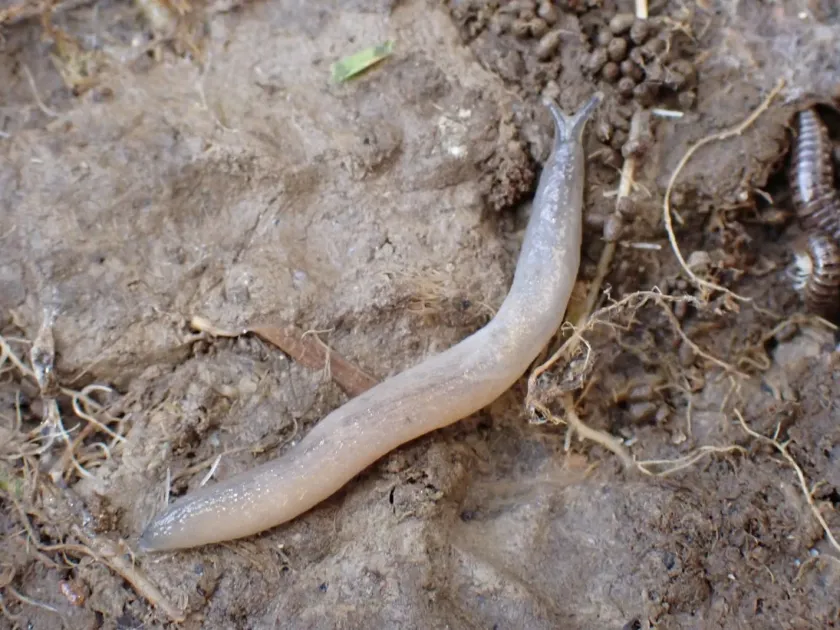
Description
How to identify
The earth slug (Boettgerilla pallens) is a member of the Boettgerillidae family. It is a small, slender slug, usually measuring between 30 and 60 mm in length when mature.
The species is distinguished by its narrow, worm-like body and a distinct, sharp keel that runs along its back from the mantle to the tip of the tail. Its coloration is typically pale, ranging from light gray to yellowish-white.
Unlike many other garden slugs, Boettgerilla pallens is highly specialized for an underground lifestyle. It spends most of its life in soil crevices, utilizing burrows created by earthworms or small rodents.
The slug's skin is covered in a thin layer of transparent mucus, which protects it from desiccation while moving through the soil. When disturbed, it is known to exhibit a sudden, strong contraction of its body muscles.
Reproduction occurs through egg-laying, with small clusters of eggs deposited deep within the soil. Juveniles emerge fully capable of subterranean living and begin feeding on roots and organic matter immediately.
What it damages
This pest is particularly harmful to root vegetables such as potatoes, carrots, parsnips, and beets. It bores deep, narrow tunnels into the flesh of these vegetables, severely reducing quality.
It also feeds on the roots of various ornamental bulbs and seedlings, causing stunted growth, wilting, and often the eventual death of the plant due to root system destruction.
During periods of excessive moisture, the slugs may emerge to the surface to graze on the leaves of low-growing vegetables like lettuce or young cabbage, leaving behind irregular feeding holes.
The tunnels created by Boettgerilla pallens inside crops often lead to secondary damage, including rot and fungal infections, which can quickly ruin entire harvests in storage.
Its hidden nature makes it a difficult pest to detect, as significant damage is often not discovered until the moment of harvest, when the vegetables are already compromised.
When it appears
The activity of the earth slug begins in early spring, as soon as soil temperatures reach 5-8 degrees Celsius. This is when they move closer to the surface to find new food sources.
Peak activity coincides with the wettest periods of the growing season. While they prefer damp conditions, they remain active throughout the summer by retreating deeper into the soil.
During dry, hot weather, these slugs descend to deeper soil layers, often 30-50 cm down, where they remain sheltered from the heat while continuing their destructive feeding on plant roots.
Autumn brings a surge in activity and feeding as the slugs prepare for winter. This is a critical time for monitoring, as populations are at their most robust before moving into hibernation.
They overwinter in the soil within protective voids or natural crevices, demonstrating high resilience to cold temperatures as long as the soil remains relatively protected from extreme freezing.
Signs of infestation
The most reliable sign of an infestation is the presence of clean-cut, narrow tunnels inside harvested root vegetables. These cavities are often devoid of outer skin damage.
The presence of fine, silver-colored mucus trails on the soil surface after rain or irrigation can sometimes indicate their emergence, although this is less common than with surface-dwelling slugs.
Unexplained wilting of individual plants, despite sufficient watering, often points to subterranean feeding on the root system, which should prompt an investigation of the soil near the base.
If you suspect an infestation, digging into the top 10-15 cm of soil near damaged crops will often reveal the presence of pale, keel-backed slugs hiding in the moist earth.
The presence of small entrance holes in the soil, leading down around the stems of crops, is a strong indicator of subterranean activity by these mollusks.
Control measures
The most effective strategy for managing earth slugs is deep autumn cultivation, which exposes the soil inhabitants to frost and natural predators, drastically reducing their numbers.
Applying gritty or desiccating barriers such as wood ash, lime, or diatomaceous earth around sensitive beds can deter movement and make the surface environment inhospitable for them.
Biological control using parasitic nematodes (Phasmarhabditis hermaphrodita) is highly effective, as these microscopic worms actively seek out and kill slugs underground where chemicals cannot reach.
- Maintain weed-free environments to reduce hiding spots.
- Encourage natural predators like frogs, toads, and ground beetles.
- Use physical trapping methods like buried bait stations with beer or specialized pellets.
For high-pressure infestations, registered molluscicides containing iron phosphate are recommended, as they provide an effective way to control the population with minimal risk to other wildlife.
Taxonomy
- Latin name
- Boettgerilla pallens
- Order
- Molluscs
- Family
- Boettgerillidae
- EPPO code
- BOEGVE
Discussion
No discussions yet — be the first.