
Sweet potato weevil
Blosyrus ipomoeae
Description
How to identify
The sweet potato weevil (Blosyrus ipomoeae) is a beetle of the Curculionidae family that poses a serious threat to sweet potato (Ipomoea batatas) production globally.
Adult weevils are small, characterized by a brownish-grey coloration that camouflages them effectively against the soil and foliage, making them difficult to spot during daylight.
They possess a snout-like mouthpart (rostrum) used for feeding and, in the case of females, for boring holes into the plant tissue where eggs are deposited.
The larval stage consists of legless, creamy-white grubs with a distinct brown head capsule, specialized for tunnel-boring inside roots and tubers of the host plants.
Identifying this species involves examining the morphology of the antennae and the texture of the elytra, as there are several similar species often found in close proximity.
What it damages
The most destructive phase of the sweet potato weevil's life cycle is the larval stage, where the grubs feed exclusively within the sweet potato tubers.
As the larvae bore through the tuber, they create internal galleries filled with frass, effectively destroying the marketability and nutritional value of the sweet potato.
Secondary infections are a major issue; the tunnels created by the weevils serve as entry points for various bacteria and fungi, leading to severe rot and total crop loss.
Adult weevils feed on the leaves and vines, creating small holes or serrated edges on the foliage, which reduces the plant's ability to perform photosynthesis efficiently.
Severe infestations cause the plant to weaken, leading to stunted growth, reduced tuber size, and a significant decrease in overall yield quality for the farmer.
When it appears
The activity of the sweet potato weevil is closely tied to the warm growing season, as development rates are highly dependent on ambient temperature and soil moisture.
In spring, emerging adults become active as they seek out young host plants, where they begin feeding and initiating their reproductive cycle for the new season.
During the peak of the growing season, multiple generations can overlap, leading to a constant pressure of both adult feeding on leaves and larval damage to tubers.
High soil moisture, often provided by irrigation, can facilitate larval movement within the soil as they seek to penetrate the developing sweet potato roots.
As temperatures decline, the population gradually decreases, although pupae or dormant adults may survive in the soil or protected debris until the following season.
Signs of infestation
The first visual indications of an infestation often include irregular, serrated holes on the edges of the leaves caused by adult feeding.
Wilting of the vines, despite sufficient soil moisture, can suggest that the stem or root base has been compromised by the feeding activities of the grubs.
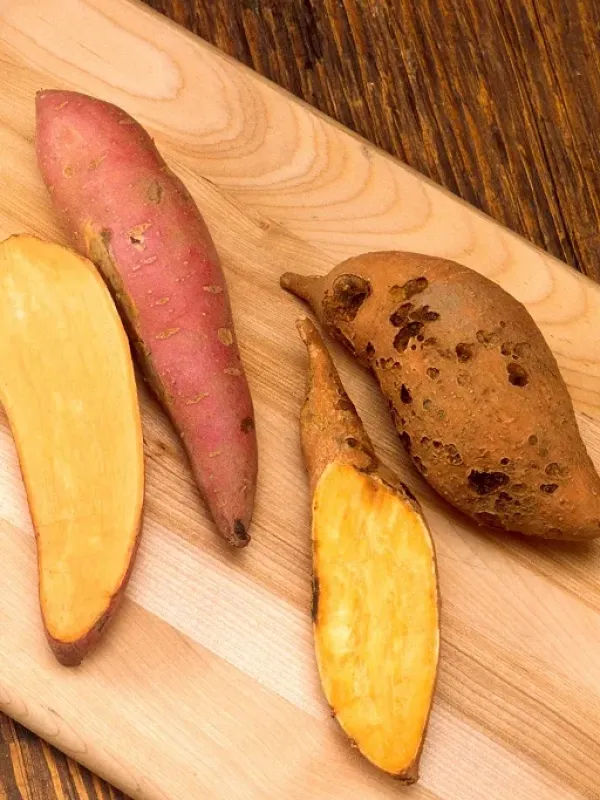
During the harvest, farmers may notice external small, round holes on the surface of the tubers, which indicate that the larvae have tunneled into the flesh.
- Adults observed on the undersides of leaves during dusk or dawn.
- Discolored or foul-smelling tubers indicating advanced decay.
- The presence of fecal pellets (frass) near the entry points on the tuber.
- Presence of pupal chambers in the soil surrounding the root zone.
Routine inspection of the soil around the base of the plant is essential for early detection and preventing the spread of the infestation to the entire crop.
Control measures
Effective crop rotation is the primary defense strategy, as avoiding the cultivation of sweet potatoes on the same site for several years starves the local pest population.
Thorough field sanitation, including the removal and destruction of all infested tubers and plant debris, significantly reduces the overwintering sites for the weevils.
Using certified, pest-free vine cuttings for propagation ensures that the weevil is not introduced to new fields through contaminated planting material.
The application of approved systemic insecticides can provide control, but they must be managed carefully to ensure compliance with pre-harvest intervals and food safety standards.
Encouraging natural biological controls and planting resistant varieties can also mitigate the impact of the weevil, providing long-term sustainability for sweet potato farms.
Taxonomy
- Latin name
- Blosyrus ipomoeae
- Order
- Coleoptera (beetles)
- Family
- Curculionidae
- EPPO code
- BLOSIP
Discussion
No discussions yet — be the first.