
Blosyrus
Blosyrus
Description
How to identify
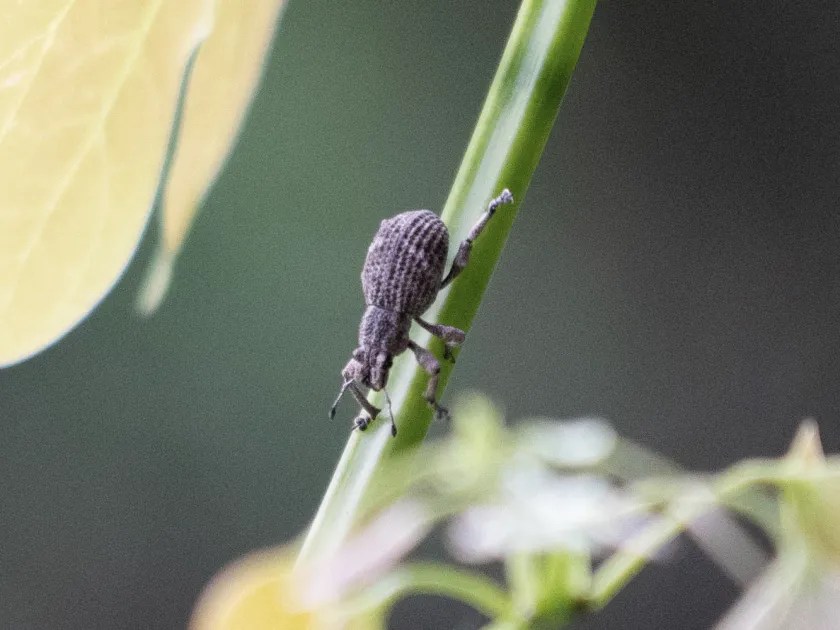
Blosyrus is a genus of beetles belonging to the weevil family (Curculionidae). They are typically robust insects with a characteristic body structure for this group, including a distinct snout (rostrum).
The bodies of these insects are dense, covered with fine scales that can provide them with gray, brown, or earthy shades, ensuring excellent camouflage on the soil surface.
Systematically, this genus belongs to the subfamily Entiminae. Their life cycle includes the egg, larva, pupa, and adult stages, with the morphology of the adults being typical for a wide range of herbivorous weevils.
Blosyrus larvae usually live in the soil, feeding on plant roots, while the adults lead a terrestrial life, preferring to move in the root zone or along the plant stems.
Species identification requires careful examination of the pronotum shape and the pattern of the scales on the elytra, as many weevil species appear very similar to each other.
What it damages
Adult Blosyrus pose a serious threat to many agricultural crops, primarily damaging the above-ground parts of the plants—leaves, buds, and young shoots.
The greatest damage is observed in sugar beets, sunflowers, and certain legume crops, where the insects eat the edges of the leaf blades, leading to plant weakening.
Larvae living in the soil damage the root system, which leads to stunted growth, yellowing of the leaves, and in some cases, complete death of young plants due to disrupted nutrition.
The pest is most dangerous during the seedling stage, when damage to even a small area of leaves or roots can be critical for the normal development of the agricultural crop.
Massive reproduction of Blosyrus can significantly reduce the stand density in a field, which directly impacts the potential harvest and the economic efficiency of the farm.
When it appears
The pest's activity begins in early spring, when soil and air temperatures reach the thresholds necessary for overwintering individuals to emerge from diapause.
The adult feeding period coincides with the germination phase and the formation of the first true leaves in most vegetable and field crops, which is the most vulnerable stage for the plants.
Reproduction and egg-laying occur mainly in the warm season, with one generation taking from several months to a year to develop, depending on the region's climatic conditions.
The summer generation of insects feeds actively until the end of the growing season, gradually moving into the soil to prepare for the winter dormant period in the larval or adult stage.
Weather factors, such as high soil moisture, contribute to better survival rates of larvae in the root zone and increase the overall population density in the field.
Signs of infestation
The main sign of infestation is the characteristic "notched" feeding on leaf edges, which looks like semicircular indentations left by the beetle's mouthparts.
The presence of larvae in the soil is evidenced by the sudden wilting of individual plants despite sufficient moisture, indicating root system damage by the pest.
When inspecting fields in the evening or morning hours, you can directly detect the beetles, which often feign death when threatened, falling from the plant to the ground.
Yellowing of cotyledons and early true leaves against a background of general growth inhibition indicates the need for a thorough inspection of roots for the presence of weevil larvae.
The presence of large amounts of excrement on the leaves and damaged stem sections can also serve as indirect confirmation of active pest feeding on the crop.
Control measures
The primary control method is crop rotation, which breaks the pest's life cycle and reduces the population reserve in the soil to a safe level.
An effective technique is deep autumn plowing (tillage), which helps destroy a significant portion of larvae and pupae residing in the soil layers.
During the period of massive pest emergence on seedlings, contact and systemic insecticides authorized for use on specific agricultural crops should be applied.
An important element of protection is the destruction of weeds around the field perimeter, as many weeds serve as reservoirs for pest reproduction before the main crop emerges.
- Use of systemic insecticide seed treatments to protect young sprouts.
- Monitoring pest populations using yellow sticky traps or visual field inspections.
- Timely fertilization of plants to stimulate their regenerative capacity after damage.
Taxonomy
- Latin name
- Blosyrus
- Order
- Coleoptera (beetles)
- Family
- Curculionidae
- EPPO code
- BLOSSP
Discussion
No discussions yet — be the first.