
Fern sawfly
Blasticotoma
Description
How to identify
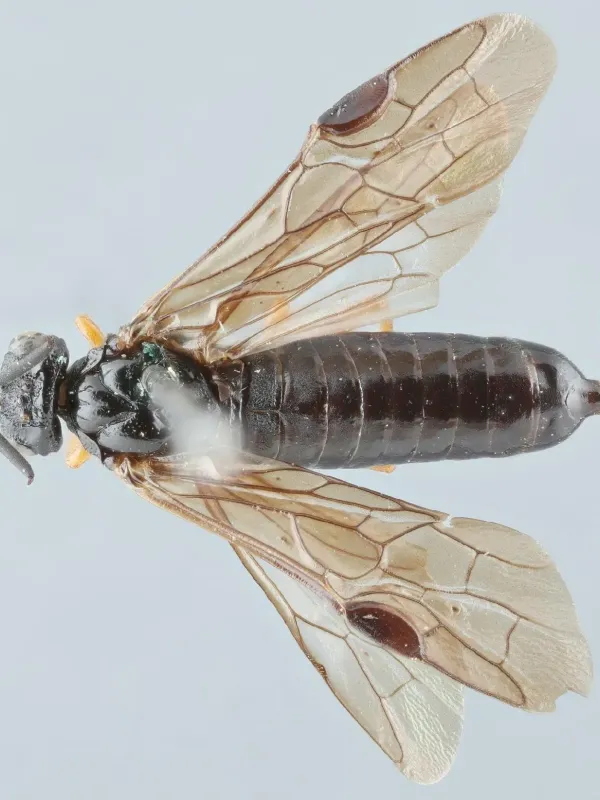
The fern sawfly (Blasticotoma filiceti) is a member of the Hymenoptera order and belongs to the small family known as Blasticotomidae.
Adult specimens are small, inconspicuous wasps that are rarely observed by casual gardeners, leading to a lack of awareness about their presence.
The larvae are specialized to feed endophytically, meaning they spend their entire development cycle inside the stems of their host plants.
These insects are primarily distributed in temperate regions, often favoring damp, shaded woodland environments where host ferns are abundant.
The biological cycle is relatively long, and adults emerge typically in spring to lay eggs directly into the tissues of developing fern fronds.
What it damages
This pest specifically targets various fern species, including those commonly used in landscape design such as species from the genus Dryopteris.
The damage is caused by larvae tunneling inside the rachis or the central stalk of the fern frond, which disrupts the flow of nutrients and water.
Affected fronds often show signs of stunted growth, drooping, or premature chlorosis, significantly diminishing the plant's aesthetic value.
Because the larvae reside inside the plant, the damage often goes undetected until the physical symptoms become quite severe and structural.
Heavy infestations can lead to the death of individual fronds and can weaken the overall health of the rhizome if the plant is subjected to repeated attacks.
Signs of infestation
The most distinctive symptom of infestation is the production of a white, frothy secretion on the stem, which the larva exudes while feeding.
This foam serves as a protective cover, shielding the larva from predators and environmental stressors, which makes manual control challenging.
Gardeners may observe localized swelling, bending, or twisting of the fern stems where the larva has created its internal feeding tunnel.
Exit holes may become visible later in the season as mature larvae leave the plant stem to pupate in the surrounding soil layers.
Persistent wilting of fronds despite adequate soil moisture levels is often an indicator that the internal tissues have been compromised by a borer.
Control measures
The primary and most effective control method is the manual removal and destruction of stems showing signs of the characteristic frothy secretions.
Proper sanitation in the garden, including the removal of infested debris before the larvae exit to the soil, is crucial for population management.
Systemic insecticides may offer some protection, but their efficacy is limited by the physical protection provided by the larva's own foam secretion.
Cultivating the soil around the base of the ferns in late autumn can expose pupae to winter temperatures, significantly reducing the survival rate of the pest.
Maintaining high plant vigor through proper watering and mulching helps the ferns tolerate minor infestations and recover faster from mechanical damage.
Taxonomy
- Latin name
- Blasticotoma
- Order
- Hymenoptera
- Family
- Blasticotomidae
- EPPO code
- BLACSP
Discussion
No discussions yet — be the first.