
Pine shoot moths
Blastesthia
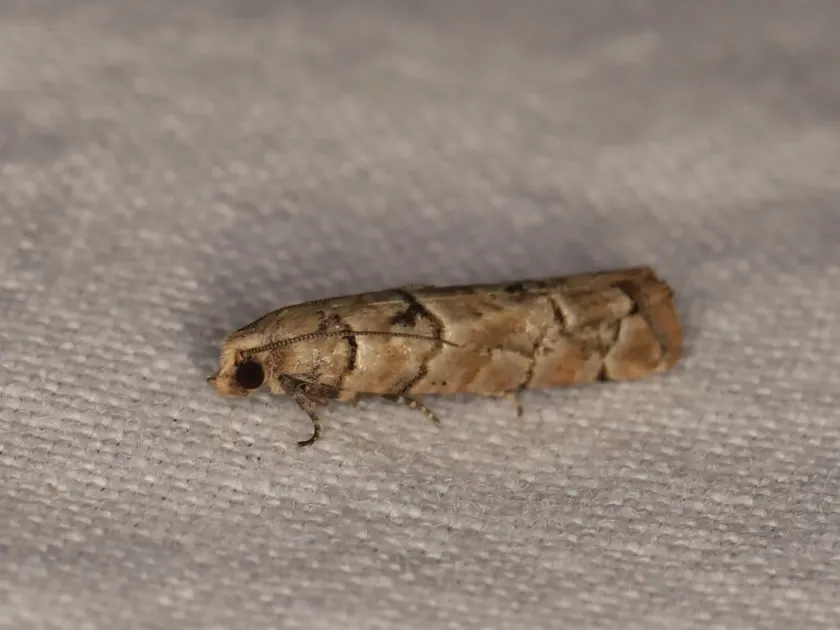
Description
How to identify
The genus Blastesthia consists of small moths belonging to the Tortricidae family. Adults are typically nocturnal, with wingspans ranging from 12 to 15 mm, featuring cryptic coloration that mimics tree bark to provide camouflage against predators.
What it damages
These pests primarily target various species of pine trees (Pinus). They are particularly detrimental to young nursery stock and saplings, as they specifically consume the terminal and lateral buds, which stunts the tree's vertical growth.
When it appears
They typically complete one generation per year. Mating and oviposition occur in late spring or early summer, and the larvae emerge to feed on the tender tissues of the buds before entering a period of overwintering as larvae or pupae.
Signs of infestation
The most common sign of infestation is the presence of resin flow or "pitch masses" around the buds. Furthermore, infested buds may turn brown, hollow out, and eventually fail to flush in the spring, leading to deformed or stunted shoot growth.
Control measures
Effective management includes mechanical control by pruning and destroying infested buds before adult emergence. Chemical control requires targeted insecticide applications applied during the period when larvae are migrating or feeding on the outer bud surfaces.
Taxonomy
- Latin name
- Blastesthia
- Order
- Lepidoptera (butterflies)
- Family
- Tortricidae
- EPPO code
- BLAHSP
Discussion
No discussions yet — be the first.