
Iberian worm lizard
Blanus cinereus
Description
How to identify
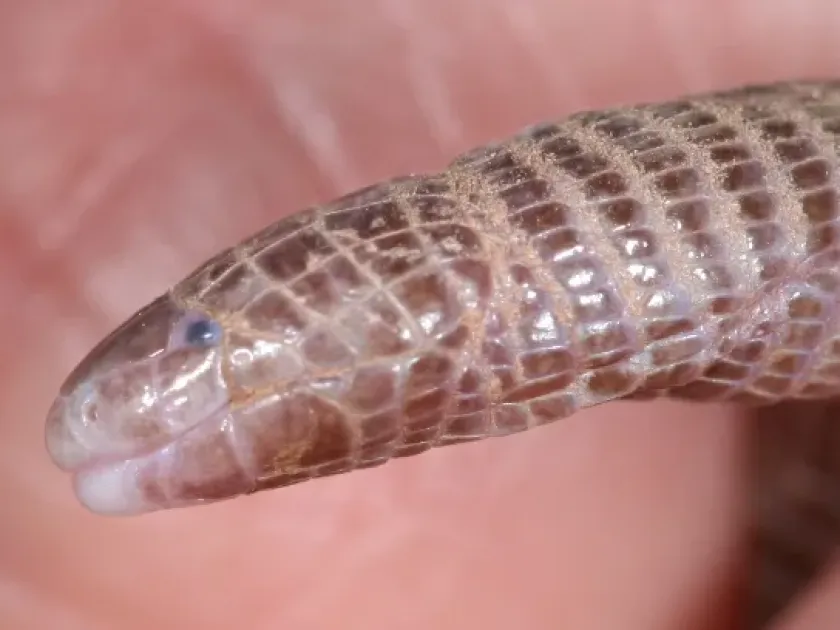
The Iberian worm lizard (Blanus cinereus) is a legless reptile belonging to the order Squamata and family Amphisbaenidae. It is frequently mistaken for a large earthworm due to its segmented body and lack of visible limbs.
Adult specimens usually reach lengths of 15 to 25 centimeters. Their skin texture is smooth, displaying a range of colors from pinkish to brownish-grey, which helps them camouflage in subterranean environments.
The head is cone-shaped and highly specialized for fossorial activity. The eyes are heavily reduced and covered by skin, as the animal spends the vast majority of its life underground.
Anatomically, they possess a unique ability to move forward and backward within their burrows. This locomotion is powered by independent muscle contractions beneath their annulated skin.
They are primarily distributed across the Iberian Peninsula and parts of North Africa. They thrive in loose, humid soils rich in organic matter where they find shelter under rocks or logs.
What it damages
The Iberian worm lizard is not an agricultural pest. There is no evidence suggesting that this reptile consumes or damages any part of cultivated plants, including roots, tubers, or sprouts.
Its diet consists strictly of soil-dwelling invertebrates. It serves as a predator for ants, beetle larvae, and other small arthropods that may exist within the soil ecosystem.
Because they do not feed on plant tissues, they have no negative impact on crop yields or plant vitality. Their presence is often considered a sign of a healthy, biologically active soil profile.
Confusion often arises when gardeners observe them during soil preparation, fearing they might attack plant roots. However, these reptiles have neither the biology nor the feeding mechanism to cause such damage.
In terms of agricultural impact, the species is considered neutral or even beneficial due to its predatory behavior against various soil-dwelling insects.
Control measures
No control measures are necessary or recommended for the Iberian worm lizard. Since it does not pose a threat to agricultural productivity, efforts to eliminate it are entirely superfluous.
The use of soil insecticides to control other pests can unintentionally kill worm lizards. Agronomists should avoid broad-spectrum soil treatments that disrupt the balance of the local ecosystem.
If the presence of these reptiles is undesirable for specific tasks, manual relocation is the only suggested action. They can be safely moved to adjacent wild areas where they will not interfere with farming operations.
Sustainable agricultural practices focus on preserving beneficial soil fauna. Protecting species like the worm lizard supports the natural regulation of potentially harmful insect populations.
We advise farmers and gardeners to educate themselves on the benefits of maintaining diverse soil wildlife, as eliminating harmless reptiles can lead to an ecological imbalance.
Taxonomy
- Latin name
- Blanus cinereus
- Family
- Amphisbaenidae
- EPPO code
- BLNUCI
Discussion
No discussions yet — be the first.