
Bithynia tentaculata
Bithynia tentaculata
Description
How to identify
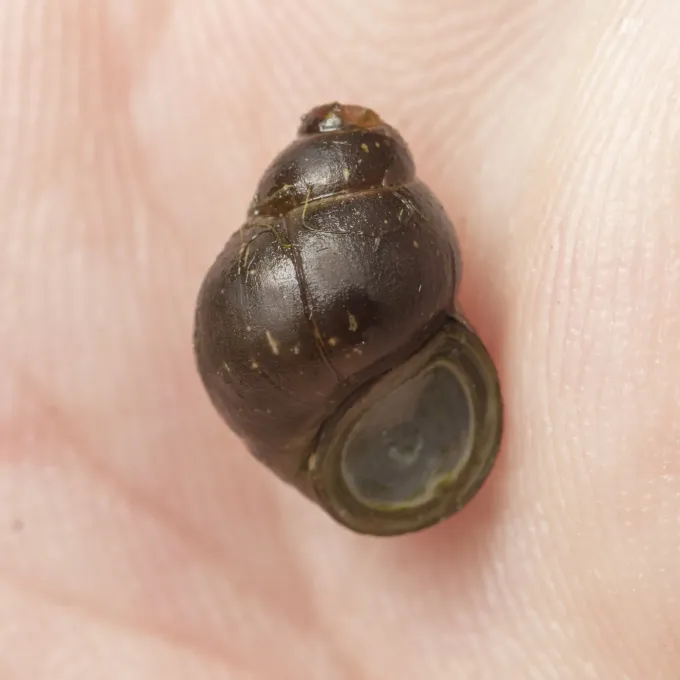
Bithynia tentaculata, commonly known as the faucet snail, is a small freshwater mollusk belonging to the family Bithyniidae.
The shell is typically conical, featuring 5 to 6 whorls with a pointed apex, and reaches a height of approximately 10 to 12 millimeters.
Its shell color ranges from yellowish-horn to brown, providing excellent camouflage against aquatic vegetation and muddy substrates.
A key identifying feature is the calcareous operculum, a trapdoor-like structure that the snail uses to seal its aperture under stress.
The animal possesses two long, slender tentacles, at the base of which eyes are located, distinguishing it from many other aquatic snails.
What it damages
The faucet snail primarily impacts rice paddies and agricultural areas where aquatic crops, such as lotus or water chestnut, are cultivated.
While they primarily graze on periphyton and algae, high densities can lead to direct damage to young, tender shoots of agricultural plants.
Feeding activities leave mechanical injuries on leaves and stems, which often become entry points for various bacterial and fungal pathogens.
Furthermore, this species acts as an intermediate host for several trematodes that cause significant disease in fish and waterfowl populations.
Large colonies within irrigation systems can cause physical clogging of pipes and irrigation equipment, hindering efficient water management.
When it appears
The activity period for Bithynia tentaculata begins in early spring as water temperatures rise above 10–12 degrees Celsius.
Summer is the peak season for reproduction and population expansion, correlating with the active growth phase of aquatic crops.
As water temperatures drop during autumn, the snails reduce their metabolic activity and seek shelter at the bottom of the water body.
The life cycle is rapid, allowing the population to reach high densities quickly during the warmer months of the cultivation season.
Wintering occurs in deeper sections of ponds or channels where the water remains fluid and temperatures do not reach critical lows.
Signs of infestation
The most evident sign of infestation is the presence of snail shells attached to stems of plants, particularly near the waterline.
Visual inspection of leaves often reveals grazing patterns, characterized by small, uneven abrasions or holes on the surface tissue.
Stunted growth or chlorosis in rice seedlings can be an indirect indication of high snail pressure in the surrounding water.
Deposits of eggs on rocks, hard stems, or debris indicate active reproduction areas where the population is likely to increase.
In irrigation ditches, the accumulation of empty shells or live snails during maintenance is a clear sign of a well-established colony.
Control measures
The most effective management strategy is the temporary draining of fields, which subjects the snails to desiccation and causes mass mortality.
Maintaining clean irrigation canals by removing excessive aquatic weeds and accumulated sediment limits the snail's habitat.
Biological control using molluscicides that are safe for the surrounding ecosystem is an option for large-scale rice cultivation.
Physical barriers such as mesh filters at water inlets prevent the colonization of irrigation systems from natural water bodies.
- Regular water level management.
- Removal of floating vegetation.
- Monitoring of infection levels in surrounding water.
Taxonomy
- Latin name
- Bithynia tentaculata
- Order
- Molluscs
- Family
- Bithyniidae
- EPPO code
- BITHTE
Discussion
No discussions yet — be the first.