
Beroe cucumis
Beroe cucumis
Description
How to identify
Beroe cucumis is a species of tentaculate-free ctenophore belonging to the order Beroida, which resides exclusively in marine environments.
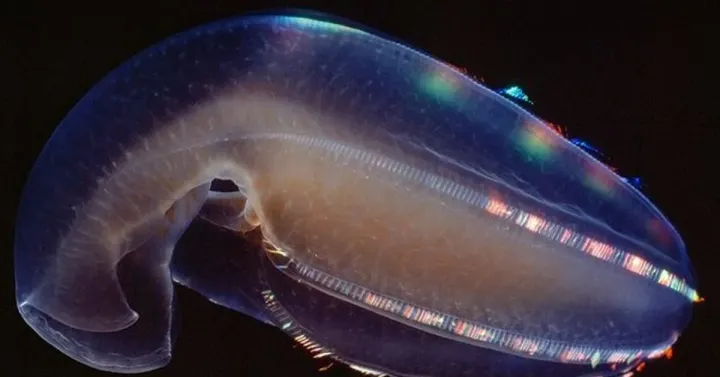
Physically, the organism has a sac-like or cylindrical body shape resembling a cucumber, which is the source of its common naming in some languages.
The body is transparent and gelatinous, featuring rows of vibrating cilia that reflect light, creating a shimmering effect as the organism swims.
It lacks tentacles and specialized mouthparts for feeding on terrestrial flora, being entirely adapted to a predatory lifestyle in the ocean.
This organism belongs to the phylum Ctenophora and is biologically distinct from any insects, arachnids, or pathogens that impact crop production.
What it damages
Beroe cucumis is not a plant pest. It does not feed on leaves, roots, stems, or fruits of any agricultural or horticultural plants.
Its diet consists strictly of other ctenophores, particularly the invasive Mnemiopsis leidyi, making it a predator of marine zooplankton.
There is no mechanism by which this marine animal could damage an agricultural crop, as it cannot survive outside of a saltwater environment.
Labeling this species as an agricultural pest is a taxonomic and agricultural error, as it lacks any contact with soil or cultivated plant life.
No agricultural damage has ever been attributed to Beroe cucumis, and it poses zero risk to greenhouse or outdoor farming operations.
When it appears
The life cycle of Beroe cucumis is entirely dependent on oceanographic conditions such as water temperature, salinity, and prey availability.
It does not have a seasonal cycle tied to the agricultural calendar, such as planting, flowering, or harvest periods of terrestrial crops.
This species is confined to the water column of seas and oceans, remaining far from any farm or garden environments throughout its life.
There are no monitoring protocols for this organism in agronomy, as it does not participate in the ecology of agricultural fields.
Seasonal fluctuations in their population are purely a matter of marine ecology and do not affect the status of any terrestrial plants.
Control measures
No control measures exist for Beroe cucumis in an agricultural context, as it is not a pest that requires eradication or management.
Applying pesticides or herbicides is unnecessary and environmentally irresponsible, as the target is a harmless marine organism.
Educational outreach confirms that this organism should be observed as a natural part of marine biology rather than a threat to food safety.
Farmers and gardeners should focus management efforts on documented pests like aphids, spider mites, or whiteflies that genuinely affect plants.
If you encounter claims suggesting control measures for this species on land, treat them as inaccurate and disregard them completely.
Taxonomy
- Latin name
- Beroe cucumis
- Family
- Beroidae
- EPPO code
- BEROCU
Discussion
No discussions yet — be the first.