
Transparent weevil
Barypeithes pellucidus
Description
How to identify
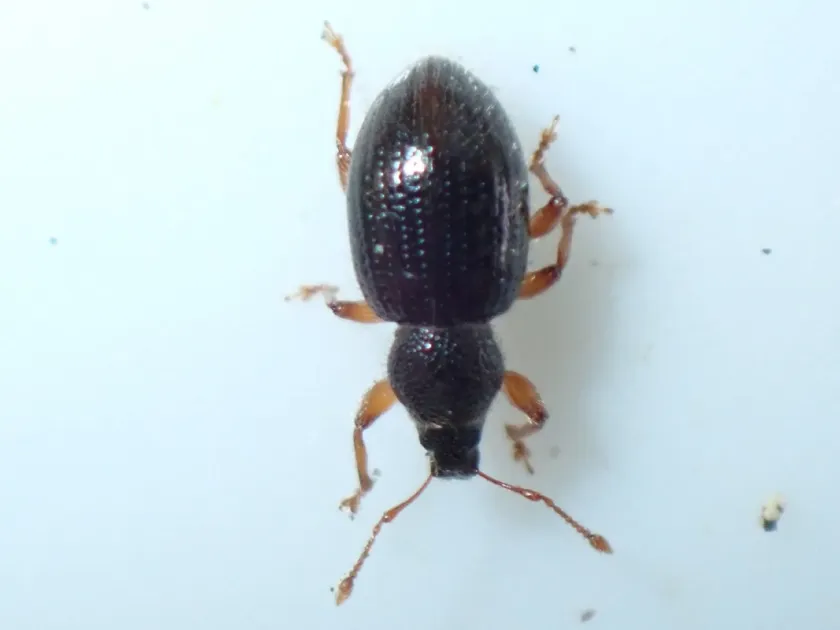
The Transparent weevil (Barypeithes pellucidus) is a small beetle belonging to the Curculionidae family, within the order Coleoptera. It is recognized by its compact, oval-shaped body and a short, broad snout typical of the genus.
Adult beetles are approximately 3 to 4 mm in length. Their cuticle is generally dark brown or reddish-brown with a distinct sheen. Sparse pale hairs on the elytra may give the appearance of transparency under certain lighting, which serves as the origin of their common name.
The larvae are legless, C-shaped, and possess a creamy-white body with a brownish head. They live exclusively in the soil, feeding on roots and staying hidden for the duration of their development, which makes them difficult to monitor.
As nocturnal insects, these weevils remain inactive during the day. They prefer to hide under soil clumps, debris, or dense vegetation at the base of plants, which protects them from predators and desiccation by sunlight.
Like many members of the weevil family, the Transparent weevil exhibits "thanatosis" or feigning death when disturbed. When they fall from a plant to the ground, they retract their legs and remain motionless, blending perfectly with the soil surface.
##damage##The Transparent weevil is a polyphagous pest, meaning it attacks a wide range of hosts. It is frequently reported as a nuisance in strawberries, raspberries, and grapevines, as well as various ornamental plants and young nursery trees.
Adults cause damage by feeding on foliage and young buds. They characteristically chew irregular notches along the edges of leaves. While this rarely kills a mature plant, it significantly impacts the plant's photosynthetic capacity and aesthetic value.
The most severe damage is inflicted by the larvae, which dwell underground. They feed on fine root hairs and occasionally larger lateral roots, compromising the plant's ability to absorb water and nutrients.
Young plants or those in nurseries are at the highest risk. Infested plants often exhibit stunted growth, yellowing foliage, and may eventually wilt and die if the root system is sufficiently destroyed during the larval development phase.
Heavy infestations can lead to substantial economic loss, particularly in fruit production, where weakened plants demonstrate reduced yield and increased vulnerability to secondary fungal infections.
When it appears
The activity of the Transparent weevil begins in the spring as soil temperatures rise. Overwintered adults emerge from the soil to begin feeding and mating, marking the start of the infestation cycle for the season.
The period of peak adult activity typically occurs in late spring and early summer. During this time, females lay eggs in the soil near the root zone of host plants, ensuring that the hatching larvae have immediate access to food.
Larval development proceeds throughout the summer and autumn months. The duration of this stage is temperature-dependent, but larvae continue to feed until cold weather forces them to move deeper into the soil for overwintering.
Overwintering occurs either as an adult or a larva at depths below the frost line. This resilience allows the species to maintain stable populations from year to year, even in climates with harsh winter conditions.
Monitoring efforts should focus on the evening hours when adults emerge to feed. Using light traps or physical inspection of plant bases can provide valuable data on population density and the appropriate timing for control measures.
Signs of infestation
The most obvious indication of Transparent weevil presence is the "scalloped" appearance of leaf margins. Adults consume tissue in a way that creates circular or irregular notches along the edges of the leaves.
- Characteristic semi-circular notches along leaf edges.
- Sudden wilting of plants despite adequate soil moisture levels.
- Visible adult beetles found near the root zone or under mulch at night.
- General lack of vigor, stunted growth, and yellowing of younger foliage.
- Discovery of chewed or hollowed-out roots during root system examination.
In cases of significant root damage, the plant may lose its anchorage in the soil. It can be easily pulled up, revealing a sparse and damaged root system with evidence of feeding marks.
In patches of severe infestation, circular areas of dying plants may develop, which is common in low-lying or moist parts of a field where soil conditions favor larval survival.
Secondary signs include the presence of numerous beetles hiding beneath dead leaves or other organic debris, which suggests that the population density in the immediate area is high enough to warrant intervention.
Control measures
Managing the Transparent weevil requires an integrated pest management (IPM) strategy that combines cultural, biological, and chemical control methods to be effective.
Cultural practices are essential; regular cultivation of the soil around the base of plants can destroy larval habitats and expose larvae to surface predators like birds and beneficial insects.
Maintaining a clean field by removing weeds and plant debris reduces the number of hiding spots available to adults during the day. Proper spacing of plants can also improve air circulation and reduce the suitability of the environment for the pest.
When chemical control is necessary, insecticides targeting the adults should be applied in the evening. Soil-applied treatments may be used to target larvae, though these require precise timing to coincide with the early larval stage.
Biological control, particularly the use of entomopathogenic nematodes, offers a sustainable alternative. These nematodes infect and kill larvae within the soil, providing a targeted and environmentally friendly way to reduce the population without disrupting beneficial insect communities.
Taxonomy
- Latin name
- Barypeithes pellucidus
- Order
- Coleoptera (beetles)
- Family
- Curculionidae
- EPPO code
- BARPPE
Discussion
No discussions yet — be the first.