
Spider weevil
Barypeithes araneiformis
Description
How to identify
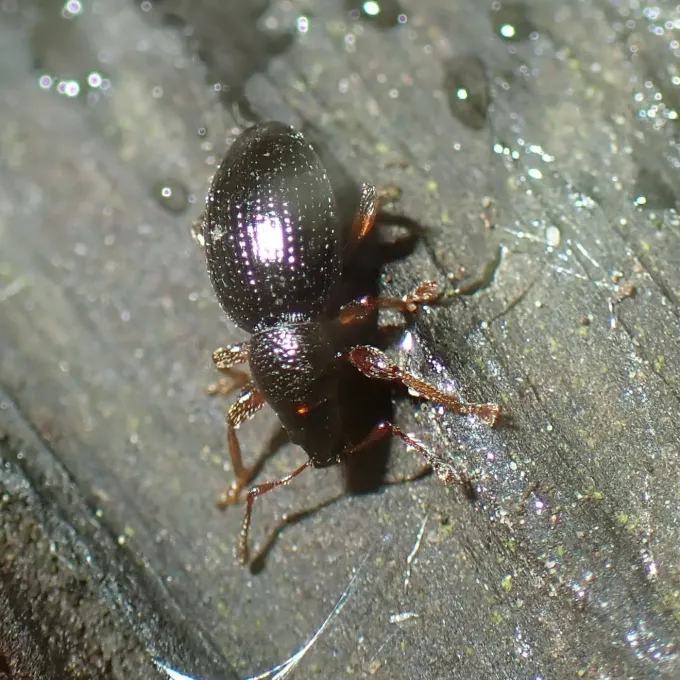
The spider weevil (Barypeithes araneiformis) is a species of beetle belonging to the family Curculionidae. Adult weevils are small, typically measuring between 3 and 4 millimeters in length, and are easily overlooked due to their size.
These insects have a distinct oval-shaped body, usually colored in dark brown to black shades. Their elytra are covered with fine scales and sparse hairs, which provide an effective camouflage against dark soil and plant debris.
The snout, or rostrum, of this species is relatively short and broad compared to other weevils. This physical characteristic is a key diagnostic feature for entomologists and researchers studying the pest.
The larvae are typical of the weevil family: legless, cream-colored, and possessing a well-developed, dark-colored head capsule. They are exclusively subterranean and remain in the soil throughout their entire developmental phase.
Antennae are elbowed and clubbed, a common trait for curculionids. As nocturnal insects, adults spend their daylight hours hidden, making detection challenging during the day.
What it damages
The spider weevil acts as a polyphagous pest, meaning it feeds on a diverse range of agricultural and horticultural plants. Strawberries and vines are particularly prone to significant leaf damage caused by adults.
In addition to small fruit crops, the pest is frequently found on various ornamental plants. It often infests roses, rhododendrons, and young nursery stock, causing aesthetic and physiological decline.
Adult feeding occurs primarily in the spring. During this phase, they graze on tender young leaves and buds, which can stunt the overall growth of the plant and reduce its vigor early in the season.
The larvae are considered the most damaging stage in some contexts, as they consume fine root hairs and small lateral roots. This feeding activity disrupts the plant's ability to absorb water and essential nutrients.
Heavy infestations lead to weakened root systems, leaving the plants highly susceptible to drought stress, secondary fungal infections, and even winter kill due to lack of carbohydrate reserves.
When it appears
The life cycle of the spider weevil is governed by soil temperatures and seasonal environmental changes. Adults typically emerge from their overwintering sites in the soil during late spring.
Mating and egg-laying occur in early summer. Females deposit eggs in the soil near the base of host plants, ensuring that emerging larvae have immediate access to a food source.
Larvae develop throughout the summer months, passing through several instars. They move deeper into the soil profile as they grow and prepare for the pupal stage.
Pupation takes place in earthen cells constructed within the soil, usually occurring in late summer. New generation adults emerge shortly after, feeding briefly before seeking shelter for the winter.
The species completes one generation per year. Successful control timing relies heavily on targeting the overwintering population or the emerging adult cohort in the spring.
Signs of infestation
Notching of the leaf margins is the most prominent sign of adult spider weevil activity. These characteristic crescent-shaped bites are a hallmark of weevil feeding on many different plant species.
Because the adults are nocturnal, they are rarely seen during regular daytime inspections. Nighttime scouting with a flashlight is the most reliable way to confirm the presence of active adults.
Poor plant performance, including yellowing leaves or wilting despite adequate moisture, is often a sign of underground larval damage to the root system.
Excavating a small amount of soil around the roots of suspected plants may reveal missing fine root hairs or larvae present in the soil, which confirms the diagnosis.
The presence of adults can also be verified by monitoring with light traps or by placing cardboard sheets near the base of plants overnight, as the beetles often hide underneath them by dawn.
Control measures
Effective management of the spider weevil requires a combination of strategies targeting different stages of the pest's life cycle.
- Regular cultivation and hoeing of the soil around host plants to disrupt larval development and destroy pupal cells.
- Application of entomopathogenic nematodes to the soil, which serve as a biological control agent for larvae.
- Use of contact-based insecticides during the spring emergence period to reduce the adult population before they lay eggs.
- Implementation of strict nursery sanitation practices to prevent the introduction of infested soil or plant material.
- Monitoring pest density using light traps or night-time observations to determine the optimal timing for chemical applications.
Taxonomy
- Latin name
- Barypeithes araneiformis
- Order
- Coleoptera (beetles)
- Family
- Curculionidae
- EPPO code
- BARPAR
Discussion
No discussions yet — be the first.