
Weevil Baryopadus corrugatus
Baryopadus corrugatus
Description
How to identify
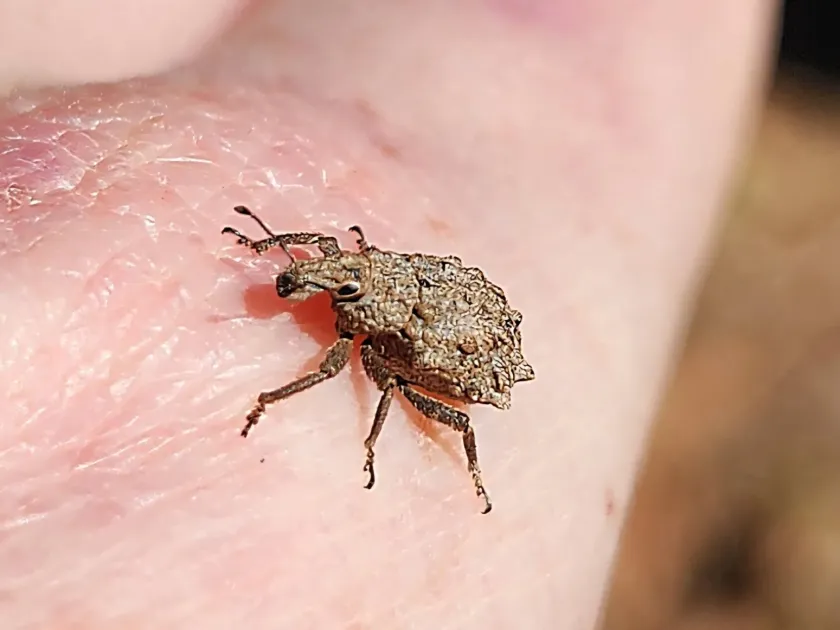
Baryopadus corrugatus belongs to the family Curculionidae, order Coleoptera. The adult specimen is a small beetle characterized by an elongated head extension known as a rostrum.
The insect's body has a dense chitinous shell, the surface of which is covered with a specific texture or tiny scales that camouflage the beetle on bark or soil.
The pest's coloration typically ranges from gray to dark brown, making it almost invisible in its natural habitat among plant debris.
The insect undergoes complete metamorphosis: egg, larva, pupa, and adult. The larvae are legless, cream-colored, and develop in hidden environments.
Species identification requires examination of the structural characteristics of the pronotum and tarsal structure, as many weevil species appear visually similar.
What it damages
Primary damage is caused by both adults and larvae, although feeding habits may vary depending on the insect's life stage.
Adult beetles prefer to feed on young leaves, buds, and the delicate bark of young shoots, which leads to a slowdown in general plant growth.
The larval stage of Baryopadus corrugatus is often associated with damage to the root system, which is the most dangerous factor for perennial crops.
Damage to the root collar and roots disrupts the plant's intake of moisture and nutrients, which in severe cases leads to the death of young saplings.
The list of host plants includes various agricultural crops and ornamental species grown in the regions where this pest is distributed.
When it appears
The activity of adult Baryopadus corrugatus begins in the spring when soil and air temperatures reach the threshold values required to break diapause.
The peak of adult harmfulness occurs during the phase of active sap flow and bud break, when plant tissues are most saturated with nutrients.
The development cycle is extended over time, meaning new generations may appear throughout the summer period under favorable weather conditions.
Larvae living in the soil show activity throughout the growing season, gradually transitioning to the pupation stage by late summer or autumn.
Insects overwinter primarily as adults or larvae in the topsoil layer or under plant debris, which provides reliable protection from winter frosts.
Signs of infestation
A visual sign of the beetles' presence is the characteristic "scalloped" feeding on the edges of leaf blades, which have a rounded shape.
Wilt of plants without visible causes in the above-ground part often indicates damage to the root system by the pest's larvae.
When inspecting the root zone in the soil, one can find tunnels made by larvae, as well as the white legless larvae themselves near the roots.
Stunted growth, yellowing, and premature leaf drop in spring indicate critical infestation of the plant by the pest.
- Presence of frass on the leaf surface.
- Exposed cambium areas on young branches.
- Reduction in overall productivity of agricultural fields.
Control measures
For effective control of Baryopadus corrugatus, it is recommended to apply a complex of agrotechnical and chemical measures.
Systematic soil cultivation in tree trunk circles in autumn helps to destroy overwintering stages of the pest by disrupting their rest.
Using pheromone traps or sticky bands allows for the monitoring and control of adult numbers in orchards and plantations.
Chemical protection includes the use of contact-stomach insecticides during the active feeding period of adults, strictly following dosage regulations.
The biological method involves using entomopathogenic fungi or nematodes, which effectively infect the soil-dwelling stages of the weevil.
Taxonomy
- Latin name
- Baryopadus corrugatus
- Order
- Coleoptera (beetles)
- Family
- Curculionidae
- EPPO code
- BAROCO
Discussion
No discussions yet — be the first.