
Scaly weevil
Barynotus squamosus
Description
How to identify
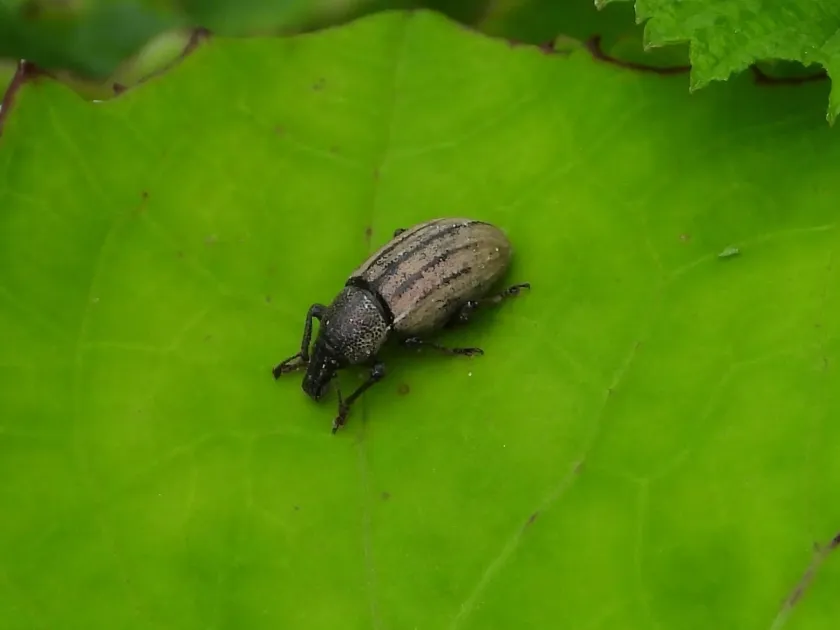
The scaly weevil Barynotus squamosus is a member of the Curculionidae family within the order Coleoptera. This beetle is easily identified by its stout body covered with distinct scales that provide excellent camouflage against soil, making them difficult to spot during daylight inspections.
Adults typically measure between 7 and 10 millimeters in length. They possess a short, broad snout and elbowed antennae. The elytra feature deep longitudinal grooves, which are characteristic of this species and help distinguish it from other soil-dwelling weevils found in gardens and fields.
The larvae are legless, creamy-white grubs with a hardened dark head capsule. They live exclusively in the topsoil, where they feed on the roots of host plants. Due to their subterranean habit, the larval stage is often the most destructive and difficult to manage.
The species reproduces parthenogenetically, meaning populations consist almost entirely of females capable of laying viable eggs without mating. This biological strategy allows for rapid colonization of host areas and high population densities under favorable conditions.
Barynotus squamosus typically completes one generation per year. Both adults and larvae can overwinter in the soil, ensuring the species survives cold winters and remains present in the same location for multiple consecutive seasons.
What it damages
As a polyphagous pest, the scaly weevil feeds on a wide range of horticultural and agricultural crops, including potatoes, carrots, legumes, and cruciferous vegetables. They can also survive on various common weeds, ensuring their presence near crop fields year-round.
Adult beetles feed on the leaves, creating signature scalloped or notched edges. This feeding pattern is a classic diagnostic feature of the species, often described as "half-moon" cuts along the leaf margins, which can lead to significant photosynthetic loss.
The larval stage is responsible for the most severe damage by consuming the root systems and tubers of plants. This feeding causes stunted growth, wilting, and, in severe cases, the complete collapse of the plant due to root starvation.
Economic losses arise not only from reduced yield but also from the degradation of root crop quality. Feeding holes in tubers and root vegetables invite secondary pathogens, such as soil-borne fungi and bacteria, leading to decay during storage.
Young transplants and seedlings are particularly vulnerable to larval damage. Even minor feeding on the roots of young plants can prevent proper establishment, leading to poor crop stands and significant financial impacts for growers.
Signs of infestation
The primary visual sign of a scaly weevil infestation is the characteristic notched or "serrated" appearance of the leaf margins. Seeing these marks on foliage is a clear indicator that adult weevils are active in the area.
Unexpected wilting or yellowing of foliage in areas without apparent drought or nutrient issues often points to underground activity by larvae. Upon inspection, root systems of affected plants will show clear signs of feeding scars or severed lateral roots.
Adults are nocturnal and can be found hiding under mulch, leaf litter, or clods of soil during the day. Digging lightly into the top few centimeters of soil around damaged plants often reveals the beetles in their resting state.
In infested tubers, small irregular channels and shallow pits are signs of larval feeding. These injuries are often accompanied by soil debris lodged within the damaged tissue, which is a common site for subsequent rot development.
Monitoring the soil surface for the presence of the beetles immediately after irrigation or rain can be effective, as the moisture often drives the insects to move slightly higher, making them visible to trained observers.
Control measures
Effective control requires a combination of cultural practices, starting with deep autumn plowing. This mechanical disruption exposes larvae and pupae to predators like birds and ground beetles, while also subjecting them to temperature extremes that increase mortality.
Crop rotation is essential for managing localized populations. By alternating host plants with non-host crops, growers can break the life cycle of the weevil and force the population to decline due to the lack of available food sources in the root zone.
Biological control using entomopathogenic nematodes (such as Steinernema species) has proven highly effective. These microscopic worms seek out and infect larvae in the soil, offering an environmentally friendly alternative to traditional chemical pesticides.
Chemical intervention should be timed to coincide with adult activity. Applying insecticides during the night, when the beetles are actively feeding on the foliage, provides the best coverage and ensures contact between the pest and the treatment.
- Maintain field hygiene by removing weeds that act as alternative hosts.
- Place physical traps like boards or damp plant debris to collect adults manually.
- Encourage beneficial insect populations to maintain natural equilibrium in the field.
Taxonomy
- Latin name
- Barynotus squamosus
- Order
- Coleoptera (beetles)
- Family
- Curculionidae
- EPPO code
- BARYSQ
Discussion
No discussions yet — be the first.