
Copper-headed weevil
Baris cuprirostris
Description
How to identify
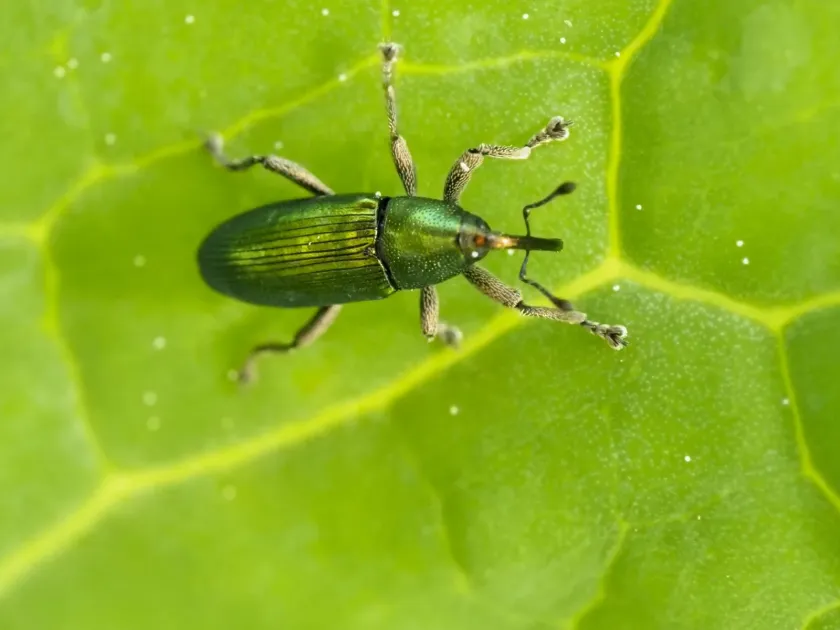
The copper-headed weevil (Baris cuprirostris) is a small beetle belonging to the order Coleoptera and the family Curculionidae. Adults typically measure between 3 and 4 mm in length.
The body displays a metallic sheen, with colors ranging from black to dark blue or greenish tones. They possess a characteristic long, slender, and slightly downward-curved snout, common to the genus Baris.
Larvae are legless and possess a cream or yellowish-white color with a distinct, sclerotized dark head capsule. They spend their entire larval stage concealed within plant tissues.
Adults overwinter in the soil or under plant debris remaining on the field. They emerge in the spring when temperatures consistently rise, beginning their active period of feeding and mating.
The species completes only one generation per year. Females deposit eggs into the stems or petioles of their host plants, providing a protected environment for the developing larvae.
What it damages
This weevil primarily feeds on plants in the Brassicaceae (cruciferous) family. Major crops affected include cabbage, radish, turnip, and rapeseed (canola).
Larvae are responsible for the most significant damage, as they mine the internal tissues of stems and root necks. This activity disrupts vascular flow, weakening the plant's structural integrity.
Infected plants become highly susceptible to secondary pathogens, including bacteria and fungi that thrive in the tunnels created by the larvae, often leading to rot.
Adult beetles feed on the leaves, creating small pin-prick holes. While this does not typically kill the plant, it contributes to stress and reduces overall photosynthetic capacity.
Severe infestations result in stunted growth, yellowing of lower leaves, and premature wilting, which can lead to significant yield losses in commercial farming operations.
Signs of infestation
Early identification is possible by observing small, round punctures on the leaves. During the peak of activity, adult beetles can be spotted on the leaves or stems.
Internal presence is indicated by swellings or cracking at the base of the stem. Examining these areas often reveals tunnels filled with larval frass and potentially the larvae themselves.
Wilting during the heat of the day, even with sufficient soil moisture, is a primary indicator of larval damage to the stem's vascular system, preventing water uptake.
On seedlings, the presence of these pests can lead to rapid collapse. Checking the root neck area for signs of mining is essential if plants show sudden decline.
Mass appearance of adults during the flight season is a clear sign that egg-laying is occurring, signaling the need for immediate field monitoring and protection.
Control measures
Crop rotation is the most effective cultural strategy. Avoiding the planting of cruciferous crops on the same site for at least three to four years breaks the pest's life cycle.
Post-harvest sanitation is critical; removing and destroying crop residues reduces the overwintering population significantly. Deep plowing can also help expose pupae to winter temperatures.
Weed management, specifically targeting cruciferous weeds like wild mustard or shepherd's purse, is necessary as these act as alternative hosts for the weevils.
When infestation levels exceed economic thresholds, the application of approved insecticides may be necessary to protect the crop during the early stages of infestation.
Utilizing sticky traps or yellow monitor boards helps detect the initial migration of weevils into the field, allowing for timely and targeted intervention before egg deposition.
Taxonomy
- Latin name
- Baris cuprirostris
- Order
- Coleoptera (beetles)
- Family
- Curculionidae
- EPPO code
- BARICU
Discussion
No discussions yet — be the first.