
Baris
Baris
Description
How to identify
The Baris weevil (genus Baris) is a member of the Curculionidae family. These insects are characterized by their small size, typically ranging from 3 to 5 mm in length, and a distinct elongated rostrum (snout).
Adult weevils have a sleek, polished appearance, often exhibiting a dark black or metallic blue/green hue. Their bodies are hardened, protecting them from environmental stresses.
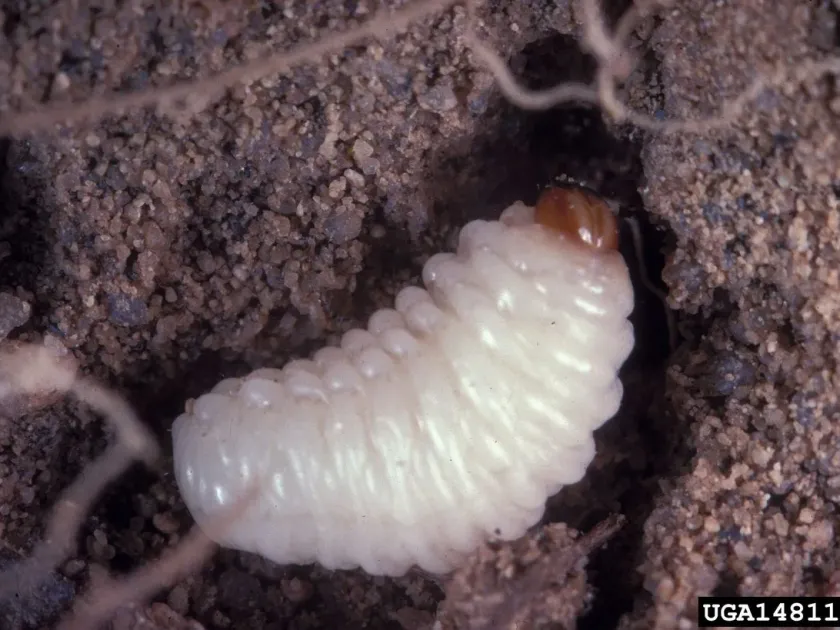
The larvae are legless, C-shaped grubs with creamy-white bodies and light brown head capsules. They are endophagous, meaning they live and feed entirely within the host plant tissues.
When disturbed, these beetles exhibit a thanatosis behavior, folding their legs and dropping to the ground, where their dark coloration makes them difficult to distinguish from soil particles.
This genus includes numerous species, with the cabbage weevil being one of the most economically significant pests in commercial vegetable and oilseed production.
What it damages
Baris weevils primarily target plants within the Brassicaceae family, including cabbage, rapeseed (canola), radish, mustard, and various related weeds like shepherd's purse.
Adults feed on the foliage and petioles, creating small, circular holes. While this feeding damage is usually superficial, heavy infestations can significantly stunt the growth of young seedlings.
The most severe damage is caused by the larvae, which burrow into the stems and root collars of the plants. Their tunneling disrupts the plant's vascular system, hindering water and nutrient uptake.
Infested crops frequently show signs of wilting, chlorosis, and general weakness. In severe cases, the structural integrity of the plant is compromised, leading to plant collapse and death.
Additionally, the feeding tunnels created by larvae serve as entry points for secondary pathogens, such as soft rot bacteria and fungi, which can lead to complete loss of the affected plants.
When it appears
Baris weevils overwinter as adults, finding shelter in the soil or beneath debris. They emerge in the spring once soil temperatures reach the threshold of approximately 10°C.
The initial spring feeding occurs on wild cruciferous plants. As cultivated crops emerge, the weevils migrate to these fields, where they begin feeding and mating.
Females deposit eggs individually into small holes they carve into the petioles or stems of the host plant, often sealing the site with a protective secretion.
The larval stage lasts for several weeks, during which they grow by consuming the internal pith of the stem. The length of this cycle is highly dependent on ambient temperature and plant health.
Pupation typically takes place within the plant stem or in the soil. The new generation of adults emerges later in the summer, feeding briefly before seeking overwintering sites.
Signs of infestation
Visible signs of an infestation include "shot-hole" damage on leaves, where numerous small holes are scattered across the leaf surface due to adult feeding.
Close inspection of the stem base or root collar often reveals small swellings or galls. These are primary indicators that larvae are developing inside the plant.
One can often spot dark, plugged holes on the stem; these are the entry points where the female laid her eggs and sealed the site against moisture loss and predators.
Plants affected by larval feeding often exhibit an unusual bluish or purplish tint to the leaves, indicating stress and compromised nutrient transport to the foliage.
Field patches with stunted, uneven, or wilting crops are classic signals of a localized Baris infestation, especially if healthy neighboring plants do not show the same symptoms.
Control measures
Crop rotation is the cornerstone of Baris management. Avoiding the planting of cruciferous crops on the same field for at least 3-4 years breaks the lifecycle of the pest.
Deep autumn plowing (tillage) is highly effective as it disturbs the overwintering adults in the soil, exposing them to freezing temperatures and natural predators like birds.
Maintaining clean fields by eliminating cruciferous weeds throughout the season removes alternative hosts, significantly reducing the population pressure on commercial crops.
Chemical control involving systemic insecticides may be necessary if thresholds are exceeded, ideally applied during the migration phase when adults are most active.
Utilizing high-quality seed and ensuring optimal fertilization can help plants grow quickly, allowing them to better tolerate minor pest damage and recover more effectively.
Taxonomy
- Latin name
- Baris
- Order
- Coleoptera (beetles)
- Family
- Curculionidae
- EPPO code
- BARISP
Discussion
No discussions yet — be the first.