
Spruce cone moth
Barbara
Description
How to identify
The spruce cone moth (genus Barbara) belongs to the Tortricidae family. These small moths are primary pests of coniferous trees, particularly spruces, causing significant damage to their cones.
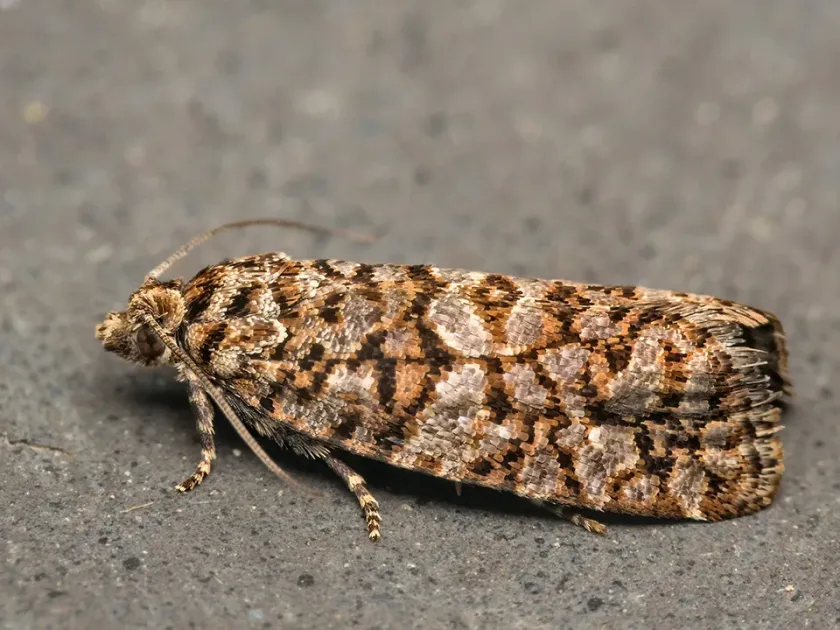
The adult moth has a wingspan of approximately 15–20 mm. Its forewings are mottled with grayish-brown patterns that provide excellent camouflage against the bark of host trees.
The larvae are typically pale, ranging from creamy-white to yellowish, with a distinct dark head capsule. They spend almost their entire developmental period hidden inside the host cones.
These insects are highly specialized, meaning their life cycle is strictly synchronized with the development of the cones on the host tree species.
Adult moths are nocturnal, making them difficult to detect during daylight hours without the use of specialized traps or pheromone lures.
What it damages
The larvae feed exclusively on the reproductive structures of spruce trees. They consume the scales and developing seeds, leading to severe losses in seed production.
By boring into the cones, the larvae disrupt the tree's ability to produce viable seeds, which is devastating for seed orchards and forest nursery operations.
Damage often leads to the premature drying, browning, and eventual dropping of infested cones. This significantly reduces the quality and quantity of the harvest.
In outbreak years, the moth can infest a very high percentage of the cone crop, causing long-term damage to the reproductive capacity of the affected forest stand.
Secondary infections, such as fungal pathogens, often colonize the damaged tissues, further weakening the tree's overall vigor and resistance to other stressors.
When it appears
Adult moths emerge in late spring or early summer, corresponding with the period when young spruce cones are beginning their active growth phase.
Eggs are laid individually or in small clusters on the young cones. Larvae hatch and quickly bore into the cone interior to begin feeding on the nutrient-rich tissues.
The larval stage lasts throughout the summer season. As the cone matures, the larvae continue to feed, expanding their tunnels and increasing the internal damage.
By autumn, the mature larvae prepare for overwintering. They typically remain within the old, damaged cones or retreat into bark crevices to pupate or enter diapause.
The life cycle is completed the following spring, when the pupae transform into adults, marking the start of the next generation of spruce cone moths.
Signs of infestation
A key indicator of infestation is the accumulation of brownish frass (larval droppings) visible on the exterior of the cone, often mixed with sticky resin.
Cones affected by larvae often appear deformed or stunted compared to healthy ones, with irregular scale patterns and patches of discoloration.
Small circular exit or entry holes on the cone surface serve as clear evidence of larval presence. These sites are often accompanied by hardened drops of resin.
Prematurely yellowed or withered cones falling from the canopy during the summer months is a strong symptom of heavy larval feeding inside the cone structure.
Opening an infested cone reveals internal tunnels and galleries filled with wood-like debris, seed fragments, and often the larvae or pupae themselves.
Control measures
Chemical control is most effective when applied as a preventative measure just before the larvae penetrate the cone tissue, usually timed with the moth's peak flight.
Silvicultural management, such as the regular collection and disposal of infested cones, can significantly reduce the overwintering population in nursery areas.
Pheromone trapping is an essential tool for monitoring population levels and can be used to disrupt mating cycles, effectively reducing the number of fertile eggs laid.
Encouraging biological control agents, including various species of parasitic wasps, can help keep moth populations below economic injury levels in natural stands.
- Timing insecticide applications based on pheromone trap monitoring.
- Proper sanitation of infested material in seed orchards.
- Utilizing biological insecticides such as Bacillus thuringiensis where appropriate.
Taxonomy
- Latin name
- Barbara
- Order
- Lepidoptera (butterflies)
- Family
- Tortricidae
- EPPO code
- BARBSP
Discussion
No discussions yet — be the first.