
Lesser bandicoot rat
Bandicota bengalensis
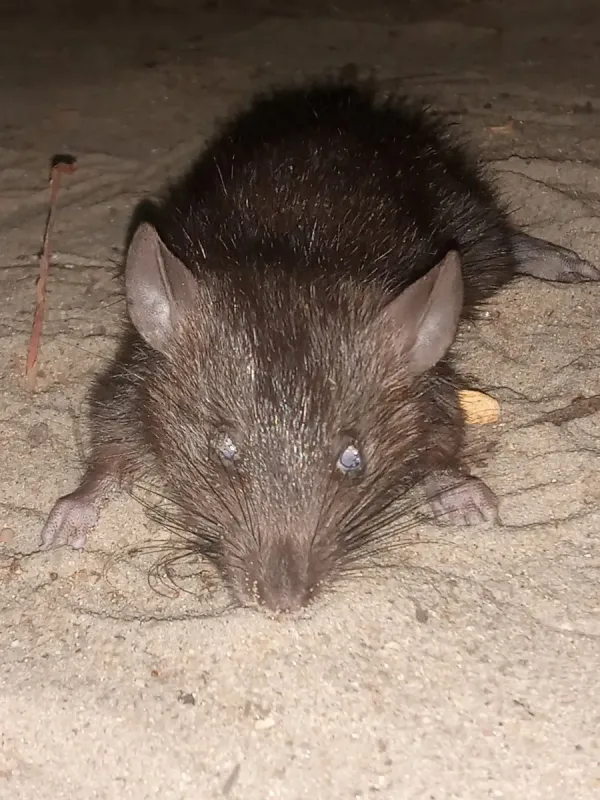
Description
How to identify
The lesser bandicoot rat is a robust rodent species belonging to the Muridae family, often mistaken for a large, aggressive brown rat due to its size and appearance.
Adult individuals typically reach a body length of up to 25 centimeters, with a tail that is generally shorter than the combined length of the head and body.
Their fur is characteristically coarse and bristly, appearing dark brown to blackish on the dorsal side, while the belly is often a lighter, brownish-gray color.
The head is broad with small, rounded ears, and the incisors are exceptionally strong, designed for digging deep burrows and gnawing through various obstacles.
They are known for their territorial behavior and vocalization, often making grunting sounds when threatened, which distinguishes them from other common rat species.
What it damages
This pest is highly destructive to cereal crops, particularly rice, wheat, and maize, attacking plants from the seedling stage through to the ripening of the grain.
In rice fields, they often cut young tillers at the base, leading to significant yield losses and sometimes total crop failure in heavily infested sections.
Beyond field damage, they cause massive economic losses in grain stores, where they not only consume vast quantities of stored produce but also contaminate it.
Their tunneling activities cause structural damage to irrigation canals and embankments, resulting in water leakage and the destabilization of agricultural soil systems.
Furthermore, they serve as natural reservoirs for several zoonotic diseases, including leptospirosis, posing a serious health risk to agricultural workers and domestic animals.
When it appears
Lesser bandicoot rats are active throughout the year, especially in tropical climates where the lack of severe winters allows for continuous breeding cycles.
Populations tend to peak during the crop maturation phase when the fields offer both optimal cover and an abundant, high-energy food source for the growing colonies.
Reproductive success is high, with females producing several litters annually, leading to rapid population expansion if environmental conditions remain favorable.
Seasonal migration often occurs following harvest activities, as the rats move from open fields to storage buildings, farmhouses, or urban peripheries in search of food.
Flooding events can trigger localized mass movements, forcing the rats to abandon their burrows and concentrate on higher ground near residential or agricultural infrastructure.
Signs of infestation
The most visible sign of an infestation is the presence of numerous burrow openings, often found in clusters along field boundaries or irrigation channels.
Fresh soil mounds found outside these burrow entrances are indicative of ongoing maintenance and expansion of their extensive underground tunnel systems.
Well-worn pathways, or runways, are frequently visible leading from the burrows toward the feeding sites, often littered with clipped stems and husks.
Partial feeding on crops, with plants cut or gnawed near the base, is a classic indication of bandicoot activity in a wheat or rice field.
- Distinctive footprints in muddy soil;
- Large, cylindrical droppings near burrow entrances;
- Food caches hidden within the deeper sections of their burrows.
Control measures
The most effective strategy involves a combination of chemical control using anticoagulants and diligent environmental management to eliminate hiding spots.
Regular weeding and the clearing of overgrown field margins significantly reduce the rodent's ability to find shelter, making the fields less hospitable for nesting.
Deep plowing of fallow fields is a recommended mechanical method to collapse burrow systems and disrupt the reproductive cycle of the existing population.
In warehouses, ensuring structural integrity through the use of metal plating and wire mesh is crucial to preventing rodents from entering storage areas.
Integrated Pest Management (IPM) programs should also encourage the preservation of natural predators, such as owls and monitor lizards, to help keep population levels in check.
Taxonomy
- Latin name
- Bandicota bengalensis
- Order
- Rodents
- Family
- Muridae
- EPPO code
- BANDBE
Discussion
No discussions yet — be the first.