
Gray triggerfish
Balistes carolinensis
Description
How to identify
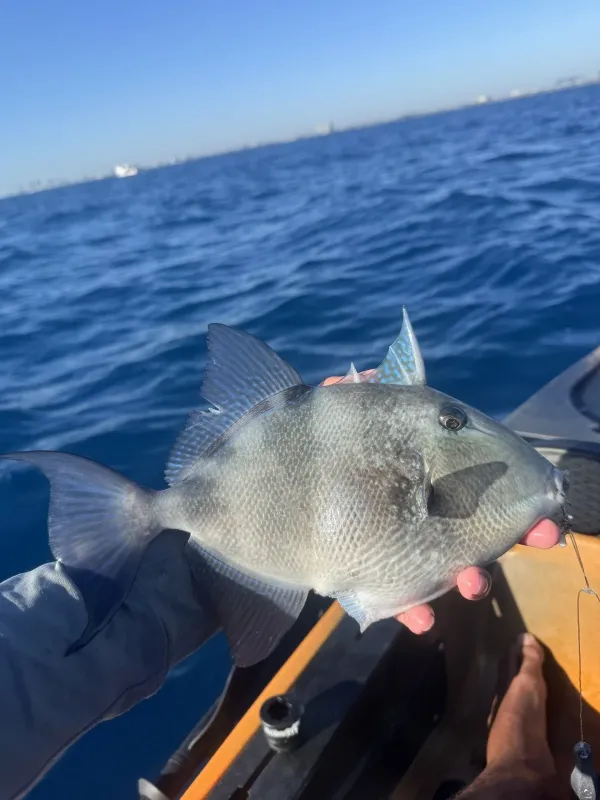
The gray triggerfish is a marine species belonging to the order Tetraodontiformes and the family Balistidae, known for its deep, laterally compressed body.
It possesses a specialized dorsal fin mechanism: the first large spine is held upright by a second, smaller locking spine, a feature from which the common name is derived.
Adult specimens typically reach lengths of 45 to 60 centimeters, featuring a gray or brownish-gray coloration that serves as effective camouflage in reef environments.
The fish is equipped with a very powerful jaw and strong, incisor-like teeth designed to crush the shells of various marine invertebrates, such as bivalves and crustaceans.
Due to their highly developed territorial behavior, these fish often dominate specific coastal zones, interacting frequently with human-made underwater structures.
What it damages
The gray triggerfish is considered a significant nuisance for the aquaculture industry, particularly in regions where shellfish like oysters and mussels are farmed.
Equipped with their specialized dentition, they are capable of biting through protective nets, gaining entry into cultivation pens to feed on the enclosed harvest.
These intrusions result in substantial crop loss, as the fish can decimate a large portion of a shellfish stock within a very short period of time.
Besides direct predation, triggerfish cause considerable structural damage to cage systems, necessitating frequent repairs and replacement of expensive netting materials.
In addition to economic damage, the presence of these fish can disrupt the local balance of coastal ecosystems by outcompeting native species for resources.
When it appears
The activity of the gray triggerfish is strongly influenced by water temperature, as they favor warmer coastal conditions for their primary life stages.
The peak period for agricultural damage occurs during the summer months when these fish migrate into shallower coastal waters for feeding and reproduction.
As metabolic rates increase with warmer water, their appetite and exploratory behavior intensify, making them more likely to target aquaculture cages.
During the cooler winter months, the fish move to deeper, warmer offshore waters, significantly reducing the pressure on shallow-water farming installations.
Understanding these migration patterns allows aquaculture operators to anticipate periods of highest risk and prepare protective measures accordingly.
Signs of infestation
The most diagnostic sign of a triggerfish infestation is the presence of irregular, ragged holes in the nylon or wire netting of the cages.
Accumulations of shattered mollusk shells underneath or inside the pens serve as clear evidence of triggerfish predation on the farmed stock.
Operators may observe unusual fish behavior, such as groups of triggerfish circling or interacting with the net structures during daily checks.
A sudden, unexplained decrease in stock density within a pen, combined with the absence of disease symptoms, often points to predatory intrusion by this species.
Frequent sightings of these fish near farm infrastructure suggest that they have become acclimated to the presence of food sources in that specific area.
Control measures
The primary control measure involves the use of high-strength, bite-resistant netting materials that are specifically engineered to withstand mechanical damage.
Deploying double-layered cage designs creates a secondary defensive barrier, making it much harder for the triggerfish to access the primary stock chamber.
Acoustic deterrents can be employed to create an underwater barrier, effectively discouraging the fish from lingering near the expensive farming equipment.
In cases of severe infestation, regulated culling or relocation efforts may be undertaken, provided that these actions comply with local environmental regulations.
Diligent maintenance and routine inspections of all containment nets allow for the prompt identification and repair of weak points before significant losses occur.
Taxonomy
- Latin name
- Balistes carolinensis
- Family
- Balistidae
- EPPO code
- BLSTCA
Discussion
No discussions yet — be the first.