
Putman mite
Balaustium putmani
Description
How to identify
The Putman mite (Balaustium putmani) is a member of the Erythraeidae family within the Trombidiformes order. These mites are notable inhabitants of various orchard ecosystems.
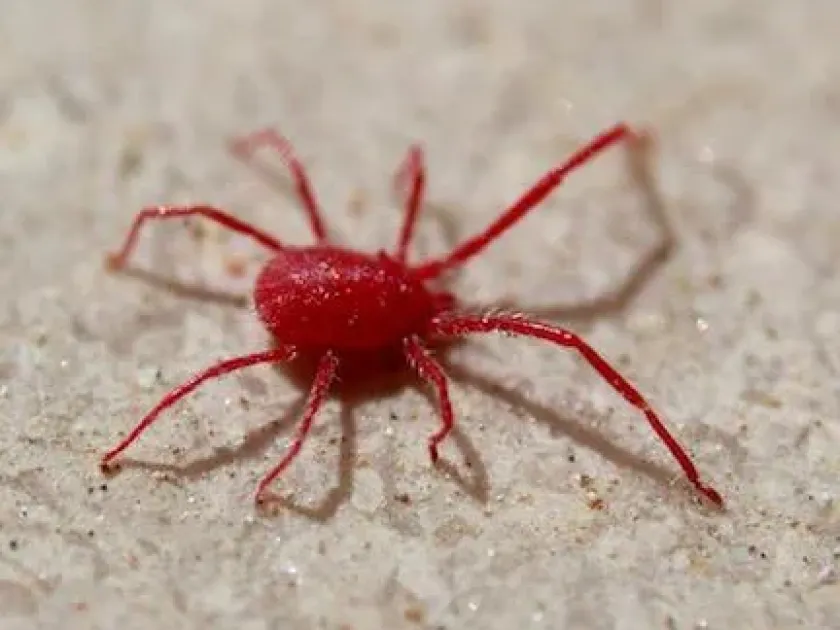
Adult mites are recognized by their distinct bright red or orange body coloration. Their bodies are oval-shaped and covered with fine hairs, which is a characteristic trait of their family.
These mites are highly mobile and can be observed crawling rapidly across bark, leaves, and fruits, making them visible during careful field inspections.
Their biology involves a flexible feeding strategy, allowing them to utilize both plant juices and pollen, as well as preying on smaller arthropods.
The life cycle includes egg, larval, nymphal, and adult stages. Overwintering typically occurs in the egg stage, often deposited in bark crevices or soil debris.
What it damages
This mite primarily attacks fruit-bearing plants, including apple, pear, peach, and grapevine crops, leading to significant physiological stress.
A key aspect of the damage caused by Balaustium putmani is its preference for feeding on flower anthers, which directly impairs successful pollination and fruit set.
Feeding on young leaves leads to cell depletion, resulting in necrotic spots and a reduction in the plant's overall photosynthetic capacity.
High population densities can cause premature leaf drop, which weakens the host tree and increases susceptibility to subsequent secondary infections.
Fruit quality is often compromised in infested orchards, as the mites can cause surface blemishes and physical deformation on ripening fruits.
Signs of infestation
The most immediate sign of infestation is the presence of fast-moving red dots on the foliage, which are easily detected with a simple hand lens.
Leaves showing signs of feeding exhibit small stippling or necrosis, which may gradually coalesce into larger, brown, dried-out patches.
Damaged blossoms appear wilted or misshapen, with clear evidence of damage to the anthers, preventing proper fruit development.
During peak heat in the summer, adult mites often migrate to the underside of leaves to congregate, leading to localized leaf discoloration.
The presence of exuviae (cast skins) and small fecal deposits on the leaf surface contributes to an overall dusty or dirty appearance of the foliage.
Control measures
Early season intervention is crucial, including the application of horticultural oils during dormancy to target overwintering eggs on tree trunks.
Chemical control with selective acaricides should only be implemented when pest density exceeds economic thresholds to avoid killing beneficial predatory mites.
Cultural practices, such as pruning and removing loose bark, help eliminate overwintering niches and reduce the mite population for the coming season.
Enhancing biological control by maintaining a healthy population of generalist predators is an effective strategy for long-term management of this species.
Consistent orchard monitoring using yellow or white sticky traps can help detect population spikes, allowing for timely and precise treatment.
Taxonomy
- Latin name
- Balaustium putmani
- Order
- Mites
- Family
- Erythraeidae
- EPPO code
- BALUPU
Discussion
No discussions yet — be the first.