
Balaustium mite
Balaustium
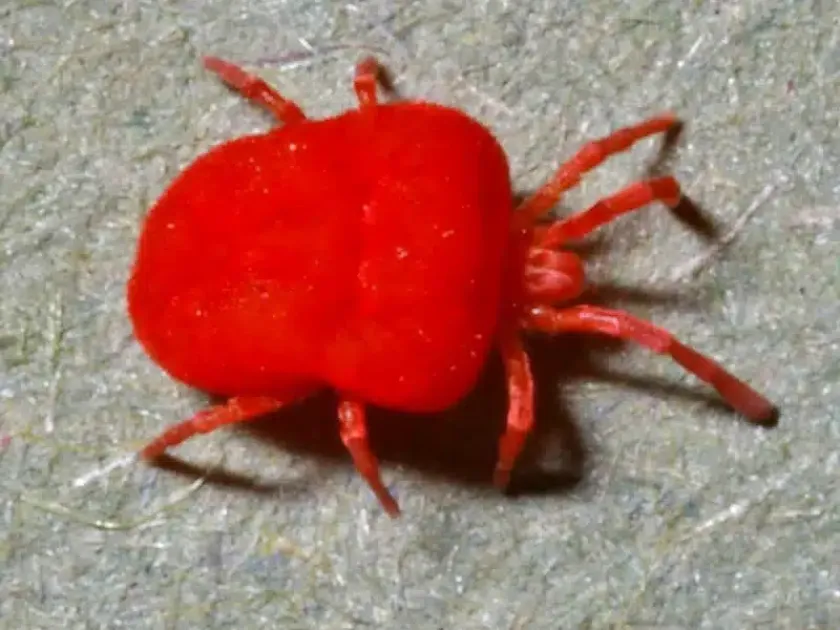
Description
How to identify
The genus Balaustium belongs to the family Erythraeidae within the order Trombidiformes. These mites are known for their bright red coloration and high level of mobility.
Adults are covered in dense setae (hairs). Their mouthparts are versatile, allowing them to feed on plant juices, pollen, or small arthropods, making them complex members of the ecosystem.
Taxonomically, they occupy a niche where some species function as beneficial predators, while others act as phytophagous pests causing significant agricultural concern.
Identification often requires magnification, as their small size (usually 1-2 mm) makes them difficult to distinguish from other red-colored mites in the field.
Unlike spider mites, they do not produce silk webbing, which is a key morphological and behavioral distinction during field inspections.
What it damages
These mites attack a diverse range of plants, including fruit trees, berry bushes, ornamental flowers, and various vegetable crops.
By piercing the epidermis and sucking plant sap, they disrupt the normal metabolic processes, leading to reduced photosynthesis and overall plant stress.
Heavy infestations result in leaf deformity, chlorosis, and premature leaf drop, which significantly weakens perennial crops and reduces their winter hardiness.
Young fruits are particularly vulnerable, as the mites leave necrotic spots and lesions that degrade the aesthetic and economic value of the harvest.
In cases of severe infestation, the cumulative damage can lead to substantial yield losses and stunted plant growth throughout the growing season.
When it appears
Activity typically begins in early spring as temperatures rise, allowing overwintering populations to emerge and resume feeding on emerging vegetation.
The peak of their reproductive cycle usually occurs during hot and dry summer months, when rapid development allows for multiple overlapping generations.
Environmental conditions play a crucial role, as drought-stressed plants are often more susceptible to mite colonization and subsequent damage.
As autumn approaches, the mites seek refuge in soil crevices, under bark, or within plant debris to undergo diapause during the winter months.
Early season scouting is essential to identify hotspots and prevent the establishment of large populations before the mid-summer peak.
Signs of infestation
The earliest signs of infestation appear as tiny stippling or light-colored punctures on the surface of the leaves.
Visual confirmation of the pests involves spotting small, fast-moving bright red individuals on the underside of leaves or near flower buds.
Over time, the puncture marks enlarge and merge, causing necrotic, browned areas that can lead to leaf tissue death.
A lack of fine webbing on the plant canopy serves as a primary diagnostic indicator that the pest is likely Balaustium rather than a common spider mite.
Wilting, loss of turgor, and overall poor plant vigor are clinical signs of high mite density that demand immediate intervention.
Control measures
Chemical control involving acaricides should be implemented based on economic thresholds to manage population density effectively.
Integrating biological control agents, such as predatory mites (e.g., Phytoseiidae), can offer sustainable long-term management of mite populations.
Cultural practices, including the removal of weeds and crop residues, help eliminate overwintering sites and reduce the initial population pressure.
- Application of specific acaricides.
- Release of predatory mites.
- Maintaining optimal irrigation to reduce plant stress.
- Sanitation of the orchard or field environment.
Taxonomy
- Latin name
- Balaustium
- Order
- Mites
- Family
- Erythraeidae
- EPPO code
- BALUSP
Discussion
No discussions yet — be the first.