
Acorn weevil
Balanobius
Description
How to identify
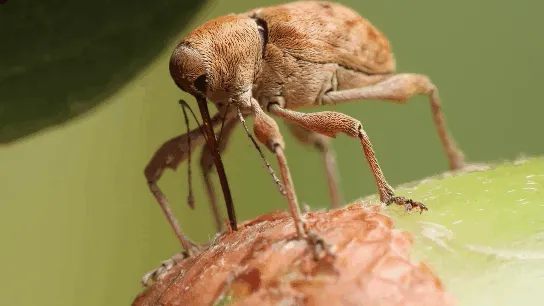
The acorn weevil (Curculio glandium) is a member of the Curculionidae family, characterized by a long, slender rostrum (snout) which is often longer than its body.
Adult beetles are brownish in color, typically measuring 4–8 mm in length, and possess specialized structures on the snout for boring into hard acorn shells.
The larvae are legless, cream-colored grubs that live exclusively inside the acorns, where they develop and consume the seed contents.
They are specialized pests, heavily reliant on the presence of oak species (Quercus) to complete their complex biological life cycle.
Distinguishing them from other weevil species requires attention to the specific shape of the rostrum and the specific host association with acorns.
What it damages
The primary damage is caused by the larvae, which burrow into developing acorns to feed on the endosperm, rendering the seeds infertile.
In cases of heavy infestation, the acorn weevil can cause substantial losses of up to 90% of the annual acorn crop, impacting natural forest regeneration.
The feeding activity creates exit holes that serve as entry points for various fungal and bacterial pathogens, leading to the rapid decay of the fruit.
Damage to acorns reduces the available food source for many wildlife species, such as squirrels, jays, and deer, which rely on mast for survival.
While adults may feed on leaves, this damage is generally considered minor compared to the total destruction of seeds by the larval stage.
When it appears
Adults emerge from the soil in late spring and early summer, corresponding with the time when oaks begin to set fruit and acorns start to grow.
The mating and egg-laying phase lasts throughout the summer as the weevils search for developing acorns to puncture with their snouts.
Larval development occurs entirely within the acorn, lasting approximately one month, depending on environmental temperature and moisture.
Once fully developed, larvae exit the acorns, typically in autumn, and burrow into the soil to undergo diapause throughout the winter.
Pupation occurs in the spring within the soil, after which the new generation of adults emerges to restart the cycle.
Signs of infestation
The most recognizable sign is the presence of small, perfectly circular holes in fallen acorns, indicating that the larvae have emerged to enter the soil.
Premature fruit drop of green, discolored, or malformed acorns in mid-summer is a clear indicator of a weevil infestation within the canopy.
Tiny punctures or scratches on the surface of young, developing acorns are often the first signs of egg-laying activity by the female weevils.
When an infested acorn is opened, it is often found to be hollowed out and filled with larval frass and decay.
- Detection of adults on oak foliage during the early summer.
- Heavy accumulation of acorns with exit holes beneath the oak tree crown.
Control measures
Collecting and disposing of fallen acorns early in the season is a highly effective manual control method to prevent larvae from entering the soil.
Cultivating or tilling the soil under the tree canopy in late autumn can disrupt the larvae's overwintering chambers, significantly reducing the next year's population.
In managed nurseries or parklands, targeted applications of systemic insecticides may be used during the peak adult emergence period.
Promoting a healthy ecosystem with natural predators, such as woodpeckers, jays, and parasitic wasps, can help suppress weevil population outbreaks.
Monitoring using pheromone traps allows forest managers to track emergence patterns and time their protective interventions effectively.
Taxonomy
- Latin name
- Balanobius
- Order
- Coleoptera (beetles)
- Family
- Curculionidae
- EPPO code
- BALBSP
Discussion
No discussions yet — be the first.