
Shoebill
Balaeniceps
Description
How to identify
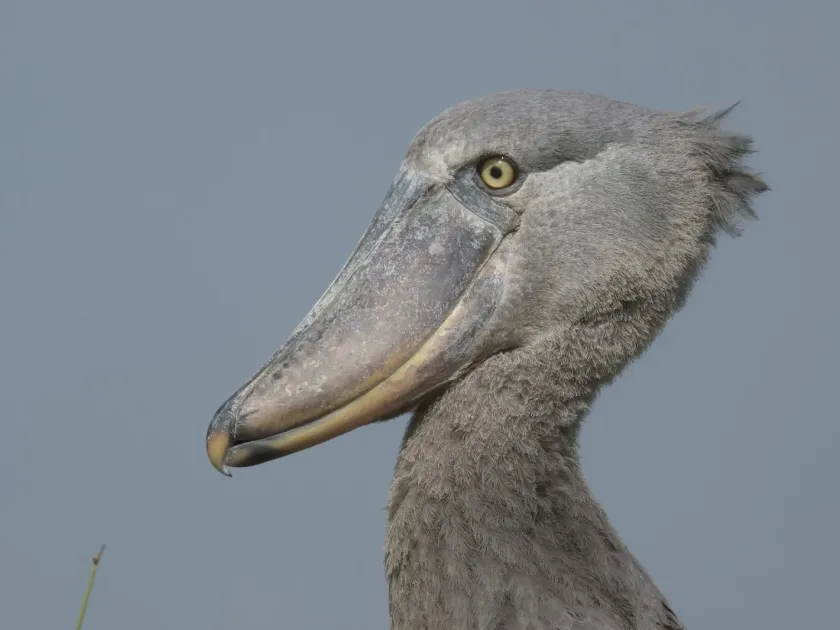
The shoebill (scientific name Balaeniceps rex) is a large, distinctive stork-like bird belonging to the order Pelecaniformes and its own unique family, Balaenicipitidae. It is native to the freshwater swamps and wetlands of tropical East Africa, known for its massive, shoe-shaped bill.
Physically, the shoebill is imposing, standing over a meter tall with grey plumage and long legs that allow it to wade through dense aquatic vegetation. Its appearance, while prehistoric and unique, is strictly adapted for hunting in shallow, stagnant waters.
It is crucial for agronomists and farmers to identify this bird correctly, as it is a highly specialized predator. It is not an herbivore and possesses no anatomical adaptations for feeding on crops, seeds, leaves, or roots, thus posing zero threat to plant health.
Taxonomically, the shoebill has no relationship with common agricultural pests such as insects, rodents, or phytophagous birds. Its presence in agricultural landscapes is purely incidental, driven by the presence of water sources that may harbor its primary food supply.
Recognizing the shoebill as a non-pest is essential for responsible land management. Misidentifying this rare, protected species as a threat can lead to improper management practices that violate environmental conservation laws.
What it damages
The diet of the shoebill consists exclusively of fish, such as lungfish and tilapia, as well as occasional amphibians and reptiles. It hunts by standing perfectly still in shallow water, waiting for fish to surface for air, which is then caught with a rapid, powerful strike.
Direct damage to agricultural crops is non-existent. The shoebill does not peck at grains, consume fruits, or trample vegetable gardens in a way that would cause economic loss. Its behavioral patterns are entirely centered around its specific hunting requirements.
Indirect impact is negligible. While the bird may occasionally step into irrigation channels, this does not interfere with the functionality of the hydraulic systems or the development of crops in adjacent fields. The compaction caused by a single bird is insignificant to soil health.
Economic losses associated with the shoebill are zero. In fact, its presence can be seen as an indicator of a healthy, functioning wetland ecosystem nearby, which often provides essential ecosystem services such as water filtration and biodiversity maintenance.
Consequently, in an agronomic context, the shoebill is not classified as a pest. It requires no intervention to prevent crop damage, as its ecological niche is entirely separate from that of cultivated agricultural plants.
Control measures
No pest control measures are required for the shoebill. In most jurisdictions, the shoebill is a protected species, and any attempt to harm, disturb, or harass these birds is strictly prohibited by both national and international wildlife protection laws.
Effective management in agricultural areas focuses on coexistence. If a farmer wishes to minimize bird activity in specific water zones, the best approach is to manage the water quality and fish population density in a way that makes the area less attractive to aquatic predators.
Maintaining clear boundaries and ensuring that wetland areas are managed sustainably can help keep wildlife away from active farming sites without the need for deterrents or chemical intervention, which are strictly advised against.
Agro-ecological strategies should prioritize the protection of endangered species, as they are often beneficial for maintaining the balance of the wider landscape. Avoiding chemical pesticides is essential, as these substances can have devastating effects on wetland biodiversity.
- Strict avoidance of pesticide use near wetland habitats.
- Preservation of natural buffers between fields and swamps.
- Implementation of non-intrusive monitoring of local wildlife.
Taxonomy
- Latin name
- Balaeniceps
- Family
- Balaenicipitidae
- EPPO code
- BLNCSP
Discussion
No discussions yet — be the first.