
Bagous
Bagous
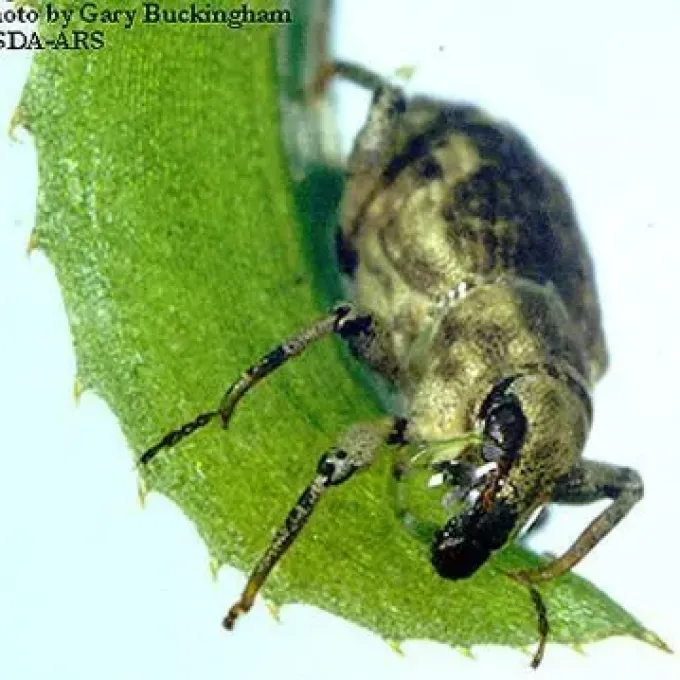
Description
How to identify
Bagous is a genus of beetles belonging to the Curculionidae family (weevils), specifically adapted to life in and around aquatic environments. These small insects typically possess dark, cryptic coloration that allows them to blend seamlessly into their wetland habitats.
The bodies of adult Bagous weevils are often covered in specialized scales or hairs that help trap air, enabling them to survive submerged in water. This is a crucial evolutionary adaptation that distinguishes them from many other terrestrial weevils.
A prominent feature of this genus is the curved rostrum (snout), which is expertly adapted for piercing the tough tissues of aquatic plants. The larvae, typical for weevils, are legless, whitish, and equipped with strong mouthparts designed for burrowing and feeding within plant stems.
The insect's development is intimately linked to the availability of water-dependent flora. Adults are capable of active flight, which facilitates their dispersal to new bodies of water or adjacent wetlands when conditions are favorable.
Taxonomically, they are categorized within the order Coleoptera. Distinguishing specific species within this genus often requires microscopic examination of the pronotum and elytral structure, as morphological differences can be quite subtle.
What it damages
Bagous weevils primarily target hydrophytic plants. These include various aquatic species, but the pest can also impact agricultural crops grown in waterlogged conditions or in paddy fields where they might thrive if unchecked.
Common hosts include pondweeds (Potamogeton), water lilies, and various sedges. When conditions allow, Bagous can become a significant nuisance, particularly in crops sensitive to stem damage or those grown in proximity to large natural reservoirs of these beetles.
Adults primarily feed on emergent plant parts, leaving characteristic small holes or notches in the leaves. This feeding behavior can impair the plant's photosynthetic efficiency and overall vigor.
The larvae cause more severe damage by boring into the stems or rhizomes. This internal feeding disrupts nutrient transport, causes the tissues to rot, and can lead to the wilting and eventual death of the affected plant parts.
High population densities of Bagous can result in substantial biomass loss, which is particularly detrimental in systems where aquatic plants serve as fodder or are managed for water filtration and stabilization.
When it appears
The life cycle of Bagous is strictly synchronized with the growing season of its host plants. In spring, as water temperatures rise, adult weevils emerge from hibernation to begin feeding on young, succulent shoots.
Oviposition typically occurs during the peak growth phase of the plants. Females use their rostrum to create precise punctures in plant tissues, depositing eggs that are immediately surrounded by food sources for the emerging larvae.
The summer season allows for rapid succession of generations. The length of time required for development from egg to adult is highly dependent on ambient water and air temperatures, often spanning several weeks.
As autumn approaches and temperatures drop, adults prepare for overwintering. They migrate from the water to the shore, seeking shelter in moist soil, leaf litter, or decaying vegetation at the water's edge.
Successful overwintering ensures a high carry-over population for the following season, making early-season monitoring essential for effective population management.
Signs of infestation
The first indicator of a Bagous infestation is the appearance of small, localized "window-pane" holes or shot-holes on leaves. Over time, these areas become necrotic and may turn yellow or brown.
Careful inspection of the stems may reveal entry points created by the adults. If a stem is cut open, the internal larval tunnels are often visible, accompanied by frass (larval excrement) and secondary decay of the surrounding tissue.
Observation of reduced vigor or stunted growth in aquatic plant beds is a key warning sign. Often, adults can be spotted resting on the surface of leaves or floating debris near the water line.
A significant indicator is the premature browning and collapse of stems at the waterline. This collapse occurs because the larvae have hollowed out the interior structure of the plant, compromising its mechanical integrity.
The presence of high adult activity near the shore during the spring is a strong signal that significant larval damage will likely follow as the season progresses.
Control measures
The primary control strategy is cultural management, which includes the regular removal of weeds and debris from drainage channels and irrigation systems to eliminate overwintering sites.
Maintaining proper water levels and implementing rigorous crop rotation in managed wetland systems can disrupt the beetle's life cycle and keep populations below economic injury levels.
Biological control focuses on enhancing populations of natural predators, such as waterfowl and various aquatic insects, which can significantly reduce adult weevil numbers in the environment.
Chemical control should be used sparingly and only with formulations specifically approved for use near aquatic environments to prevent adverse impacts on non-target species and water quality.
Consistent monitoring and early detection of damage are critical. By identifying infestations before larvae penetrate deep into the stems, growers can implement management measures that are far more effective and less destructive.
Taxonomy
- Latin name
- Bagous
- Order
- Coleoptera (beetles)
- Family
- Curculionidae
- EPPO code
- BAGOSP
Discussion
No discussions yet — be the first.