
Black house spider
Badumna insignis
Description
How to identify
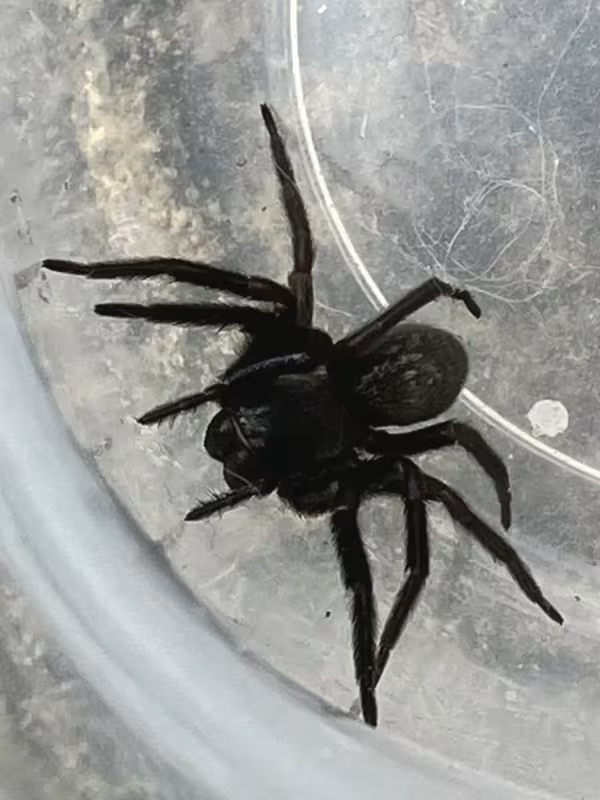
The black house spider (Badumna insignis) belongs to the Desidae family. These spiders are typically dark brown to black in color, with a body length ranging from 10 to 18 mm. Females are notably larger than males and possess a robust, hairy abdomen.
The species is easily recognized by its distinctive, untidy funnel-shaped web. These webs are frequently constructed in crevices of tree bark, window frames, or amidst dense ornamental foliage, creating a sturdy, sheet-like frame of silk.
They have two rows of eyes, facilitating nocturnal hunting. During the day, they remain deep within their funnel retreats, which makes them difficult to spot without careful inspection of the plant's structural nodes.
Development involves several molting stages, with the spider increasing in size as it grows. As an invasive species in some areas, it is highly adaptable to both natural environments and human-made structures.
Agronomic scouting should be performed during late evening hours when the spider is most active. Look for the characteristic silk tunnels that often collect debris, distinguishing them from the webs of common garden orb-weavers.
What it damages
While Badumna insignis does not feed on plant tissues directly, it causes significant indirect damage. The construction of dense, funnel-shaped webs around young shoots restricts airflow and blocks sunlight, which is detrimental to the plant's growth.
The silk structure traps dust, pollen, and leaf debris. This accumulation creates a moist, dark environment that is perfect for the development of fungal pathogens and mold, leading to leaf spot diseases and tissue decay.
Heavy infestations can cause physical deformation of tender growth. As the spider maintains and expands its web, the silk fibers can tighten, resulting in curled or stunted leaves and twisted stems that lose their aesthetic value.
For nursery stock, the presence of these spiders can be a quarantine concern or a reason for the rejection of plants by consumers. The unsightly webs make plants appear neglected and difficult to maintain.
Furthermore, the webs often house other small insects that are attracted to the spider's lair. This increases the total pest load on the plant and interferes with the proper application of systemic or contact pesticides.
When it appears
The black house spider is active throughout the warmer months, typically from spring through late autumn. The peak of their web-building activity occurs during mid-summer when temperatures are optimal for their metabolic rate.
Reproduction takes place in the middle of summer, with females laying egg sacs in protected niches. This period sees a surge in population density, making it crucial for growers to monitor their nursery or garden plots carefully.
As autumn temperatures drop, the spiders' activity declines, and they retreat into deeper crevices or protected structures to overwinter. They are well-adapted to surviving in man-made sheds, greenhouses, and woodpiles.
In greenhouses, where temperatures remain stable, the black house spider may maintain activity year-round. This requires year-round vigilance and the implementation of strict hygiene practices to prevent colony establishment.
Early spring scouting is essential to identify overwintered females before they start creating new webs. Removing these initial nests is the most effective way to prevent a population explosion later in the season.
Signs of infestation
The primary sign of infestation is the presence of messy, funnel-shaped webs. Unlike symmetrical orb webs, these are irregular, thick, and typically lead into a narrow retreat within a crack or a dense leaf cluster.
Accumulated debris at the entrance of the silk funnel is a clear indicator of a resident spider. Leaves situated underneath or near the web often appear dusty, discolored, or show early symptoms of fungal infection.
You may observe physical distortion of new growth. Stems that have been encased in web for a long period often show a noticeable curve or twist, as the silk structure exerts tension on the plant during the drying process.
Nighttime observation with a flashlight will often reveal the spiders near the opening of their webs. They are highly sensitive to vibration, so even walking past a heavily infested plant may cause them to retreat quickly.
Multiple funnel webs on a single shrub or tree indicate an established colony. Such high-density areas often suffer more pronounced yellowing of foliage and general vigor decline due to the inhibited gas exchange.
Control measures
Mechanical removal is the most environmentally friendly control method. Regularly clearing webs with a brush or a high-pressure water spray effectively destroys the spider's shelter and forces them to relocate.
Chemical control involves the application of appropriate acaricides if infestations are severe. It is best to apply these treatments in the evening when spiders are most likely to be active near the entrance of their funnels.
- Prune dense foliage to improve air circulation and light penetration.
- Regularly remove leaf litter and debris from beneath plants.
- Ensure greenhouse structures are sealed to prevent spider entry.
- Use systemic insecticides to control the insects that provide the spider's food source.
- Deploy biological controls, such as parasitoid wasps that target spider egg sacs.
Maintaining a clean garden environment is critical for long-term management. By eliminating attractive nesting sites such as piles of wood or cluttered storage areas, you reduce the likelihood of colonization.
Integrated Pest Management (IPM) strategies suggest focusing on habitat modification first. By keeping the plant canopy open and ensuring the surrounding area is tidy, you make the environment far less hospitable for Badumna insignis.
Taxonomy
- Latin name
- Badumna insignis
- Family
- Desidae
- EPPO code
- BADUIN
Discussion
No discussions yet — be the first.