
Black house spider
Badumna
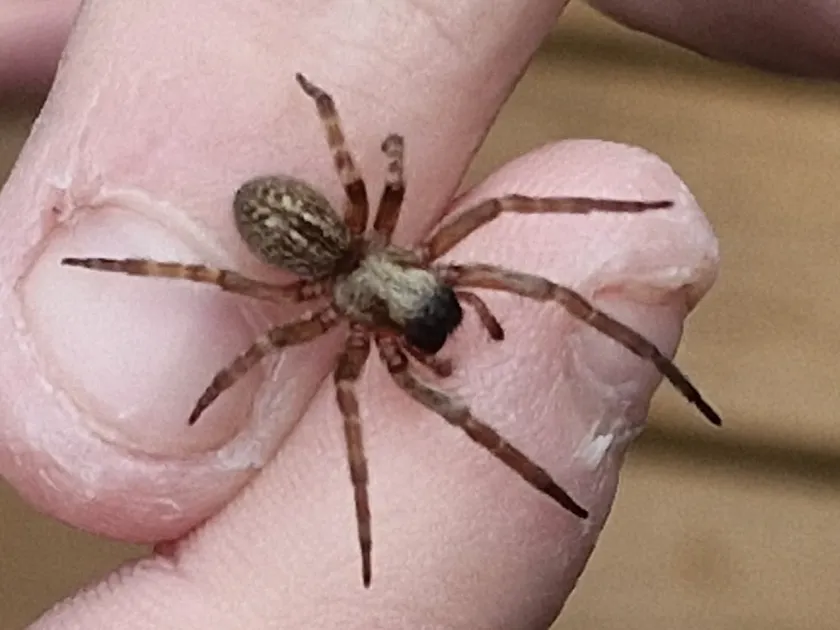
Description
How to identify
The black house spider (genus Badumna) belongs to the Desidae family. These spiders are known for their dark, often velvety appearance, with colors ranging from deep brown to charcoal black.
They possess a stout, robust body structure and relatively short, thick legs. Females are typically larger than males and are known for being long-lived when conditions are favorable for their development.
The most distinctive identification feature of the Badumna genus is their unique web design. It forms a messy, funnel-shaped structure that leads into a silken retreat hidden within crevices or forks of branches.
Taxonomically, they are part of the Araneae order. While not strictly pests in the agricultural sense of feeding on plants, they are often considered nuisance organisms in gardens, nurseries, and greenhouses.
Gardeners should learn to distinguish Badumna from beneficial orb-weaving spiders, which actively reduce insect pest populations, whereas house spiders primarily rely on ambushing prey in fixed locations.
What it damages
Although black house spiders do not consume plant tissues, their presence can cause significant damage to the aesthetic and physiological health of ornamental plants and garden crops.
The primary impact is the formation of dense, thick webs that wrap around leaves and stems. This physical barrier blocks vital sunlight, effectively hindering photosynthesis and potentially slowing the plant's growth.
Massive infestations on shrubs or hedges can result in deformed leaves. The tension from the webs can pull foliage into tight clusters, preventing proper airflow and leading to the senescence of those plant parts.
Webs act as collectors for dust, pollen, and debris. This trapped organic matter becomes a breeding ground for various fungal spores and mold, which can quickly spread to the plant's surface tissues.
Furthermore, these webs pose a practical challenge for gardeners. They obstruct the application of fertilizers and pesticides, preventing uniform coverage and reducing the efficacy of necessary plant care treatments.
When it appears
The activity of Badumna is highly dependent on ambient temperature. These spiders begin to emerge and increase their web-spinning activity once the temperature consistently stays above 15 degrees Celsius.
The peak of their population and web construction occurs during the warm summer months, when increased insect activity provides an abundant food source, encouraging the spiders to expand their hunting territory.
As autumn approaches, spiders become more visible as they actively secure their hunting sites and search for suitable locations to settle in for the upcoming cold season.
During winter, black house spiders enter a state of dormancy. They retreat into deep cracks in bark, crevices in masonry, or dense, sheltered clusters of dried vegetation where they remain until spring.
Early spring warming triggers their emergence from hibernation. If spring weather is unseasonably warm, the reproductive cycle accelerates, leading to larger spider populations earlier in the season.
Signs of infestation
The most obvious sign of infestation is the discovery of funnel-shaped silk retreats. These messy, soot-like webs are frequently found in the angles of branches, near plant stems, or on outdoor structures.
Deformed or curled leaves that appear unnaturally stuck together are a clear indication of a nearby spider colony. This clustering disrupts the normal habit and visual appeal of the plant.
The presence of chitinous remains and other insect debris scattered around the web entrance suggests the location is being used as a productive hunting zone by the spider.
On warm, calm evenings, you may observe the spiders resting near the mouth of their funnels, waiting for vibrations in the web to signal the presence of potential prey.
Plants suffering from persistent spider presence often appear dull or "dusty." Despite proper watering and nutrient management, these plants may show reduced vigor and stunted new growth.
Control measures
Mechanical control is the most practical and effective strategy. Regularly removing webs with a stiff brush or a high-pressure water spray forces the spider to relocate or perish, limiting population growth.
Cultural practices, such as proper pruning, are essential. By removing excessive branches and thinning out dense foliage, you decrease the number of suitable spots for spiders to construct their funnels.
Chemical control is rarely effective against the spiders themselves because they are shielded within their retreats. Instead, focus on general pest management to reduce the population of insects they prey upon.
Sanitation is key to prevention. Clearing away piles of wood, debris, and dead plant matter reduces the available shelter sites where Badumna can successfully hibernate during the winter.
To discourage spiders, maintain high levels of light and airflow around your plants. By eliminating dark, stagnant corners, you make the environment less attractive for web-building spiders.
Taxonomy
- Latin name
- Badumna
- Family
- Desidae
- EPPO code
- BADUSP
Discussion
No discussions yet — be the first.