
Bactra verutana
Bactra verutana
Description
How to identify
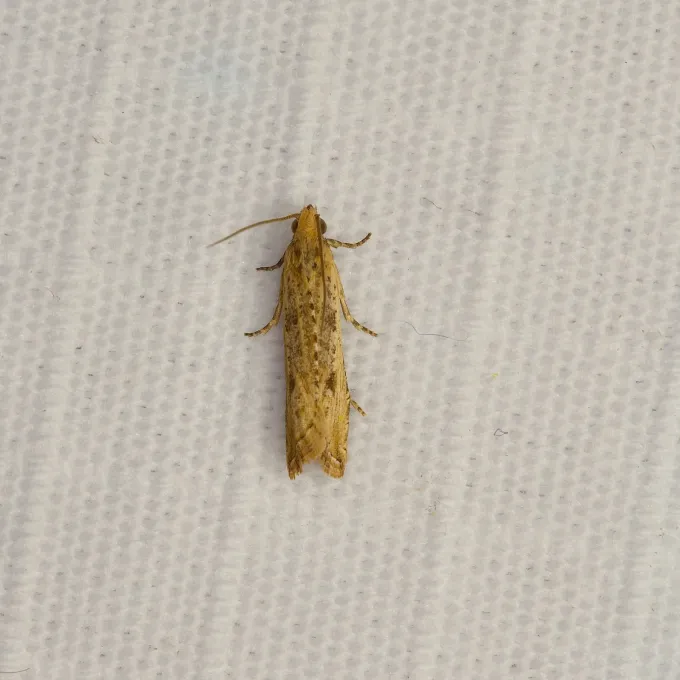
Bactra verutana is a species of moth in the family Tortricidae. The adult moth has a wingspan of approximately 12–18 mm and is characterized by ochreous-brown forewings with distinct patterns.
The larvae, or caterpillars, undergo several developmental stages, transitioning from pale yellow to greenish colors with a darkened head. They are known for their endophagous lifestyle, residing within plant tissues.
The life cycle follows a complete metamorphosis: egg, larva, pupa, and adult. Identification of the adult moths is often difficult due to their nocturnal habits and camouflaged appearance.
Eggs are typically laid singly or in small groups on the surface of host plants, which allows the newly hatched larvae to bore directly into the plant structure for feeding.
The population density is highly dependent on humidity levels, as the species primarily associates with aquatic or semi-aquatic plant environments.
What it damages
The primary hosts for Bactra verutana are members of the Cyperaceae family, particularly Cyperus rotundus (purple nutsedge). In some instances, it may spill over to nearby agricultural crops.
Damage occurs as larvae bore into the stems and flower stalks, consuming the inner tissues. This activity stunts the growth of the plant and causes wilting and chlorosis.
Flower heads that have been colonized by the larvae often fail to develop properly or lose fertility, leading to significant reductions in seed yield.
Severe infestations can lead to substantial economic losses, particularly in fields where weed management practices have been neglected near water sources.
Because the larvae are concealed within the stems, early detection is difficult, and visible damage often appears only after the plant has been significantly weakened.
When it appears
The adult flight period typically begins in late spring and continues throughout the summer, with multiple generations possible in warmer climates.
Larval activity peaks during the period of rapid plant growth, usually mid-summer, when the environmental conditions favor the development of the generation.
The species overwinters either as a larva or pupa within crop residues, soil, or the lower stems of host plants remaining in the field.
Climate factors such as drought or excessive precipitation significantly impact the survival rates of each generation and the overall population dynamics.
Monitoring for adults is effectively performed using light traps or pheromone lures to determine the timing for necessary pest control interventions.
Signs of infestation
The presence of entry holes in the stems of plants, often surrounded by frass (larval excrement), is a primary indicator of an infestation.
Wilting, yellowing, or stunted growth of terminal shoots is a common symptom resulting from the internal damage caused by the feeding larvae.
Inspecting the interior of suspected stems will reveal the larvae or the distinctive tunnels and tissue damage caused by their feeding activities.
Deformed or underdeveloped inflorescences are often a clear sign that the larvae have targeted the reproductive parts of the plant.
Presence of fine webbing near the base of the stems or on the leaf surfaces can also indicate an active larval colony in the immediate area.
Control measures
Cultural control practices involve the removal of sedge weeds, which serve as primary reservoirs for the pest, and managing soil moisture to prevent favorable breeding conditions.
Chemical control usually requires the use of systemic insecticides, which must be applied before the larvae burrow deeply into the plant stems.
Biological control options include the use of Bacillus thuringiensis formulations, which are effective against young larvae while minimizing environmental impact.
Crop rotation and proper field sanitation help reduce the overwintering success of the pest and break the life cycle in infested areas.
- Use light traps for monitoring
- Remove crop debris post-harvest
- Apply systemic insecticides early
- Manage sedge populations
Taxonomy
- Latin name
- Bactra verutana
- Order
- Lepidoptera (butterflies)
- Family
- Tortricidae
- EPPO code
- BACTVR
Discussion
No discussions yet — be the first.