
Bactra venosana
Bactra venosana
Description
How to identify
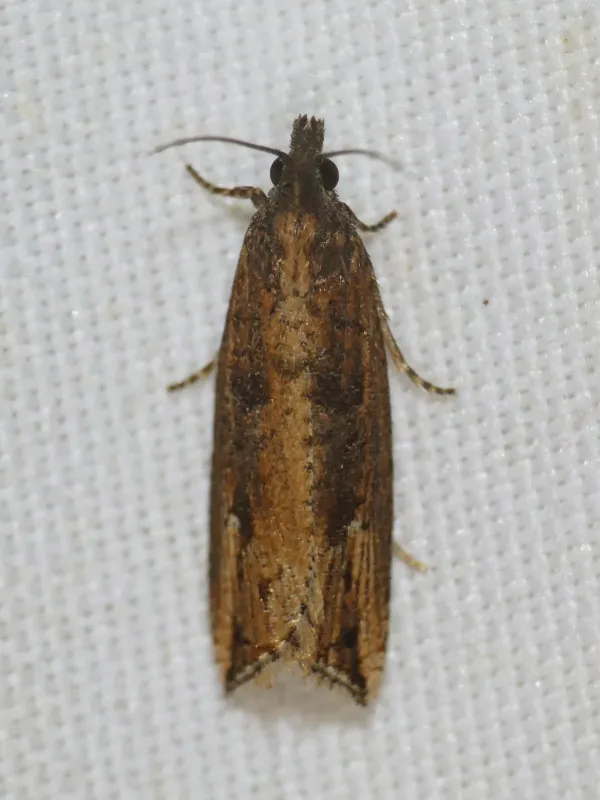
Bactra venosana belongs to the Tortricidae family within the order Lepidoptera. This small moth is characterized by its dull-colored wings, typically ranging from light brown to yellowish-gray, which allow it to blend seamlessly into its natural habitat.
The larvae, known as caterpillars, possess a light-colored body and a distinctively darkened head capsule. They are specialized borers that spend most of their life cycle protected within the internal tissues of their host plants.
What it damages
This pest primarily infests plants in the Cyperaceae family, with Cyperus esculentus (chufa) being a major target. The larvae bore into the stems, disrupting the plant's vascular system and nutrient transport.
By damaging the central shoot, the larvae effectively halt the plant's growth, leading to reduced tuber formation. Infestation on a large scale can significantly impact the final yield, making it a target for agricultural pest control.
When it appears
The life cycle of the moth is highly dependent on climate, with several generations appearing during a single growing season in temperate and tropical regions. Adults are primarily nocturnal, emerging to mate and oviposit on the foliage of host plants.
The transition between generations is continuous in warm climates, leading to overlapping life stages on the field. This necessitates ongoing monitoring throughout the entire vegetative period of the crop to prevent population explosions.
Signs of infestation
The most visible symptom of an infestation is the wilting or yellowing of the central leaf, often referred to as "dead heart." Upon close inspection, small entry holes on the stem and associated larval frass can be observed.
Internally, the stem is hollowed out, showing evidence of larval tunneling. When plants are heavily infested, they may exhibit stunted growth or collapse, significantly reducing their competitive ability against surrounding vegetation and weeds.
Control measures
Management strategies focus on cultural practices, such as removing sedge-like weeds that serve as alternate hosts. Proper field sanitation after harvest is essential to reduce the population of pupae overwintering in plant debris.
Chemical control should be timed to target neonate larvae before they burrow into the stem tissue. In high-pressure areas, integrated pest management (IPM) involving pheromone monitoring and strategic application of systemic insecticides is the most effective approach.
Taxonomy
- Latin name
- Bactra venosana
- Order
- Lepidoptera (butterflies)
- Family
- Tortricidae
- EPPO code
- BACTVE
Discussion
No discussions yet — be the first.