
Rush Marble
Bactra lanceolana
Description
How to identify
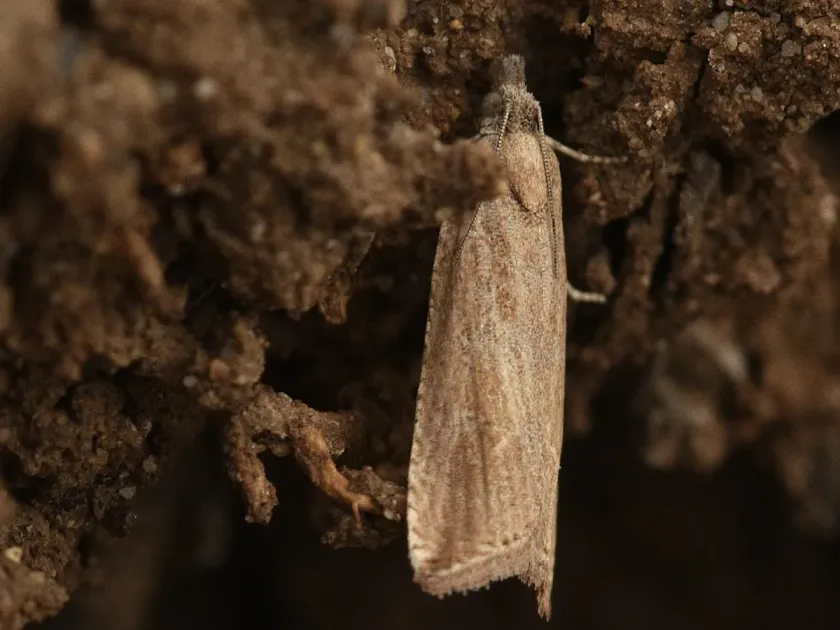
The Rush Marble (Bactra lanceolana) is a small moth belonging to the family Tortricidae. Adults feature a wingspan ranging from 12 to 18 mm, with forewings showing a yellowish-brown or greyish pattern that often displays a distinctive lance-shaped marking.
The larvae, or caterpillars, are typically 10–12 mm long with a yellowish-green body and a dark brown or black head capsule. They develop within the stems of their host plants, where they create tunnels for protection and feeding throughout their larval stage.
What it damages
The primary hosts for this species are plants in the genus Juncus, commonly known as rushes. While it is not a direct threat to major food crops, it can become a pest in ornamental gardens or wetland restoration projects where rushes are cultivated as native vegetation.
The larvae feed internally on the stems, often consuming the pith. This feeding behavior stunts the growth of the plant and disrupts its reproductive cycle, potentially causing localized dieback in dense stands of rushes.
When it appears
The Rush Marble typically completes two generations per year in temperate climates. The flight period for adult moths begins in late spring, with the second generation appearing in mid-to-late summer.
The species overwinters in the larval stage. Caterpillars remain dormant inside the dead stems of the host plants or in the soil surface debris, emerging to resume feeding and pupate once the environmental conditions become favorable in the spring.
Signs of infestation
Identifying an infestation often relies on spotting damaged plant stems. The most notable sign is the presence of small entry holes where larvae have bored into the stalk, coupled with a general wilting of the plant's top section.
- Yellowing and browning of the central stem tips.
- Small piles of frass (larval waste) near the entry points on the stem.
- Stunted growth of the flowering stalk.
- Exit holes created by the larvae just before or during pupation.
Control measures
Effective control involves cultural practices such as the removal and destruction of infested stems during the autumn or early spring to reduce the overwintering population. Keeping the surrounding area free of excessive rush weeds helps limit the moth's habitat.
In cases where the infestation threatens ornamental plants, chemical control using targeted insecticides is possible. Applications must coincide with the peak period of larval activity, before they fully penetrate the internal tissues of the stems.
Taxonomy
- Latin name
- Bactra lanceolana
- Order
- Lepidoptera (butterflies)
- Family
- Tortricidae
- EPPO code
- BACTLA
Discussion
No discussions yet — be the first.