
Asynonychus
Asynonychus
Description
How to identify
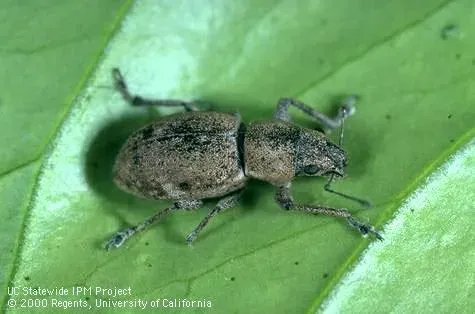
Asynonychus is a genus of broad-nosed weevils belonging to the family Curculionidae. These beetles are characterized by a short rostrum and a body covered with dense scales, which often provide excellent camouflage on soil or debris.
Adult beetles usually have a gray, brown, or mottled appearance, allowing them to blend into their environment perfectly. They are typically nocturnal, remaining hidden during the heat of the day.
The larvae are legless, C-shaped grubs with a distinct brown head capsule. They live entirely within the soil profile, where they feed on the root systems of various host plants.
Reproduction in many Asynonychus species is parthenogenetic, meaning females can lay fertile eggs without mating, leading to rapid population explosions.
The life cycle encompasses eggs, larvae, pupae, and adults. Adults overwinter in protected soil niches or deep in plant debris, emerging with the arrival of warmer seasonal temperatures.
What it damages
Asynonychus species are significant polyphagous pests that affect a wide array of crops, including citrus, legumes, vegetables, and ornamental nursery plants.
The larvae are the most damaging stage, as they consume root hair and even large roots. This root destruction severely impairs the plant's ability to uptake water and nutrients.
Adult weevils cause damage to foliage by feeding on the edges of leaves, creating characteristic scalloped or notched patterns that reduce the plant's photosynthetic capacity.
In high-density populations, the cumulative damage from both larvae and adults can cause severe stunting, yellowing of foliage, and, in extreme cases, the total collapse of the plant.
Secondary infections from soil-borne pathogens are common in damaged root zones, as wounds caused by larval feeding serve as entry points for fungi and bacteria.
Signs of infestation
Notched or jagged leaf margins are the primary sign of adult feeding. If such symptoms are observed, checking the plant at night with a flashlight often reveals the beetles in action.
Wilting of plants during daylight hours, even when soil moisture appears adequate, is a classic sign that the root system has been compromised by larval feeding.
Poor growth performance or unexpected yellowing of lower leaves often indicates that the root mass has been significantly reduced by soil-dwelling larvae.
By excavating the soil around the base of an affected plant, one can usually find white, C-shaped grubs, which confirms the presence of an infestation.
Reduced vigor and sensitivity to drought are clear indicators that the plant is under stress, likely due to root damage caused by this pest's larval stage.
Control measures
Cultural control involves frequent cultivation of the soil around host plants. This mechanical disturbance exposes larvae to predators and environmental stress, significantly reducing their survival rate.
Biological control agents, particularly entomopathogenic nematodes or fungi like Beauveria bassiana, are highly effective when applied to the soil to target the larval stages.
Chemical intervention focuses on targeting adult weevils upon emergence. Insecticides with systemic or contact-stomach action should be applied when adult activity is at its peak.
Integrated Pest Management (IPM) practices require monitoring adult populations with traps and keeping fields free of weeds that may provide alternative food sources or shelter.
- Frequent soil cultivation to disrupt larval development.
- Application of entomopathogenic nematodes to the soil.
- Targeted insecticide sprays during the adult emergence phase.
Taxonomy
- Latin name
- Asynonychus
- Order
- Coleoptera (beetles)
- Family
- Curculionidae
- EPPO code
- ASYNSP
Discussion
No discussions yet — be the first.